
TL;DR:
- Effective odor control in luxury fleets relies on enzymatic treatments that digest odor-causing organic matter rather than masking odors with aerosols. Implementing proactive procedures, such as extraction, drying, and HVAC treatment, can significantly reduce reconditioning costs and enhance passenger satisfaction. Adopting neutral, hypoallergenic, and environmentally certified odor solutions ultimately preserves brand reputation and supports fleet profitability.
Most luxury fleet managers spend thousands on premium interiors and zero on the one thing passengers notice first. Smell. The role of odor control in luxury fleets goes far beyond keeping vehicles fresh. It directly shapes passenger satisfaction, reconditioning costs, and how your brand is perceived the moment a door opens. The common mistake is reaching for a can of aerosol spray and calling it done. That approach masks odors temporarily, then allows them to return stronger. This guide breaks down the science, the methods that actually work, and how to build odor control into your standard operating workflow.
Table of Contents
- Key takeaways
- The role of odor control in luxury fleets starts with chemistry
- Odor control methods compared for luxury fleets
- Best practices for fleet-wide odor management
- Why odor control pays for itself in luxury fleets
- Emerging trends in luxury fleet odor science
- My take on what actually moves the needle
- How Masterodorremoval supports luxury fleet operators
- FAQ
Key takeaways
| Point | Details |
|---|---|
| Masking fails in luxury vehicles | Aerosol sprays rebound at 60% rates; enzymatic treatments keep rebound below 5%. |
| Enzymatic gels last weeks, not hours | Slow-release solid gels maintain odor control for 30 to 45 days with minimal disruption to passengers. |
| Moisture is the hidden culprit | Improper drying after cleaning causes persistent musty odors that no fragrance can fix. |
| Operational savings are measurable | Switching to enzymatic gels can reduce reconditioning labor costs by $370 per 100 vehicles each month. |
| Neutral scents protect all passengers | Hypoallergenic, fragrance-free treatments eliminate sensitivity complaints and reinforce premium brand perception. |
The role of odor control in luxury fleets starts with chemistry
Understanding why odors persist in luxury vehicles requires a quick look at what you’re actually dealing with. Odors in fleet cabins come from multiple sources including tobacco residue, food spills, pet dander, mildew trapped under seat padding, and contaminated HVAC systems. Each source leaves behind odor-causing organic compounds that bind to porous surfaces like leather, fabric headliners, and carpet fibers.
The critical distinction fleet managers often miss is the difference between masking and eliminating. Traditional aerosol sprays deposit fragrance molecules over odor molecules, creating a temporary cover. But the source remains. As the fragrance evaporates, the original odor returns. Enzymatic solutions show odor rebound rates below 5%, compared to 60% rebound for masking aerosols.
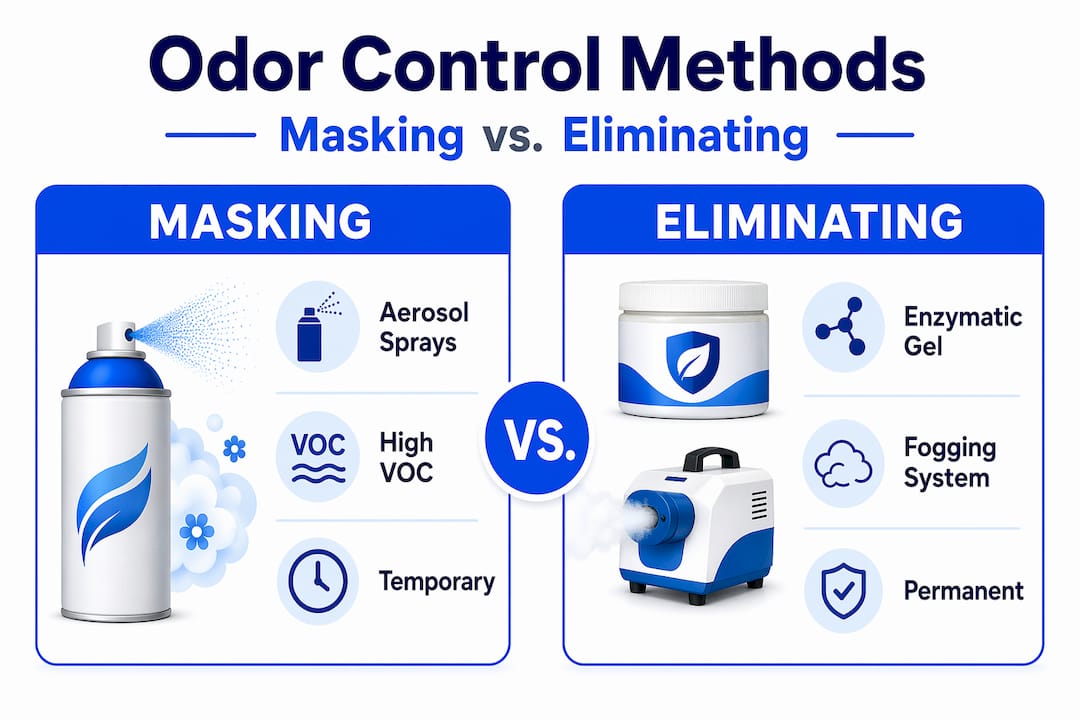
Enzymatic treatments work differently. They contain active biological agents that digest odor-causing organic matter at the molecular level, breaking down the compounds themselves rather than covering them. The odor cannot return because the source no longer exists.
Cabin materials make this worse than it sounds. Luxury vehicles use dense foam padding, thick carpeting, and perforated leather, all of which trap moisture and organic matter deep below the surface. A spray-on solution rarely penetrates far enough to reach the actual odor source.
- Tobacco and smoke residue bonds to soft surfaces within minutes of exposure
- Food spills ferment under seat cushions when not fully extracted during cleaning
- HVAC evaporators grow mold and circulate odors throughout the entire cabin
- Moisture retained in upholstery creates mildew colonies that compound existing odors
Pro Tip: Before applying any odor treatment, run the HVAC system on max fan with windows open for five minutes. This forces cabin air through the evaporator and helps you detect whether the odor source is in the air system or the upholstery. It changes your treatment approach entirely.
Odor control methods compared for luxury fleets
Not every odor control method is appropriate for luxury fleet operations. The right choice depends on turnaround time, cost per vehicle, passenger sensitivity, and how long the effect needs to last.
The four main approaches
Aerosol sprays are cheap, fast, and familiar. They are also the least effective option for high-end vehicles. High VOC aerosol sprays degrade interior air quality and can cause respiratory reactions in sensitive passengers. For a luxury fleet, that is an unacceptable risk.
Enzymatic liquid sprays represent the next level. Applied directly to odor sources, they digest organic matter and eliminate odors without leaving a residue. They require some dwell time but deliver results that last days to weeks depending on formulation.
Enzymatic solid gels are the preferred option for fleet operations that need consistent, long-running results. Solid gels maintain odor control for 30 to 45 days with minimal disruption. You place them during reconditioning and forget them.
Automated fogging systems apply enzymatic liquids across the entire cabin in minutes. Enzymatic liquids designed for foggers use a specific viscosity to prevent nozzle clogging and enable consistent fleet-wide application, reducing labor and improving uniformity across large fleets.
| Method | Effectiveness | Duration | Cost per vehicle | Passenger disruption |
|---|---|---|---|---|
| Aerosol spray | Low (masking only) | 2 to 8 hours | Low | Low to medium |
| Enzymatic liquid spray | High | 3 to 14 days | Medium | Low |
| Enzymatic solid gel | Very high | 30 to 45 days | Medium | Minimal |
| Automated fogging | Very high | 14 to 30 days | Low at scale | Requires short dwell time |
For luxury clients with scent sensitivities, neutral odor control is not optional. This principle applies equally to superyacht care and yacht charter operations, where guest comfort standards are similarly exacting. Overpowering fragrances irritate guests and erode trust in the premium experience you are trying to deliver.
Pro Tip: When selecting enzymatic products for your fleet, request samples with neutral or very low fragrance loads. Run a 30-day test with a subset of vehicles and track passenger feedback. The data will make the purchasing decision obvious.
Best practices for fleet-wide odor management
Integrating odor control into regular fleet maintenance requires discipline and a clear process. Here is a workflow that works at scale.
- Identify the odor source before treating. Train your detailing team to smell-test HVAC output, lift seat cushions, and check trunk liners. Applying treatment to the wrong surface wastes product and time.
- Extract before you deodorize. Wet-vacuum all upholstery and carpeting thoroughly. Enzymatic treatments work on residual organic matter, not standing liquid. Skipping extraction dilutes the treatment.
- Dry completely before closing the vehicle. Moisture retained after cleaning grows mildew and odor-causing microbes within 24 hours. Use industrial air movers directed at seat bases and floor wells, not just a surface wipe-down.
- Treat the HVAC system as a separate step. Contaminated cabin air filters and evaporators cause recurring odors that return regardless of how well you treat the cabin surfaces. Replace filters on a fixed schedule and apply enzymatic treatment directly to the evaporator housing.
- Place slow-release gels during reconditioning. Position them under seats where airflow carries neutralized air throughout the cabin. Document placement so they are retrieved at the next reconditioning cycle.
- Standardize product selection across the fleet. Using a single approved product list eliminates inconsistency and makes bulk purchasing practical. Bulk sourcing in gallon drums cuts cost of ownership by up to 65% compared to retail trigger bottles.
- Log odor complaints from drivers and passengers. Track patterns. If one vehicle generates repeated complaints, it has a structural odor issue that standard reconditioning is not reaching. That vehicle needs professional intervention.
The detailing team’s training matters as much as the products you choose. Staff who understand that odor control is source removal, not fragrance application, make better treatment decisions at every step.
Why odor control pays for itself in luxury fleets
The business case for investing in proper luxury fleet odor management is concrete, not theoretical.
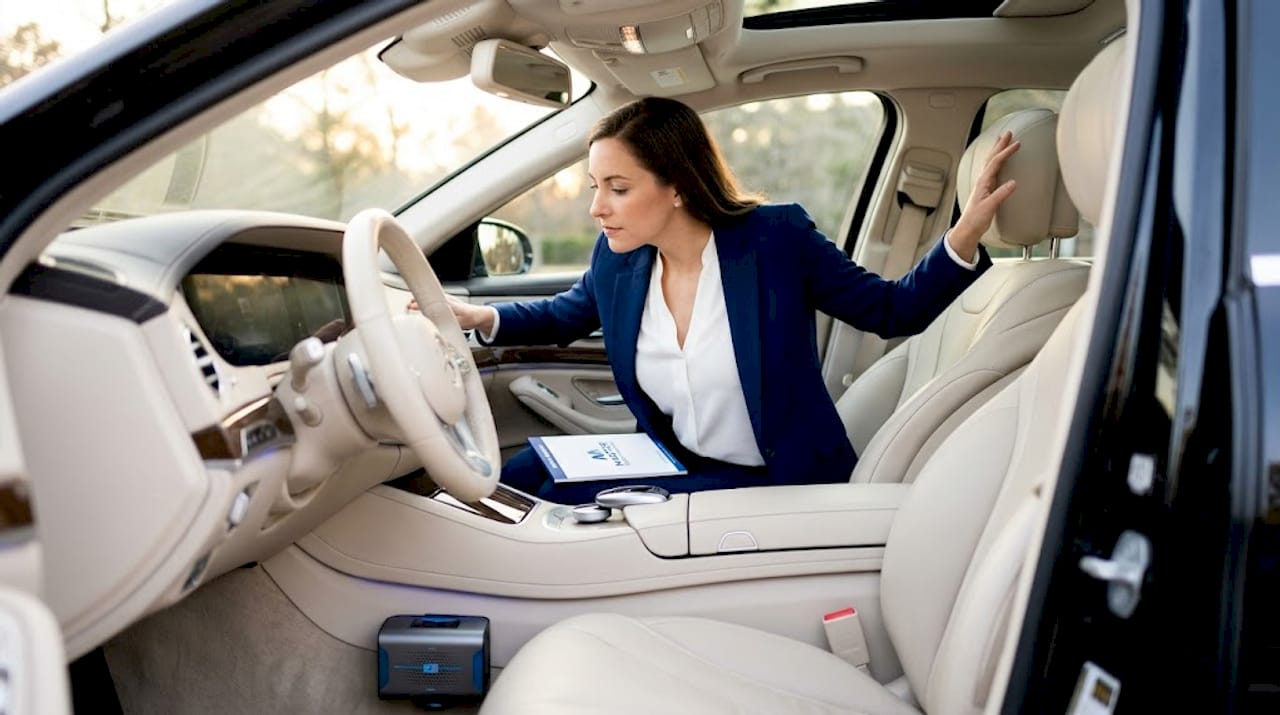
Fleet hubs that switched from masking sprays to enzymatic solid gels reduced turnaround delays by 68% and saved $370 per 100 vehicles monthly in reconditioning labor. For a 200-vehicle luxury fleet, that is over $8,800 in annual savings from one product change.
The passenger experience impact compounds those savings. Consider what a single negative odor review does to a charter rating or corporate fleet contract renewal. The role of odor in yacht charter ratings is well understood among superyacht operators. The same dynamic applies to ground fleets. Poor air quality is one of the fastest ways to lose a high-value client.
- Health and safety: removing high-VOC aerosols protects passengers with respiratory sensitivities and reduces liability exposure
- Brand positioning: a clean-smelling vehicle signals quality in a way that no interior upgrade can replicate
- Staff productivity: olfactory interventions can improve driver alertness and reduce stress, adding a safety dimension to odor management
- Vehicle resale value: consistently well-maintained interiors with documented odor control history command higher residual values
The impact of odors on luxury fleets reaches further than most operators realize. It touches reviews, renewals, staff performance, and the total cost of fleet ownership.
Emerging trends in luxury fleet odor science
The field is moving fast. Here is what to watch in 2026 and beyond.
- Scent-as-performance research: Studies on peppermint improving driver vigilance and bergamot reducing stress in urban driving suggest that strategic scent choices in premium vehicle scent solutions could become a recognized safety practice, not just a luxury add-on.
- Digital olfaction technology: Sensor-based odor detection systems can now identify specific odor compounds in a vehicle cabin and trigger automated treatment responses. These systems are entering commercial fleet operations, removing the reliance on human detection.
- Hypoallergenic formulation advances: Manufacturers are developing enzymatic products with zero fragrance load and clinically tested hypoallergenic profiles, specifically for luxury and healthcare fleet environments where passenger sensitivities are high.
- Eco-certified bulk chemistry: Green-certified enzymatic concentrates that meet EPA Safer Choice standards are now available in fleet-scale formats, allowing operators to meet sustainability commitments without sacrificing odor control performance. You can explore eco-friendly odor removal trends emerging in 2026 for a closer look at what is driving this shift.
- Integration with fleet management software: Leading fleet software platforms are beginning to include odor complaint tracking and reconditioning cycle logging, making odor control a reportable metric alongside fuel efficiency and maintenance.
My take on what actually moves the needle
I’ve worked with enough luxury fleet operators to know that the gap between operators who manage odor well and those who don’t is almost never about budget. It’s about mindset.
The operators who get this right understand that odor removal is an intervention, not a maintenance step. You don’t spray a pleasant scent and move on. You identify what created the problem, remove it at the source, and then prevent conditions that let it return. Every time I’ve seen a fleet manager switch from masking aerosols to enzymatic treatment protocols, the complaints drop significantly within 60 days. Not because the product is magic, but because the approach is fundamentally different.
The trend toward neutral and hypoallergenic scents in luxury fleet odor management is one I fully support. Passengers should not be able to smell your odor control product. If they can, you’ve replaced one problem with another. The goal is a cabin that smells like nothing, which is the hardest result to achieve and the one that reads as genuinely premium.
For fleet operators running superyachts or high-end charter vehicles, personalized odor services tailored to the specific cabin environment will consistently outperform standardized spray protocols. The geometry, materials, and usage patterns of every vessel and vehicle are different. Treating them all the same is where operators lose money and guests.
— Master
How Masterodorremoval supports luxury fleet operators

Masterodorremoval specializes in the permanent elimination of interior odors across luxury vehicles, superyachts, and high-end fleet environments. Using green-certified enzymatic technologies and explicitly avoiding ozone and chlorine treatments, the team delivers results that are safe for passengers with sensitivities and built to last. Whether you need fleet odor elimination done right across a 50-vehicle fleet or a single deep intervention on a problem vehicle, Masterodorremoval offers same-day and next-day service with guaranteed results. The luxury vehicle odor neutralization process is tailored to each cabin’s materials and odor profile, not a one-size-fits-all spray-down. For fleet managers who need a reliable partner, not just a product, this is the standard of service your clients expect.
FAQ
What causes recurring odors in luxury fleet vehicles?
Recurring odors in luxury fleet vehicles are almost always caused by untreated sources. Contaminated HVAC evaporators, moisture trapped in upholstery after cleaning, and residual organic matter from food or tobacco keep regenerating the smell even after surface treatments.
How long does enzymatic odor treatment last in a vehicle?
Enzymatic solid gels maintain active odor neutralization for 30 to 45 days. Fogged enzymatic liquids typically last 14 to 30 days, depending on cabin conditions and how frequently the vehicle is used.
Why should luxury fleets avoid aerosol air fresheners?
High-VOC aerosol sprays mask odors rather than eliminating them, and they degrade cabin air quality. They can trigger respiratory reactions in sensitive passengers and produce odor rebound rates of around 60% once the fragrance dissipates.
What is the most cost-effective odor control approach for large fleets?
Bulk sourcing enzymatic concentrates in gallon drums reduces cost of ownership by up to 65% compared to retail products. Paired with automated fogging systems, this approach delivers consistent results across hundreds of vehicles with minimal labor.
How does odor control affect luxury brand perception?
Odor is the first sensory signal a passenger receives when entering a vehicle. A neutral, clean-smelling cabin signals quality and care before a single word is spoken. Negative odor experiences are among the most common triggers for lost charter contracts and poor fleet reviews.
Recommended
- Odor control: protect your luxury brand and spaces – Master Odor Removal
- Vehicle odor neutralization steps for clean luxury interiors – Master Odor Removal
- Professional Odor Removal: Luxury Eco-Friendly Solutions – Master Odor Removal
- Defining Fast Odor Removal Service for Luxury Interiors – Master Odor Removal
Recent Comments