
TL;DR:
- A single odor can damage reputation more than minor damages or amenities, especially in luxury spaces. Addressing root causes and maintaining airflow control are essential for preventing recurring complaints and negative reviews. Proactive, consistent odor management enhances operational standards and preserves higher ratings across diverse environments.
A single lingering smell can unravel everything you’ve built. You can have flawless staging, spotless lobbies, and a perfectly detailed vehicle interior, but one guest who catches a whiff of stale tobacco or mildew will write that review as if the whole operation is falling apart. That’s not an exaggeration. Odor complaints generate some of the most emotionally charged negative feedback across hospitality, real estate, and automotive platforms, and they carry disproportionate weight with prospective customers reading those reviews. This article breaks down why odor affects perception so powerfully, what actually causes odors to return after treatment, and the practical steps you can take to stay ahead of complaints before they hit your ratings.
Table of Contents
- How odors influence customer perception and reviews
- The science behind recurring odor complaints
- Why odor removal is a root-cause maintenance task, not just cosmetic
- Practical steps to minimize odor-driven negative reviews
- Why ‘freshness’ is an operational KPI, not just a guest amenity
- Expert odor removal: connect with proven solutions
- Frequently asked questions
Key Takeaways
| Point | Details |
|---|---|
| Odors drive review sentiment | Smell affects perceived quality and can fuel negative reviews even in upscale environments. |
| Root-cause fixes matter | Addressing ventilation and maintenance is crucial—masking odors rarely solves review-triggering issues. |
| Prevention is operational | Routine checks, filter changes, and airflow monitoring are key to avoiding repeat complaints. |
| Professional help elevates standards | Specialized odor removal services offer lasting solutions and protect long-term reputation. |
How odors influence customer perception and reviews
Smell is the fastest sense to process and the hardest to rationalize away. Before a hotel guest fully registers the decor or a luxury car buyer notices the stitching on the seats, their nose has already filed a verdict. In premium environments, that verdict carries enormous weight.
Why odors signal quality in luxury spaces
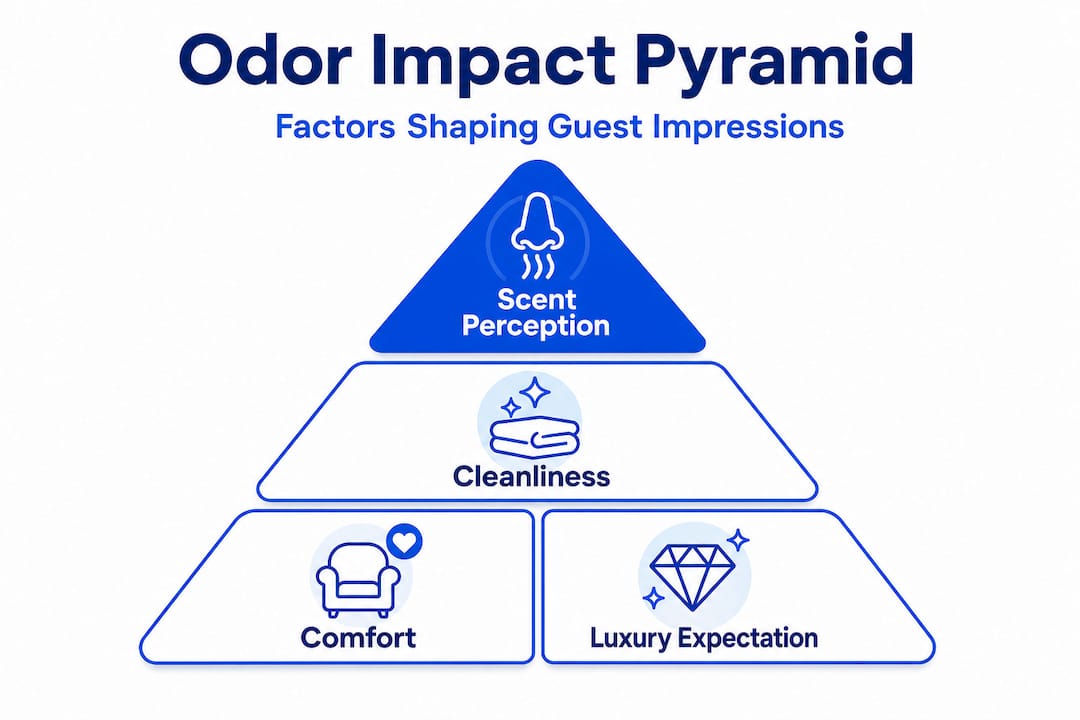
When someone enters a high-end environment, they bring elevated expectations. A minor scuff on a wall in a budget motel goes unmentioned. That same scuff in a five-star suite gets photographed and posted. Odor works the same way, but the stakes are even higher because smell bypasses rational thinking. It triggers an emotional, almost instinctive response that immediately links the scent to a judgment about cleanliness and management competence.
Consider two scenarios. A luxury car buyer visits a dealership to test drive a pre-owned vehicle listed at $85,000. The exterior is immaculate, the leather is in perfect condition, but the moment they open the door, a stale cigar smell fills the cabin. That buyer isn’t just inconvenienced. As Cars.com reviews demonstrate, buyers in exactly this situation report feeling deceived, especially when they were told beforehand that the vehicle had been “fully detailed.” The odor doesn’t read as a maintenance issue. It reads as dishonesty.
Now picture a hotel guest who paid a premium rate for a non-smoking room. The room looks clean. The linens are fresh. But there’s a faint tobacco smell near the HVAC vent. That guest’s review won’t say “the room had a faint smell.” It will say “the room was dirty” or “the hotel is poorly managed,” and those odors and online reviews will drag your star rating down in a way that a broken remote control never would.
Here’s what makes odor complaints uniquely damaging in review culture:
- They trigger emotional language, which algorithms on platforms like Google and TripAdvisor tend to surface more prominently
- They create doubt about everything else in the space, even things the guest hasn’t personally verified
- They are nearly impossible to dispute or contextualize in a manager response
- They deter future bookings far more effectively than complaints about minor amenities
“When a guest or buyer detects an odor in a luxury setting, the smell doesn’t just register as unpleasant. It registers as evidence that something has been overlooked or hidden. That shift from annoyance to suspicion is what drives the harshest reviews.”
The masking trap
One of the most common and costly mistakes managers make is reaching for an air freshener when they should be calling a professional. Heavy fragrances layered over an existing odor don’t neutralize anything. In fact, they can make the situation worse. A perceptive buyer or guest will immediately recognize the masking attempt, and that recognition sends a signal: someone knew about this problem and tried to hide it.
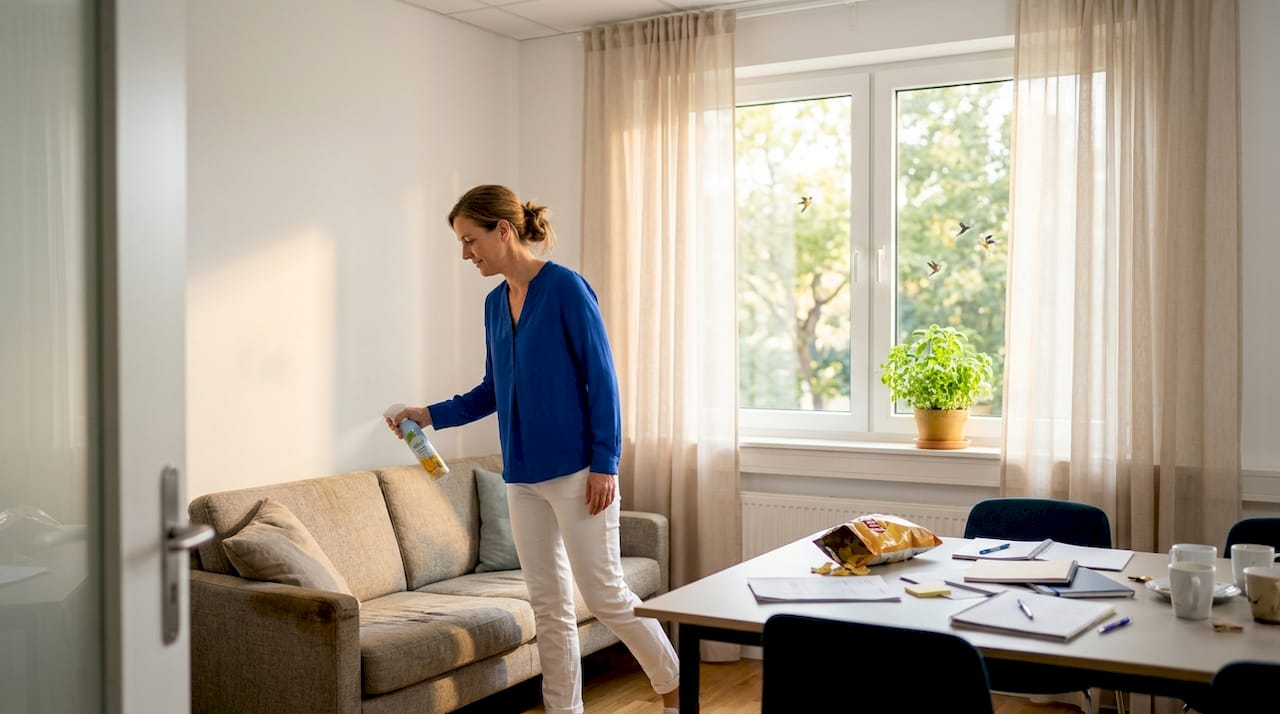
Pro Tip: If your team is placing air fresheners in specific rooms or vehicles more frequently than others, treat that pattern as a diagnostic flag, not a solution. Recurring freshener use usually means there’s an unresolved source odor that needs professional attention.
The science behind recurring odor complaints
Understanding why odors keep coming back after cleaning is essential for anyone managing multiple properties or a fleet of vehicles. The answer almost always involves airflow, not just surface contamination.
How pressure and ventilation spread odors
Airflow and pressure management are directly tied to odor complaints in multifamily and hospitality settings. When a building’s exhaust system underperforms or a maintenance cycle disrupts the pressure balance, odors migrate from one space to another through gaps, shared ductwork, and unsealed penetrations. The result: a tenant on the third floor starts smelling whatever the second-floor unit cooked last Tuesday, or a hotel guest in room 412 detects cigarette smoke from the room next door.
Several factors drive these hidden odor risks in managed properties:
- Stack effect: warm air rises and creates negative pressure on lower floors, pulling odors upward through shared pathways
- Filter changes that temporarily disrupt calibrated airflow balance
- Exhaust fans that slow down over time due to wear, reducing their ability to remove stale air
- Outdoor air intakes positioned near loading docks, parking garages, or smoking areas
- Unsealed gaps around pipes, conduits, and cable runs that connect units
| Symptom | Likely underlying cause | Recommended check |
|---|---|---|
| Odor returns within days of cleaning | Shared ventilation pathway or active source | Pressure test adjacent units or HVAC zones |
| Smell isolated to one wall or corner | Unsealed penetration or moisture intrusion | Inspect behind walls for mold or pipe leak |
| Odor strongest near HVAC vents | Filter failure or contaminated ductwork | Replace filter, inspect and clean duct runs |
| Intermittent odor tied to weather or season | Stack effect or outdoor intake proximity | Measure airflow balance across temperature changes |
| Smell travels between floors | Stairwell or elevator shaft acting as chimney | Seal penetrations, verify exhaust performance |
Even when a property manager prevents odor issues within a single unit through thorough cleaning and treatment, inter-unit air circulation and shared infrastructure can reintroduce the problem entirely. Door sweeps on unit entry doors, for example, reduce hallway air infiltration and eliminate many “mysterious smell” complaints that managers have struggled to trace for months.
Why odor removal is a root-cause maintenance task, not just cosmetic
There’s a perception gap in how most operators think about odor management. Most teams treat a smell as a surface problem: something smells bad, so you clean the surface. That’s the wrong mental model, and it’s why the same rooms and vehicles generate repeat complaints year after year.
What guests are actually telling you
When a guest flags an odor in a review, they aren’t just complaining about a smell. They’re reporting a perceived failure of your operational standards. Studies on ventilation pressure imbalance show that recurring odor complaints map directly to underlying infrastructure and maintenance failures, not just cleaning frequency. The guest doesn’t know the technical reason. But their nose tells them that something is wrong, and they trust that instinct completely.
Here’s a practical maintenance checklist that goes beyond standard cleaning:
- Verify exhaust fan performance in every bathroom and kitchen every quarter
- Confirm HVAC airflow balance after any filter change, not just at installation
- Inspect all plumbing penetrations and cable runs for unsealed gaps
- Check for moisture intrusion around windows, roof edges, and basement walls
- Test grout and caulk integrity in bathrooms where mold can grow invisibly
- Audit parking structures for exhaust infiltration into adjacent spaces
Temporary fixes vs. lasting solutions
| Approach | Method | Duration of result | Review impact |
|---|---|---|---|
| Cosmetic (masking) | Air fresheners, scented candles, surface sprays | Hours to days | Can worsen reviews if guests detect masking |
| Surface cleaning | Steam cleaning, shampooing, wiping hard surfaces | Days to weeks | Improves short-term but misses embedded odors |
| Root-cause treatment | Source elimination, HVAC inspection, professional remediation | Months to permanent | Strong positive effect on reviews over time |
| Infrastructure repair | Sealing penetrations, rebalancing exhaust, moisture control | Permanent | Eliminates recurring complaints entirely |
Professional odor maintenance takes a root-cause approach by identifying and neutralizing the actual source molecule, not covering it. This is especially critical for materials like hardwood floors where pet odor can penetrate deep into the wood grain and resist surface treatments entirely.
Pro Tip: Don’t schedule odor treatment as a one-off event triggered by a complaint. Build it into your quarterly maintenance calendar the same way you schedule HVAC service and pest control. Proactive treatment costs a fraction of what reactive reputation management requires.
Practical steps to minimize odor-driven negative reviews
Theory is useful. But what you actually need is a process your team can run consistently, across every property, vehicle, or hospitality space you manage. Here’s a step-by-step framework built for operators in the field.
- Conduct sensory walkthroughs at the start of every shift. Don’t rely on your regular staff for this. People acclimate to familiar smells within minutes. Rotate who does the walkthrough, or ask someone from another area of the building to do the check.
- Establish odor baselines for each space. What does a truly neutral room smell like? Write it down. Photograph the conditions. This gives your team a reference point and helps you identify drift early.
- Log every air freshener use. Track which spaces require fresheners and how often. Spaces that show up consistently are flagging unresolved source odors.
- Align filter replacements with airflow verification. Every ventilation pressure shift after a filter change is a window for odors to migrate. Confirm balance is restored before the next guest or buyer walks in.
- Use move-in and move-out inspections for airflow checks. These transitions are your best opportunity to reset conditions and confirm infrastructure is performing correctly.
- Respond to odor reviews within 24 hours. Don’t be defensive. Acknowledge the experience, explain what you’re doing, and follow up with 5-star odor removal results to rebuild confidence with future readers.
- Schedule professional treatment proactively, not reactively. Waiting for a complaint means the review is already written. Scheduled move-in and move-out cleaning with odor verification closes that gap entirely.
Pro Tip: Use move-in and move-out inspections as structured opportunities for airflow verification. Have your maintenance team check exhaust performance and pressure balance at every unit transition, not just when a complaint comes in. This single habit can dramatically reduce the number of repeat odor calls you handle per quarter.
A property or dealership that integrates these steps into standard operations will see measurable improvement in review sentiment within two to three review cycles. The key is consistency: odor management performed once or twice a year produces unpredictable results. Performed monthly as part of routine maintenance, it becomes a reliable competitive advantage.
Why ‘freshness’ is an operational KPI, not just a guest amenity
Here’s the perspective most managers never hear: freshness is a performance metric, and the operators who treat it as one consistently outperform those who treat it as an afterthought.
The instinct in most operations is to rely on visual inspections as the primary quality check. Rooms look clean, cars look spotless, lobbies look polished. Visual passes dominate checklists because they’re easy to confirm and easy to photograph. But olfactory cues (what guests smell) drive emotional responses that visuals simply cannot override. You cannot look at a photograph and tell that the room smelled fine. Guests know this. So they trust what their nose tells them more than what their eyes show them.
The most sophisticated property managers and dealership operators we work with have started benchmarking freshness the same way they track maintenance completion rates or occupancy. They assign responsibility, track variance from baseline, and act on early signals rather than waiting for reviews to tell them something went wrong. This approach connects directly to workplace odor removal practices that the best-run facilities use to maintain standards across high-traffic environments.
The “tip of the iceberg” dynamic is real. When a guest mentions odor in a review, it rarely means they only noticed the smell. It usually means the smell was the detail that crystallized a broader feeling of neglect they’d been accumulating throughout their stay or visit. Unaddressed odor is almost never an isolated issue in how guests perceive it. Treat freshness as a KPI, measure it, act on it, and your reviews will reflect the operational discipline behind it.
Expert odor removal: connect with proven solutions
Running a premium property or high-volume dealership means you can’t afford to gamble on whether an odor problem has truly been resolved.

At Master Odor Removal, we specialize in luxury eco-friendly odor solutions that address the source, not just the symptom, using green-certified methods that are safe for guests, staff, and vehicles. No ozone. No chlorine. Just permanent results delivered by licensed professionals who understand what’s at stake for your reviews and your reputation. Whether you’re managing a multifamily portfolio, a five-star property, or a luxury auto inventory, our team delivers same or next-day service with odor removal done right the first time. Connect with our odor removal specialists today and find out why top-tier operators trust us to protect their ratings.
Frequently asked questions
Can masking odors with air fresheners actually harm reviews?
Yes, guests and buyers often recognize masking attempts, which makes negative reviews harsher because the buyer feels deceived rather than simply disappointed by an unresolved problem.
How do shared ventilation systems cause repeated odor complaints?
Shared ventilation carries odors between connected spaces, so even a freshly treated room can develop recurring smells through shared pathways unless building-level infrastructure is also addressed.
Are routine filter changes essential for preventing odor complaints?
Yes, filter changes that disrupt airflow balance and pressure can reactivate odor migration between spaces, making consistent post-change verification as important as the change itself.
Why do luxury property guests react more strongly to odors than to minor visual issues?
In luxury settings, odor signals perceived neglect rather than a minor oversight, because premium environments are expected to be managed at every sensory level, not just visually.
Recent Comments