
TL;DR:
- Vapor-based odor neutralization chemically eliminates odors without masking or residue.
- Dry vapor systems are safe, discreet, and effective for continuous use in luxury environments.
- They outperform ozone, cyclodextrin, and enzyme treatments by providing silent, ongoing odor control.
Luxury properties are not immune to odor problems. Whether it’s a high-end residential lobby that absorbed years of cooking smells, a yacht with persistent mildew, or a premium auto dealership showroom that smells faintly of cigarette smoke from a trade-in, the stakes are high and the tolerance for error is zero. Vapor-based odor neutralization has emerged as one of the most effective, occupant-safe solutions available today, offering property managers and business owners a method that actually eliminates odor molecules rather than layering fragrances on top of them. This article breaks down what this technology is, how the key systems perform, and how to apply it strategically in upscale environments.
Table of Contents
- Understanding vapor-based odor neutralization
- Key technologies and how they work
- Vapor-based versus other odor neutralization methods
- Applications and best practices for upscale properties
- Why most property managers underestimate vapor-based solutions
- Expert odor removal for luxury interiors
- Frequently asked questions
Key Takeaways
| Point | Details |
|---|---|
| Vapor neutralizes at the source | Vapor-based systems break down odors instead of just masking them for true air quality improvement. |
| Safe for luxury spaces | Dry vapor methods are effective and safe for ongoing use in premium occupied environments. |
| Outperforms ozone and enzymes | Vapor-based neutralization achieves rapid, continuous results and avoids the safety risks of ozone. |
| Long-lasting solutions | Cartridges and vapor systems provide months of dependable freshness with minimal maintenance. |
Understanding vapor-based odor neutralization
Vapor-based odor neutralization is exactly what the name suggests: odor-fighting compounds are delivered in vapor form, allowing them to penetrate surfaces, circulate through air, and chemically neutralize the molecular sources of odor rather than simply masking them. This is a fundamentally different approach from spraying a liquid deodorizer or placing a scented candle in a corner.
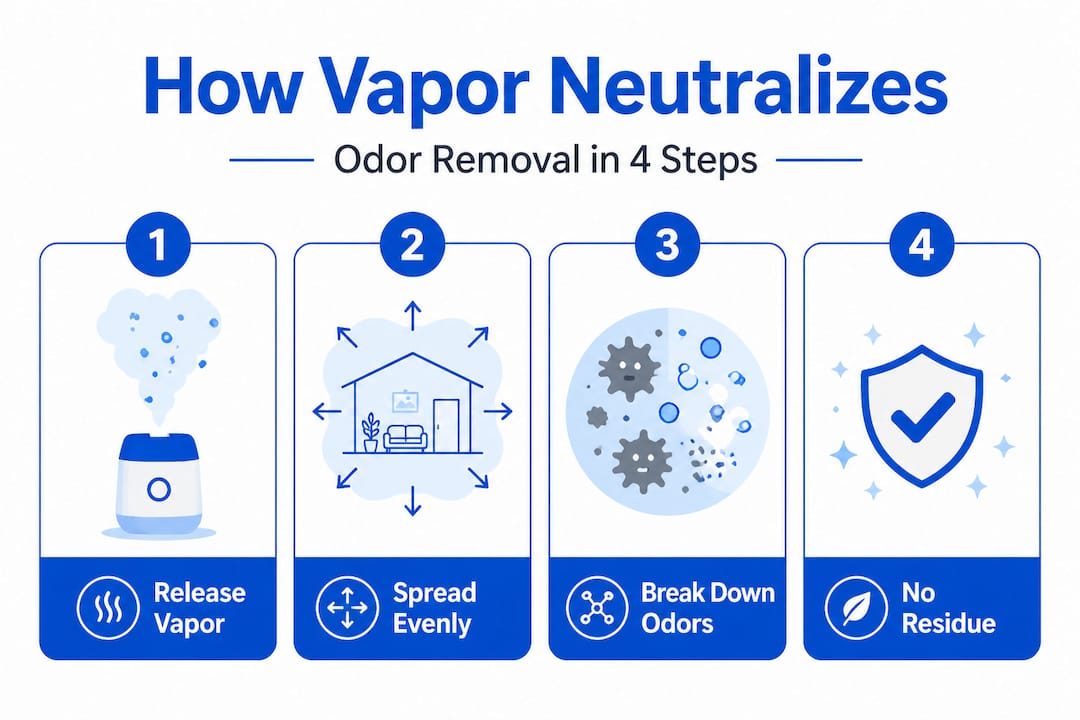
At its core, vapor-based neutralization works through either physical adsorption (odor molecules bind to a neutralizing agent) or chemisorption (a chemical reaction changes the structure of the odor molecule so it no longer smells). Both mechanisms are far more effective than fragrance masking because they address the root cause rather than the symptom.
There are several major technology types under this umbrella:
- Dry vapor systems: These use membrane-based cartridges infused with essential oil compounds or other neutralizing agents that release a controlled, continuous dry vapor. Unlike wet fogging, these leave no residue on surfaces and are entirely safe for occupied spaces. Dry vapor systems like the Vaportek Optimum 4000 and the Restorator release penetrating dry vapor for continuous or rapid deodorization in areas up to 20,000 ft³.
- Vapor-phase chemical scrubbing: Primarily used in industrial contexts, this method injects neutralizing chemicals directly into vapor streams.
- Thermal fogging: Heat converts a deodorizing solution into a fog that penetrates porous surfaces. Often used post-disaster, but less suitable for occupied luxury spaces.
- Cold ULV fogging: Produces ultra-low volume mist droplets that settle into fabrics and carpets. Effective but may leave moisture residue.
Understanding chemical vs gas odor removal methods can help property managers identify which approach fits their specific environment. For most upscale applications, dry vapor wins because it requires no evacuation, leaves no chemical trace on finishes, and operates continuously.
The key distinction for luxury environments: The best odor solution is invisible. Guests and tenants should never know treatment occurred. Dry vapor systems run silently, continuously, and without disrupting daily operations.
This matters enormously in settings like boutique hotels, high-end real estate offices, or luxury vehicle showrooms, where even a brief shutdown for odor treatment can translate into lost revenue or a compromised client experience.
Key technologies and how they work
Having a definition is useful, but understanding the actual technologies and their operational strengths guides real decision-making for property managers who need reliable results, not experiments.
Dry vapor systems are the most widely adopted vapor-based technology for upscale interiors. Products like the Vaportek Optimum 4000 use a membrane cartridge soaked in plant-derived neutralizing compounds. The membrane releases controlled quantities of dry vapor over time. Because the vapor is dry (not mist), it does not settle on surfaces or alter humidity levels. These systems operate safely around electronics, artwork, leather furniture, and other high-value materials that occupy luxury interiors.
Vapor-phase chemical scrubbing operates at the industrial end of the spectrum. This method injects neutralizing chemicals like VapoScrub into vapor streams for continuous chemisorption of compounds like hydrogen sulfide and mercaptans, achieving over 99% removal without requiring media replacement. While this level of industrial application is beyond typical luxury residential or hospitality use, the same principles inform smaller-scale vapor scrubbing units used in commercial HVAC systems for commercial high-rises and large resort properties.
Here’s a practical comparison of key vapor system performance metrics:
| Technology | Coverage area | Residue left | Safe for occupied spaces | Maintenance cycle |
|---|---|---|---|---|
| Dry vapor (membrane) | Up to 20,000 ft³ | None | Yes | 3-4 months per cartridge |
| Vapor-phase scrubbing | Industrial scale | None | Varies | No media replacement needed |
| Cold ULV fogging | Variable | Possible moisture | Generally no | Per application |
| Thermal fogging | Large areas | Minimal | Generally no | Per application |
Pro Tip: When selecting a vapor system for a luxury property, prioritize systems explicitly rated as safe for occupied spaces and residue-free. Any method that requires evacuation or leaves visible residue on premium finishes is the wrong tool for the job. Engage odor removal professionals who specialize in high-value environments to evaluate your specific space before committing to a system.
For property managers overseeing multiple units, commercial lobbies, or common areas, integrating dry vapor systems into HVAC pathways allows for building-wide continuous treatment without any visible equipment in public areas. This kind of seamless deployment is one of the reasons top-tier workplace odor solutions now increasingly favor vapor-based approaches over periodic fogging treatments.
Vapor-based versus other odor neutralization methods
To truly appreciate the value of vapor-based methods, comparing them directly to other commonly used approaches reveals both the benefits and the gaps in each.
Ozone treatment is probably the most well-known alternative. Ozone generators flood a space with highly reactive O₃ molecules that oxidize and break down odor compounds. It works, but with serious drawbacks: ozone is harmful to humans, pets, and plants, requiring complete evacuation of the space. Results typically take 24-72 hours, and residual ozone must dissipate before reoccupancy. For a luxury hotel suite or residential unit, a 24-72 hour shutdown is often operationally impossible. Learn more about how vapor vs ozone machines differ in real-world applications.
Cyclodextrin treatments work by encapsulating odor molecules inside a ring-shaped sugar compound, effectively trapping them so they can no longer be detected. This is a clever molecular approach, but it requires direct contact application to surfaces, meaning it cannot treat airborne odor continuously. Enzymes take a biological approach, using microorganisms to break down odor-causing compounds. Both are excellent for targeted surface treatment but fall short as ambient air quality solutions.
Here’s how the major methods compare in the context of a luxury property environment:
| Method | Effectiveness | Safety (occupied) | Time to results | Luxury suitability |
|---|---|---|---|---|
| Dry vapor | 90%+ reduction | Yes | Continuous | Excellent |
| Ozone | High | No (must evacuate) | 24-72 hours | Poor |
| Cyclodextrin/enzyme | Moderate (surfaces) | Yes | 24-72 hours | Moderate |
| Fragrance masking | None (covers only) | Yes | Immediate | Poor |
Empirical performance data shows that dry vapor cartridges last 3-4 months or 270 hours, treating up to 20,000 ft³, while vapor systems reduce odors by 90%+ in targeted applications. Ozone achieves comparable results but requires a 24-72 hour evacuation window, and cyclodextrin or enzyme alternatives also need 24-72 hours and only treat surfaces.
Key advantages that make vapor-based systems the standout choice for upscale properties:
- No evacuation required during treatment, preserving business continuity
- No chemical residue on premium surfaces like marble, leather, and hardwood
- Continuous treatment rather than one-time application
- Safe for sensitive materials including artwork, electronics, and luxury textiles
- No ozone or chlorine exposure, aligning with eco-conscious property standards
When choosing a solution, consulting odor removal specialists with direct experience in high-end environments ensures the method selected actually matches the operational demands of the property.
Applications and best practices for upscale properties
With a comparison in hand, property managers can focus on where vapor-based systems genuinely excel and how to deploy them for reliable, ongoing results.
Common luxury applications:
- Hotel lobbies and common areas: Continuous dry vapor systems integrated into ventilation create a reliably fresh, neutral environment without visible equipment.
- Luxury vehicle showrooms and dealerships: Dry vapor units placed discreetly in display areas neutralize residual smells from trade-ins without disrupting the showroom aesthetic.
- Residential condominiums and co-ops: Dry vapor systems in hallways and elevator banks eliminate cooking, pet, and smoke odors before they penetrate individual units.
- Yacht and private aviation interiors: Compact dry vapor devices are ideal for confined, premium spaces where chemical fogging would be impractical and potentially damaging.
- HVAC-integrated systems: For large properties, vapor neutralizing compounds can be introduced directly into HVAC airflow, treating every room simultaneously without any visible equipment placement.
Step-by-step best practices for implementation:
- Conduct an odor audit first. Identify primary odor sources, their locations, and intensity. Don’t guess. Walk the space at different times of day, since odors shift with foot traffic, temperature, and humidity.
- Match system capacity to space volume. A unit rated for 10,000 ft³ in a 20,000 ft³ lobby is half as effective. Always spec at the upper end of coverage for commercial and luxury environments.
- Position units at airflow sources. Near air returns, vents, or natural air circulation points, vapor distributes more evenly and reaches problem areas faster.
- Set a replacement schedule before you need one. Cartridge exhaustion is easy to miss in a busy property. Schedule replacements every 90 days regardless of perceived effectiveness.
- Integrate with your cleaning protocols. Vapor treatment works best alongside regular deep cleaning. Vapor neutralizes airborne and embedded odor molecules; it does not substitute for removing the physical source.
- Document results with before-and-after assessments. This matters for accountability to ownership groups, boards, or investors who expect measurable maintenance standards.
For tobacco smoke odor removal in vehicles or residential units, dry vapor systems paired with professional surface treatment deliver the most complete resolution. Smoke odor is especially persistent because it embeds in porous materials like fabric, carpet, and wood. Vapor systems continuously address airborne recurrence while professional treatment handles the embedded source. For properties dealing with removal of smoke odors, a layered approach is always more effective than a single-method solution.
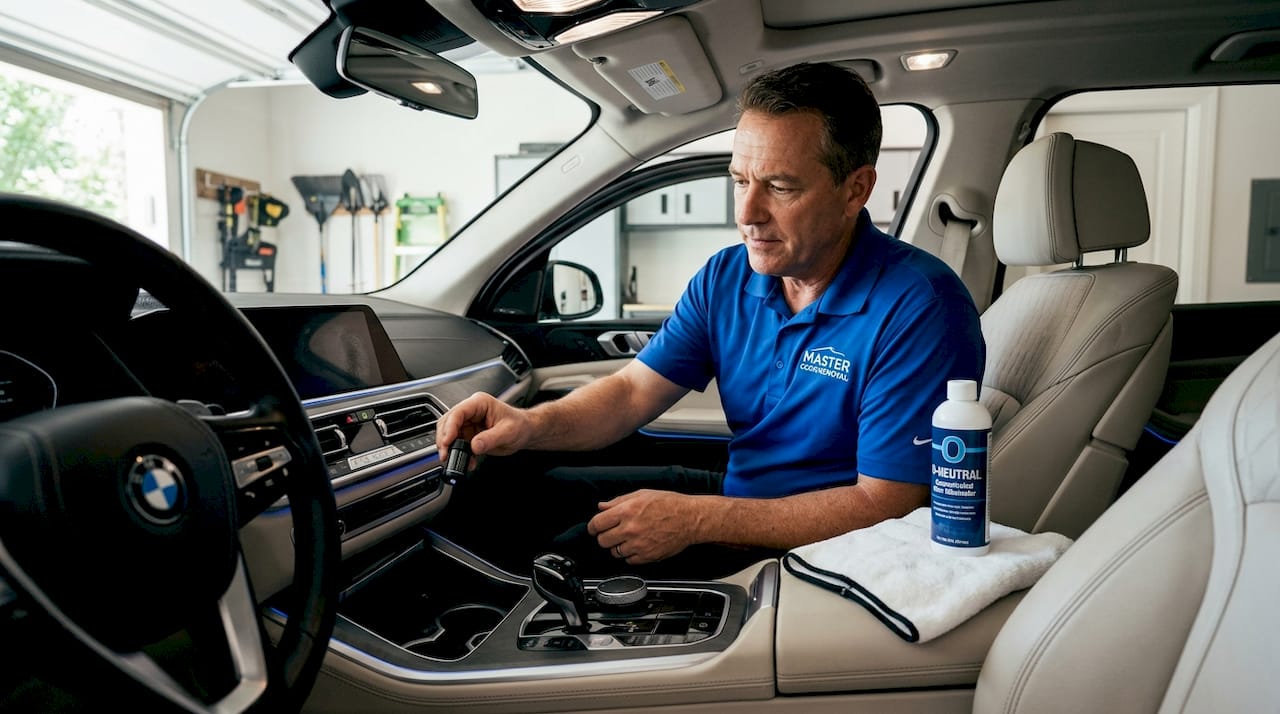
Pro Tip: Avoid the temptation to use strong-scented air fresheners alongside a vapor system. Fragrances interfere with neutralization by introducing new volatile compounds into the air, and the combination often creates an artificial, heavy smell that immediately signals to guests that something is being covered up rather than eliminated.
Why most property managers underestimate vapor-based solutions
Here is an uncomfortable truth: most property managers reach for ozone machines or fragrance-heavy sprays because those methods feel decisive. You turn on a machine, the smell of ozone fills the room, and it seems like something aggressive and effective is happening. That perception is wrong, and it is costing properties real money and reputation.
Vapor-based systems, by contrast, do their work quietly. There is no dramatic smell, no visible fog, no chemical signature that reassures you action was taken. That subtlety is precisely their strength, but it makes them easy to overlook or dismiss as insufficient. The luxury market demands outcomes, not theater, and vapor systems deliver outcomes without the performance.
There is also a deeply ingrained belief in the cleaning and property management industry that strong equals effective. Strong chemical smell means it worked. Strong ozone odor means odors were defeated. But for a guest checking into a premium suite or a buyer touring a luxury listing, any strong smell, including the smell of treatment, is a red flag. True luxury means neutral, fresh, and effortless. Clients should not be able to detect your odor management strategy. That is the standard vapor-based systems are designed to meet, and it is a standard that odor elimination insights from high-end property environments consistently reinforce.
The financial case is equally clear. Ozone treatments require evacuation and typically cost more per session because of labor and liability considerations. Cyclodextrin and enzyme treatments require repeated professional applications. A properly installed dry vapor system runs continuously for three to four months per cartridge with essentially zero disruption. For a high-traffic lobby, that translates to uninterrupted, consistent air quality with minimal cost per square foot over time. The ROI on vapor systems in luxury environments is genuinely compelling once you calculate it against the alternative.
The property managers who adopt vapor-based solutions first, before a problem becomes obvious to guests, are the ones who protect their reputation and their asset value. By the time an odor complaint surfaces in a guest review or a prospective buyer comment, the damage is already partially done.
Expert odor removal for luxury interiors
When managing a high-value property, you need a solution that is guaranteed, safe, and fast. Vapor-based odor neutralization is a powerful technology, but choosing the right system and deploying it correctly in a luxury environment requires professional expertise.

Master Odor Removal specializes in luxury interior odor removal across vehicles, residential properties, yachts, commercial spaces, and hospitality venues. The team uses proven, eco-friendly methods that exclude ozone and chlorine, focusing instead on sustainable vapor-based and direct-application approaches suited to premium interiors. With same or next-day availability and a satisfaction guarantee, working with licensed odor removal specialists means no guesswork, no damage to premium surfaces, and no disruption to your operations. Explore eco-friendly luxury odor solutions tailored specifically for properties where quality and discretion are non-negotiable.
Frequently asked questions
How does vapor-based odor neutralization differ from air fresheners?
Vapor-based neutralization breaks down odor molecules at the source using chemical or physical reactions, while air fresheners only add fragrance to mask existing smells. Dry vapor systems release penetrating vapor that continuously deodorizes areas up to 20,000 ft³ without any masking effect.
How long does a vapor cartridge last in these systems?
Dry vapor cartridges typically last 3-4 months or up to 270 hours of operation, depending on space size and the concentration of odor compounds present in the environment.
Is vapor-based odor neutralization safe for occupied spaces?
Yes. Dry vapor systems are specifically engineered for use while people are present, making them ideal for hotels, showrooms, and residential environments where evacuation is not feasible.
Does vapor-based neutralization work on smoke odors?
Yes, vapor systems are highly effective against tobacco, cannabis, and other smoke-related odors. Professional odor specialists typically combine vapor treatment with direct surface application for complete smoke odor elimination in luxury interiors.
Can vapor-based systems handle industrial odors as well?
Industrial vapor-phase scrubbing achieves over 99% removal of targeted volatile compounds like hydrogen sulfide and mercaptans from vapor streams, all without requiring media replacement between treatment cycles.
Recommended
- Vehicle odor neutralization steps for clean luxury interiors – Master Odor Removal
- Odor neutralization: eco-friendly solutions for luxury – Master Odor Removal
- Smoke Odor Neutralization: Proven Strategies for Luxury Spaces – Master Odor Removal
- Eco-friendly deodorization: Expert steps for luxury properties – Master Odor Removal
Recent Comments