
Keeping a high-value property smelling fresh is harder than it looks. Regular cleaning handles surface dirt, but odors from moisture, bacteria, and volatile compounds embed themselves deep into materials where no mop or spray can reach. Property owners and managers who rely on masking products end up in a cycle of temporary fixes that erode trust with residents, guests, and buyers. The strategies in this article cut through that cycle with professional, eco-friendly prevention methods that protect your property’s value and reputation for the long term.
Table of Contents
- Understand why odors persist in properties
- Control moisture to reduce odor risk
- Maintain and upgrade HVAC systems
- Use eco-friendly adsorbents and neutralizers
- Site planning and odor source management
- Combine prevention with ongoing monitoring
- Summary: Comparing odor prevention strategies for properties
- Professional help for stubborn and luxury property odors
- Frequently asked questions
Key Takeaways
| Point | Details |
|---|---|
| Prioritize moisture control | Quick action to manage humidity prevents mold and odor problems from developing. |
| Adopt eco-friendly solutions | Natural adsorbents and enzymes offer safe, long-term odor elimination for luxury properties. |
| Regular HVAC and site management | Ongoing maintenance and smart site planning reduce odor risks and resident complaints. |
| Professional help for tough cases | Persistent or complex odors require certified specialists to ensure property value and satisfaction. |
Understand why odors persist in properties
Odors don’t just appear out of nowhere. They come from biological sources like bacteria, mold, and mildew, or from chemical compounds called volatile organic compounds (VOCs) that off-gas from materials like flooring, paint, and upholstery. Once these sources take hold, the smell becomes part of the structure itself.
The biggest mistake property managers make is reaching for a fragrance spray. Masking with fragrances fails long-term because it covers symptoms without touching the source. You end up with a property that smells like lavender and mildew at the same time, which is worse than either alone.
Professional odor removal works differently. It targets the actual compounds causing the smell and neutralizes them at the molecular level. If you want to neutralize odors with science, the approach has to start with identifying the root cause, not covering it up.
The rule is simple: if you can still smell it after cleaning, you haven’t removed it. You’ve just changed what it smells like.
- Bacteria and mold produce gases as they break down organic matter
- VOCs off-gas continuously from building materials and furnishings
- Pet, tobacco, and food odors penetrate porous surfaces like carpet, drywall, and wood
- Masking agents add a new scent layer but leave the original source intact
Control moisture to reduce odor risk
Moisture is the single most common trigger for persistent property odors. Wet materials become breeding grounds for mold and bacteria fast. In fact, mold grows within 24-48 hours on wet surfaces, which means a slow leak behind a wall or a damp basement corner can become a serious odor problem before you even notice it.
The good news is that moisture control is highly actionable. Here’s a practical sequence for managing it:
- Inspect high-risk zones monthly including bathrooms, basements, crawl spaces, and areas around HVAC units
- Repair leaks immediately rather than patching cosmetically
- Run dehumidifiers in spaces where humidity consistently exceeds 50%
- Improve ventilation in kitchens, laundry rooms, and bathrooms with exhaust fans
- Check HVAC drain pans for standing water, which is a common overlooked source
You can also catch odor risks during property inspections before they become embedded problems. A trained eye during a walkthrough can spot moisture staining, musty smells, and ventilation gaps that a standard inspection misses.
📊 Stat to know: Moisture control is cited as the primary prevention strategy for mold, mildew, and bacterial odors in properties of all types.
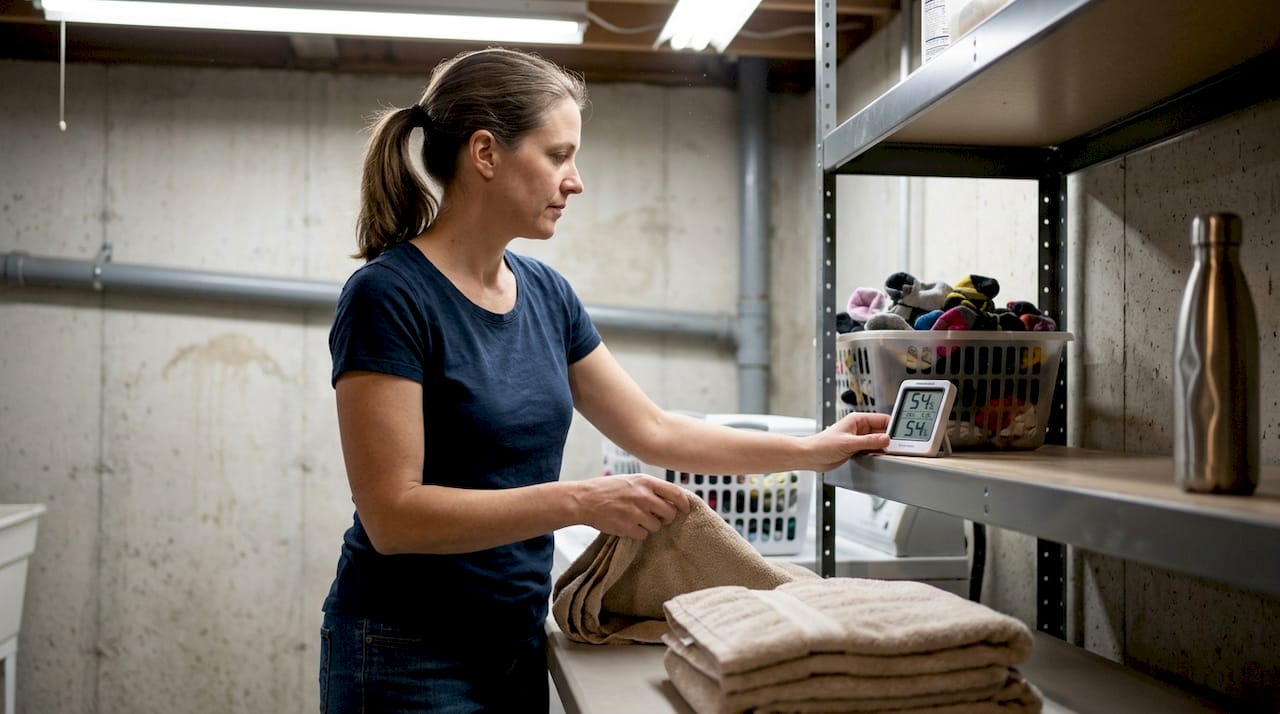
Pro Tip: Use a digital hygrometer in problem rooms. If relative humidity stays above 55% regularly, that space needs active dehumidification, not just better airflow.
Maintain and upgrade HVAC systems
Your HVAC system moves air through every room in the building. If it’s harboring mold, dust, or biological buildup, it’s also distributing odors to every room in the building. This is one of the most overlooked sources of whole-property smell complaints.
Proper HVAC maintenance includes cleaning ducts, coils, and drain pans, upgrading filters, and ensuring adequate ventilation rates. For luxury properties and commercial spaces, UV-C air sanitizers installed inside the air handler offer an advanced layer of odor and pathogen control without chemicals.
Key HVAC odor prevention steps:
- Upgrade to MERV-13 or higher filters to capture finer particles and allergens
- Schedule professional duct cleaning annually, or every six months for high-traffic spaces
- Clean evaporator coils to prevent mold and mildew buildup in the air handler
- Install UV-C lights inside the air handler to reduce biological growth on coils
- Check fresh air intake to ensure outdoor air dilutes indoor pollutants adequately
To prevent HVAC-related odors from spreading through a property, treat the HVAC system as a first-line defense rather than an afterthought.
Pro Tip: If a room smells musty only when the air conditioning runs, the evaporator coil or drain pan is almost certainly the culprit. Don’t just change the filter. Have the coil inspected.
Use eco-friendly adsorbents and neutralizers
Not all odor control products are created equal. Conventional chemical sprays often introduce new VOCs into the space while temporarily masking the original smell. Eco-friendly adsorbents work differently: they trap odor molecules physically or chemically without releasing harmful byproducts.
Research on natural adsorbents like activated carbon, zeolite, and biochar shows reductions in ammonia (NH3) and volatile sulfur compounds (VSCs) of 28 to 51%. That’s a meaningful, measurable result, not a marketing claim.
| Adsorbent | Best use case | Eco rating | Effectiveness |
|---|---|---|---|
| Activated carbon | General VOCs, smoke, pet odors | ★★★★☆ | High |
| Zeolite | Ammonia, moisture-related odors | ★★★★★ | High |
| Biochar | Agricultural and organic odors | ★★★★★ | Very high |
| Plant-based neutralizers | Surface and fabric odors | ★★★★☆ | Moderate to high |
For green odor elimination in luxury homes, yachts, and upscale commercial spaces, these materials integrate cleanly without leaving residue or fragrance. They work passively over time or as part of a targeted treatment.
- Activated carbon pouches placed in closets, cars, and storage areas absorb odors continuously
- Zeolite granules near litter areas or HVAC returns capture ammonia before it spreads
- Biochar panels in crawl spaces or basements reduce moisture-related odor compounds
For a deeper look at eco odor control solutions that go beyond surface treatment, the approach always starts with choosing materials that neutralize rather than mask.
Pro Tip: Activated carbon loses effectiveness once saturated. Replace pouches every 30 to 60 days in active odor zones, or recharge them by placing them in direct sunlight for a few hours.
Site planning and odor source management
For property managers overseeing multiple units or large commercial spaces, where you place odor sources matters as much as how you treat them. Site planning locates odor sources away from sensitive areas and uses physical barriers, enclosures, and separation distances to contain smells before they travel.
This applies at both the macro level (building layout, trash enclosures, loading docks) and the micro level (indoor zoning, kitchen placement, pet areas).
| Strategy | Residential | Commercial | Marine/Yacht |
|---|---|---|---|
| Source separation | Trash rooms away from lobbies | Kitchen exhaust away from HVAC intake | Galley ventilation isolated from cabins |
| Physical barriers | Sealed utility rooms | Enclosed waste stations | Sealed bilge compartments |
| Buffer zones | Laundry room doors | Staff areas separated from guest spaces | Engine room isolated from living areas |
Key site management principles:
- Locate trash and waste areas away from building entrances and HVAC intakes
- Use sealed enclosures for garbage, recycling, and organic waste storage
- Zone pet-friendly areas away from high-traffic corridors and lobbies
- Ensure kitchen exhaust does not recirculate into fresh air intakes
For broader property odor prevention strategies that include site-level thinking, the goal is always to stop odors from traveling rather than treating them after they’ve spread.
Combine prevention with ongoing monitoring
Prevention without monitoring is incomplete. Odor problems often develop gradually, and by the time a guest or resident complains, the issue has already been building for weeks. Scheduled inspections and smart monitoring close that gap.
Here’s a practical monitoring routine for property managers:
- Conduct monthly walkthroughs with a focus on moisture, HVAC performance, and any new odor sources
- Install smart humidity and air quality monitors in high-risk areas like basements, bathrooms, and storage rooms
- Log every odor complaint with location, date, and suspected source to identify patterns
- Schedule seasonal HVAC inspections before peak heating and cooling seasons
- Review adsorbent placements quarterly and replace or recharge as needed
Combining prevention with monitoring produces the most consistent results because it catches problems at the source before they become embedded. Chemical treatments can work faster in an emergency, but sustainable biological and physical methods deliver better long-term outcomes.
For properties where neutral scent best practices are the standard, documentation matters. Keeping records of interventions, inspections, and product applications gives you a clear picture of what’s working and what needs adjustment.
Pro Tip: Assign a specific team member to odor monitoring as part of their regular duties. When it’s no one’s job, it’s everyone’s problem.
Summary: Comparing odor prevention strategies for properties
With all the strategies laid out, a side-by-side comparison helps clarify which approaches fit your specific property type and priorities.
| Strategy | Sustainability | Cost | Effectiveness | Best for |
|---|---|---|---|---|
| Moisture control | ★★★★★ | Low | Very high | All property types |
| HVAC maintenance | ★★★★☆ | Medium | High | Homes, commercial, yachts |
| Eco adsorbents | ★★★★★ | Low to medium | High | Luxury, vehicles, marine |
| Site planning | ★★★★★ | Low (design phase) | High | Multi-unit, commercial |
| Ongoing monitoring | ★★★★★ | Low | Very high | All property types |
| Professional treatment | ★★★★★ | Medium to high | Highest | Persistent or complex odors |
No single method covers every situation. The most reliable results come from layering these strategies: control moisture, maintain HVAC, use eco adsorbents, plan your space intelligently, and monitor consistently. When a problem exceeds what prevention can handle, professional intervention is the logical next step.
Professional help for stubborn and luxury property odors
Some odor problems are too embedded for prevention alone to solve. Tobacco, marijuana, mildew, and pet odors that have soaked into walls, flooring, and HVAC systems need targeted professional treatment to fully eliminate.

At Master Odor Removal, we specialize in green odor elimination services that use certified, eco-friendly methods with no ozone and no chlorine treatments. Our approach is safe for luxury interiors, sensitive materials, and occupied spaces. Whether you manage a high-end residential property, a fleet of vehicles, or a yacht, we bring same or next-day availability and a satisfaction guarantee to every job. For odors that won’t respond to prevention alone, professional odor removal is the fastest path to a permanently fresh environment.
Frequently asked questions
What is the fastest way to prevent odors from developing after a leak?
Immediate moisture control with dehumidifiers and prompt leak repair stops mold from taking hold. Mold establishes within 24-48 hours on wet materials, so speed is everything.
Are plant-based odor neutralizers safer than chemical sprays?
Yes. Natural plant-based neutralizers are safer, more sustainable, and more effective at eliminating odors long-term than chemical masking sprays that simply layer one scent over another.
How often should HVAC systems be cleaned to prevent odors?
For most properties, professional HVAC cleaning once a year is the minimum. High-traffic commercial spaces, marine environments, and properties with known odor history benefit from cleaning every six months.
Do site design and planning really make a difference for preventing odor problems?
Absolutely. Locating odor sources away from sensitive areas and using physical enclosures and separation distances dramatically reduces odor migration and complaints before they start.
Recommended
- Identify signs of persistent odors in luxury properties – Master Odor Removal
- 10 Issues To Ask During a Home Inspection That Can Cause Odor Issues – Master Odor Removal
- MOR Odor Elimination News and Tips for Open Houses – Master Odor Removal
- How to eliminate smoke smell with eco-friendly methods – Master Odor Removal
Recent Comments