
TL;DR:
- Rental car odors persist because molecules bond deeply with porous materials and HVAC components, making them hard to remove. Surface cleaning and air fresheners only mask smells, while chemical neutralization is needed for true odor elimination. Proper documentation and professional treatments help renters protect themselves from unfair charges caused by residual odors.
Rental car odors persist because smoke particles and volatile organic compounds (VOCs) bind deep within porous cabin materials, making them nearly impossible to remove with standard cleaning. The industry term for this process is “odor sorption,” where fabrics, foam, and carpet act as molecular sponges. A quick vacuum and a pine-scented air freshener do nothing to break those chemical bonds. Understanding the science behind persistent smells in rental cars is the first step toward protecting yourself from surprise fees and uncomfortable trips.
Why rental car odors persist in porous cabin materials
The core reason odors linger in rental vehicles comes down to material science. Porous materials absorb odors far more aggressively than leather or hard plastic surfaces. Fabric upholstery, carpet, foam padding, and headliners all contain microscopic fibers that trap odor molecules and release them slowly over days or even weeks.
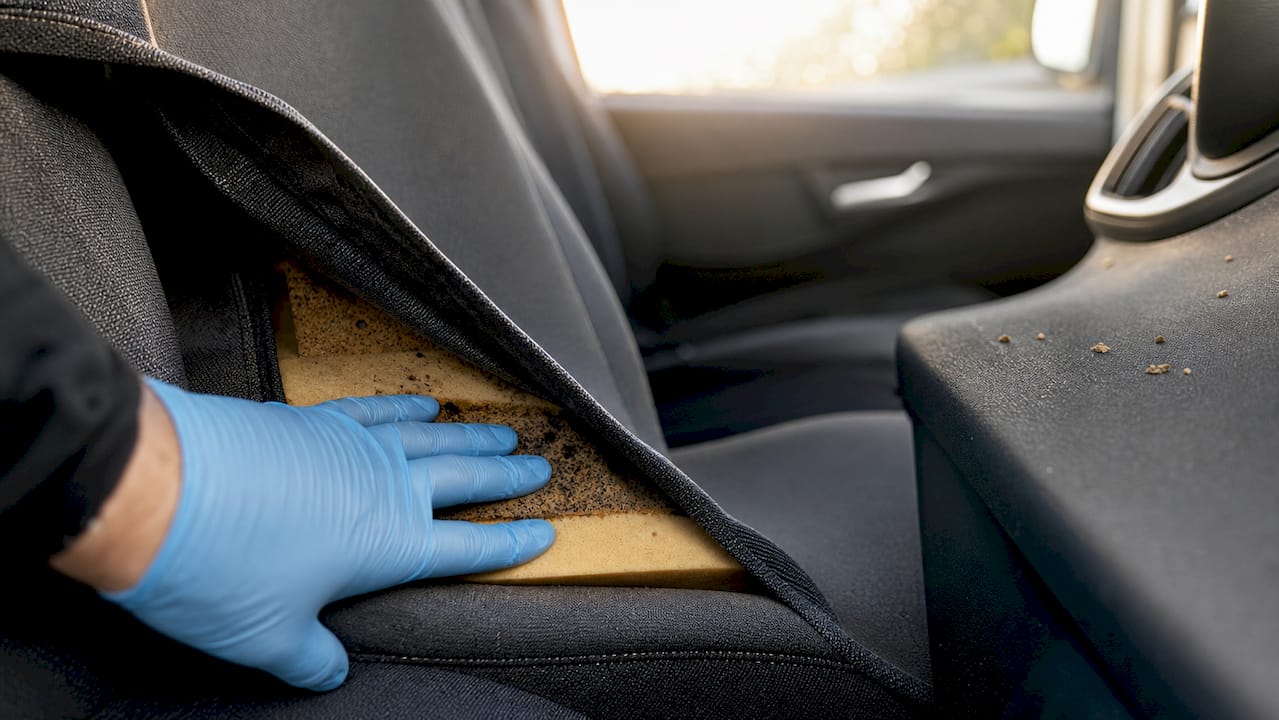
Smoke is the most stubborn offender. Nicotine and tar particles are small enough to penetrate deep into foam padding beneath headliners and under carpet backing. Odor molecules trapped in microscopic fibers slowly off-gas over time, which is why a car can smell fine on day one and noticeably stale by day three. This slow release is called off-gassing, and it defeats any surface-level cleaning attempt.
The HVAC system compounds the problem significantly. Cabin air filters and HVAC evaporator coils trap odors directly, and a contaminated filter recirculates smells every time the fan runs. That means even if the upholstery is treated, an untouched HVAC system will keep pumping odor molecules back into the cabin. Replacing the filter and treating the evaporator coil is often the only way to stop recurring smells.
Here is a breakdown of which cabin components trap odors most aggressively:
- Fabric upholstery and seat foam: Absorbs VOCs, food odors, and smoke at the fiber level
- Carpet and carpet backing: Traps moisture, mildew spores, and tobacco residue in dense weave
- Headliner foam: Nicotine and tar penetrate the backing layer, which is rarely cleaned
- Cabin air filter: Collects airborne particles and distributes them through the ventilation system
- HVAC evaporator coil: Accumulates biological growth and chemical residue from recirculated air
- Leather and hard plastic: Absorb far less but can still hold surface-level odor from spills or smoke film
Pro Tip: Run the HVAC on fresh-air mode with the windows cracked for 10 minutes before judging a rental car’s odor. Recirculated air masks how bad the system actually smells.
Why masking agents and routine cleaning fail to remove odors from rentals
Air fresheners do not eliminate odors. They overlay synthetic fragrances that fade within hours, allowing the original smell to return at full strength. Bio-enzymatic treatments or chemical agents that break down odor-causing molecules at the source are required for effective removal. This is the critical distinction between masking and neutralization.
Standard rental car cleaning follows a predictable sequence: vacuuming, wipe-down, and a spray of scented product. That process removes visible dirt and surface debris. It does not reach the odor compounds bonded to foam fibers two inches below the seat surface. The smell returns within 24 to 48 hours because the source was never addressed.
Fleet operators are recognizing this gap. Hypoallergenic, scent-free odor management protocols are replacing synthetic masking agents across professional fleets, because heavy fragrances trigger allergies and motion sickness in sensitive travelers. Bio-enzymatic formulas that produce a neutral cabin are now the preferred standard. That shift reflects a broader understanding that true odor elimination requires molecular neutralization, not fragrance coverage.
The most effective rental car smell solutions follow this sequence:
- Identify the odor source by checking upholstery, carpet, and HVAC output separately
- Replace the cabin air filter before any other treatment, since a contaminated filter recontaminates everything else
- Apply a bio-enzymatic treatment directly to fabric surfaces, allowing dwell time for the enzymes to break down odor compounds
- Treat the HVAC evaporator coil with an antimicrobial spray introduced through the intake vent
- Ventilate the cabin with outside air for at least 30 minutes after treatment to allow off-gassing to clear
Pro Tip: Bio-enzymatic products require contact time to work. Spraying and immediately wiping defeats the purpose. Follow the dwell time on the label, typically 5 to 15 minutes.
How rental companies detect and remediate persistent odors
Odor detection in rental fleets is largely subjective. Staff members assess returned vehicles by smell, and that judgment varies by individual sensitivity, time of day, and how recently the car was aired out. Documenting odors with photos and notes at pick-up is the most reliable way for travelers to avoid liability for pre-existing smells. Without that documentation, disputes become a renter’s word against a staff member’s nose.
Remediation levels vary widely depending on odor severity. A mildly stale car might receive a vacuum and a filter swap. A vehicle returned after heavy smoking may require full upholstery extraction, HVAC treatment, and in extreme cases, headliner or carpet replacement. Professional remediation costs for severe odor cases can exceed several hundred dollars, driven by labor, specialized equipment, and the time the vehicle sits out of service.
Multi-step cleaning including HVAC treatment and possible component replacement is the industry standard for severe odor remediation. Skipping steps leads to odor rebound, which means the car smells fine for a day and then returns to its previous state. That rebound costs the rental company a second remediation cycle and another day of lost revenue.
| Remediation level | Method | Typical trigger |
|---|---|---|
| Basic | Vacuum, wipe-down, air freshener | Light food or general staleness |
| Intermediate | Cabin filter replacement, fabric spray | Moderate smoke or pet odor |
| Advanced | Bio-enzymatic treatment, HVAC coil treatment | Heavy smoke, mildew, or vaping residue |
| Full restoration | Upholstery extraction, component replacement | Severe or repeated contamination |
For documentation advice that applies beyond vehicles, the same principles used to document past property work apply to rental car pick-up inspections. Timestamped photos and written notes on the rental agreement create a clear record that protects you from unfair charges.
Practical tips for renters to avoid and manage rental car smells
Travelers can take specific steps at every stage of a rental to protect themselves and maintain a comfortable experience.
- At pick-up, document everything. Walk around the interior with your phone camera before signing. Note any existing odors on the rental agreement and ask the agent to initial it. Odor detection subjectivity creates disputes, and your documentation is the only objective record.
- Never smoke or vape in the vehicle. Smoke odor fees are among the most common and most expensive charges renters face. Nicotine bonds to every porous surface in minutes and cannot be removed without professional treatment.
- Run the HVAC on fresh-air mode, not recirculate. Recirculate mode pulls cabin air through the system repeatedly, concentrating existing odors. Fresh-air mode draws outside air in and pushes stale air out.
- Open windows when possible. Ventilation is the simplest and most effective way to reduce odor concentration during your rental period. Even 10 minutes of open-window driving significantly dilutes VOC levels inside the cabin.
- Avoid heavy food in the car. Food odors absorb into upholstery quickly. Strong-smelling items like fast food, fish, or spiced dishes leave residue that compounds existing smells.
- Request a vehicle swap early. If the car smells bad at pick-up, report it immediately and ask for a different vehicle. Waiting until return gives the company grounds to attribute the odor to your rental period.
- Use mild, hypoallergenic products if needed. If you carry a personal odor neutralizer, choose a scent-free, bio-enzymatic formula rather than a heavy fragrance. Heavy scents layer on top of existing odors and can trigger complaints from the next renter.
For travelers who want to understand sustainable odor prevention methods more broadly, the same principles that apply to rental vehicles work across any enclosed interior space.
Key Takeaways
Rental car odors persist because odor molecules bond to porous materials and HVAC components at a molecular level, making surface cleaning and masking agents permanently ineffective without molecular neutralization.
| Point | Details |
|---|---|
| Porous materials are the root cause | Fabric, foam, and carpet trap odor molecules deep below the surface where cleaning cannot reach. |
| HVAC systems recirculate odors | A contaminated cabin air filter or evaporator coil reintroduces smells every time the fan runs. |
| Masking agents fail every time | Air fresheners overlay fragrance temporarily; only bio-enzymatic treatments break down odor compounds. |
| Documentation protects renters | Photographing and noting pre-existing odors at pick-up is the only reliable defense against unfair charges. |
| Professional remediation costs are real | Severe odor cases require multi-step treatment that can exceed several hundred dollars in fees. |
What I’ve learned working with vehicle odors that most renters never consider
Most renters assume a bad-smelling car is a cleaning problem. It is not. It is a chemistry problem. The moment smoke or VOCs enter a fabric interior, they begin forming bonds with the fibers at a molecular level. No amount of vacuuming or air freshener reverses that process. What you are smelling is not dirt. It is chemistry.
The second thing renters consistently misunderstand is the HVAC system. I have seen vehicles where the upholstery was treated correctly, the carpet was extracted, and the car still smelled within 48 hours. Every single time, the culprit was an untreated evaporator coil or a filter that was never swapped. The HVAC system is the lungs of the vehicle. Ignore it and every other treatment is temporary.
Rental companies face a real operational challenge here. Fleet turnaround times are tight, often measured in hours between returns and new rentals. Deep remediation takes time that most fleet schedules cannot absorb. That economic pressure is why so many vehicles get a spray and a vacuum instead of a proper treatment. Renters who understand this are less surprised when a car smells off and more prepared to document it and request a swap.
The practical takeaway is this: protect yourself at pick-up, never introduce new odors, and if a vehicle needs real treatment, know that vehicle odor neutralization requires more than a surface clean. The renters who avoid disputes are the ones who treat documentation like a habit, not an afterthought.
— Master
When a rental car smell needs professional attention
Persistent smells in rental cars sometimes go beyond what any renter or fleet cleaning crew can address with standard products. Masterodorremoval specializes in the permanent elimination of interior odors using eco-friendly, molecular neutralization methods that do not rely on ozone, chlorine, or heavy fragrances.

For rental fleets, dealerships, and individual vehicles with stubborn smoke, mildew, or VOC contamination, Masterodorremoval’s commercial odor removal services deliver same or next-day treatment from licensed professionals. The process targets odor at the molecular level, treating upholstery, carpet, and HVAC components together for results that do not rebound. If a vehicle smells wrong and standard cleaning has already failed, professional molecular treatment is the only path to a genuinely neutral cabin.
FAQ
Why do rental cars smell even after cleaning?
Standard cleaning removes surface dirt but does not reach odor molecules bonded to foam, carpet fibers, and HVAC components. Only bio-enzymatic or molecular neutralization treatments break down those compounds at the source.
What causes the most persistent odors in rental cars?
Tobacco smoke and VOCs from vaping are the most persistent causes, because nicotine and tar particles penetrate deep into porous materials and off-gas slowly over days or weeks.
Can I be charged for a smell I did not cause?
Yes, because odor detection is subjective and staff judgment varies. Documenting pre-existing odors with timestamped photos and written notes on the rental agreement at pick-up is the most reliable way to dispute unfair charges.
Does running the air conditioning make rental car odors worse?
Running the HVAC on recirculate mode concentrates existing odors by cycling the same cabin air repeatedly. Switching to fresh-air mode and opening windows reduces odor levels significantly.
What is the most effective way to eliminate odors from a rental car interior?
Bio-enzymatic treatment applied to fabric surfaces, combined with cabin air filter replacement and HVAC evaporator coil treatment, is the most effective multi-step approach. Surface cleaning or air fresheners alone will not produce lasting results.
Recent Comments