
Trap the odor before it spreads: open a window, aim a box fan outward to pull air from your unit, and run a HEPA plus activated-carbon purifier sized to the room. That handles what’s airborne right now. For smell that keeps coming back, you’re dealing with saturated fabrics, contaminated HVAC ducts, or smoke drifting in from a neighbor, and fixing that usually means deep cleaning, sealing gaps, contacting your landlord, or calling in a specialist like Master Odor Removal.
TL;DR:
- Sealing gaps around outlets, doors, and baseboards can prevent smoke from entering or reentering your apartment through shared walls and entry points.
- Upgrading HVAC filters to at least MERV 13 and running a high-quality carbon filter purifier can significantly reduce recurring odors caused by duct circulation.
- Laundering fabrics with hot water, enzyme detergents, and vinegar, along with baking soda treatments on soft surfaces, helps remove odor trapped in soft furnishings.
- Use negative pressure with an outward-facing fan and a HEPA plus activated-carbon purifier for quick immediate smoke removal, especially within the first hour.
- Professional odor remediation becomes necessary when all DIY measures fail after weeks, especially in cases of deep structural contamination or when preparing for property sale or lease transitions.
Table of Contents
- Quick Actions to Cut Weed Smell in Your Apartment Right Now
- How Do You Get Weed Smell Out of Fabrics and Surfaces?
- Why Does Your HVAC System Keep Bringing the Smell Back?
- Where Is Weed Smell Getting Into Your Apartment?
- What Are Your Rights When a Neighbor’s Smoke Invades Your Unit?
- What a Professional Odor Removal Job Actually Involves
- What Most Advice Gets Wrong About Weed Smell
- When It’s Time to Call in Professional Odor Removal
- Sources
Quick Actions to Cut Weed Smell in Your Apartment Right Now
Speed matters more than intensity in the first hour. Here’s the order that actually works:
- Set up negative pressure. Open a window and point a box fan so it blows air out, not in. One fan pulling air out of the room clears smoke faster than three fans just stirring it around, according to cannabis odor removal guidance from Barney’s Farm.
- Turn on a real air purifier. Not a $30 desktop unit. Look for HEPA filtration paired with a genuine activated-carbon bed, not just a thin carbon-coated mesh. A single gram of activated carbon holds enormous internal surface area for trapping odor molecules, which is why the bed size actually matters.
- Clear physical evidence. Empty ashtrays, bag up trash, and pull worn clothes or blankets into a hamper with a lid.
- Block the door gap temporarily with a towel so smell doesn’t drift into the hallway while you work.
Pro Tip: Skip the scented candles and sprays. They add new smells on top of the old one instead of removing anything, which is why your nose still catches both layers underneath the “clean linen” scent.
How Do You Get Weed Smell Out of Fabrics and Surfaces?
The reason weed smell clings to your couch, curtains, and carpet longer than it lingers in the air comes down to chemistry. Cannabis terpenes are lipophilic, meaning they bond readily with fats and oils, and fabric fibers happen to be full of the kind of surface these compounds love to grip. RethinkTHC’s breakdown of odor chemistry explains why simply airing out a room rarely finishes the job: the smell is sitting inside soft surfaces, not just floating past them.
Removing it takes mechanical and chemical action, not fresh air alone.
- Laundry: wash fabrics in the hottest water the care label allows, using an enzyme-based detergent. Enzymes break down organic residue that regular detergent leaves behind. Add a half-cup of white vinegar to the rinse cycle for stubborn cases, and repeat the wash if you still catch a whiff once things dry.
- Upholstery and carpet: vacuum first with a HEPA-filter vacuum to lift particulates, then sprinkle baking soda and let it sit for several hours before vacuuming again. An enzymatic upholstery spray or a rented steam cleaner handles what baking soda alone can’t reach.
- Curtains and soft throws: treat these like clothing. If they can’t go in a washing machine, a laundromat’s large-capacity machine or a dry-cleaner familiar with smoke odor is worth the trip.
- Hard surfaces: walls and ceilings absorb smoke residue too, especially in a small apartment. Wipe them down with a vinegar solution or diluted TSP, working top to bottom, since ceilings tend to hold the densest smoke reservoir.
One wash rarely solves months of accumulated exposure. Budget for two or three rounds on anything that’s absorbed smoke regularly, and treat quick spot-cleaning as maintenance, not a cure.
Why Does Your HVAC System Keep Bringing the Smell Back?
If you’ve cleaned every fabric in the apartment and the smell still returns within a day, your HVAC system is probably the reservoir. Smoke particles settle on filters, coil surfaces, and duct interiors, then get redistributed every time the system cycles. That’s why a freshly cleaned room can smell smoky again ten minutes after the heat or AC kicks on.
A few fixes address this at different levels:
- Upgrade your filter to at least MERV 13 if your system supports it. Check your building’s HVAC specs first since some older systems can’t handle a dense filter without airflow problems.
- Close the vent in whatever room the smoking happens in, if you can control it, to limit how far particles travel through ducts.
- Run a portable purifier with a substantial carbon bed in that same room continuously rather than only when you notice the smell.
- Replace window-unit filters on a monthly schedule if you rely on a standalone AC unit instead of central air.
If the smell persists after fabric cleaning and filter changes, it’s time to ask your landlord about coil cleaning or professional duct servicing. Document when you first noticed the smell returning and mention that you’ve already replaced filters. That detail moves your request from a vague complaint to a documented maintenance issue, which property managers tend to take more seriously.
Pro Tip: Smoke doesn’t just travel through the air you breathe. Shared HVAC systems, especially in older buildings with connected ductwork, can pull odor from a neighboring unit straight into yours. If ventilation fixes don’t help, ask your building manager whether your unit shares ductwork with adjoining apartments.
Where Is Weed Smell Getting Into Your Apartment?
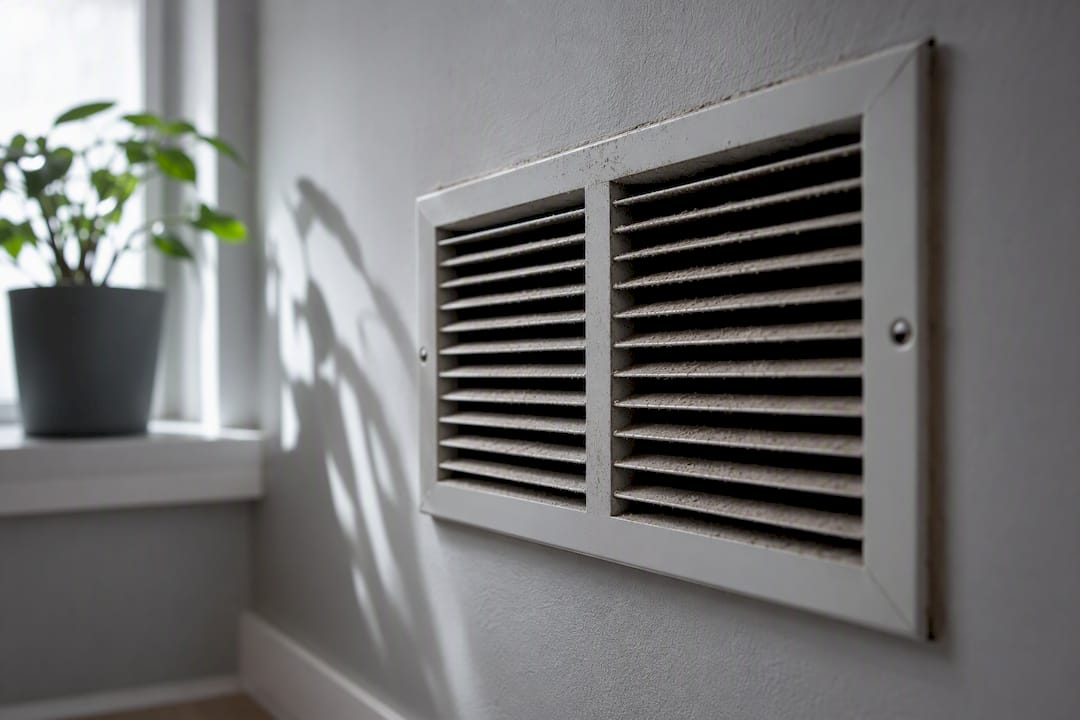
Smoke doesn’t pass through solid drywall. It travels through gaps, and most apartments have more of them than residents realize. Electrical outlets on shared walls, plumbing penetrations under sinks, gaps along baseboards, the space under your entry door, and the trim around HVAC registers are the usual culprits.
Sealing these off is inexpensive and doesn’t require a landlord’s permission for most of it:
- Install foam gaskets behind outlet and light switch covers on shared walls. They cost a few dollars per outlet and take five minutes each.
- Add a door sweep to your entry door and any interior door leading to a hallway or shared airspace.
- Use removable caulk around baseboards and pipe penetrations if your lease allows temporary modifications, and remove it cleanly when you move out.
- Place a draft stopper under doors as an immediate stopgap while you gather the permanent supplies.
If smoke is coming through a shared wall cavity rather than obvious gaps, that’s a fire-blocking issue between units, and it’s a landlord responsibility. Sealing between units for fire code compliance is standard building maintenance, and the American Nonsmokers’ Rights Foundation’s guidance for multi-unit housing recommends raising this specifically as a structural request, not just an odor complaint.
What Are Your Rights When a Neighbor’s Smoke Invades Your Unit?
Start by checking your lease for a no-smoking clause, a nuisance provision, or “quiet enjoyment” language, since most standard leases include at least one of these even without naming cannabis directly. Then start documenting: log the date and time of each incident, note how strong the smell is, take photos if smoke is visible, and get a neighbor or roommate to confirm what you’re experiencing if possible.
A written complaint to management should include:
- Specific dates and times odor was detected
- Any health effects you’ve experienced (headaches, respiratory irritation, sleep disruption)
- Steps you’ve already taken (sealing, purifiers, HVAC filters)
- A clear, specific request: HVAC servicing, a conversation with the neighbor, or enforcement of existing lease terms
Set realistic expectations here. In states where cannabis is legal, police typically won’t intervene over smoke smell alone, which is why legal guidance on neighbor smoke complaints recommends starting with a calm, direct conversation before escalating to management. Landlords and HOAs, on the other hand, can enforce smokefree policies where the lease permits it, and ANR provides a model smokefree lease addendum that tenants can point management toward if no clear policy exists yet. If management won’t act and the smell is documented and ongoing, a tenant rights attorney or local housing authority can advise on next steps, including small-claims options in some jurisdictions.
What a Professional Odor Removal Job Actually Involves
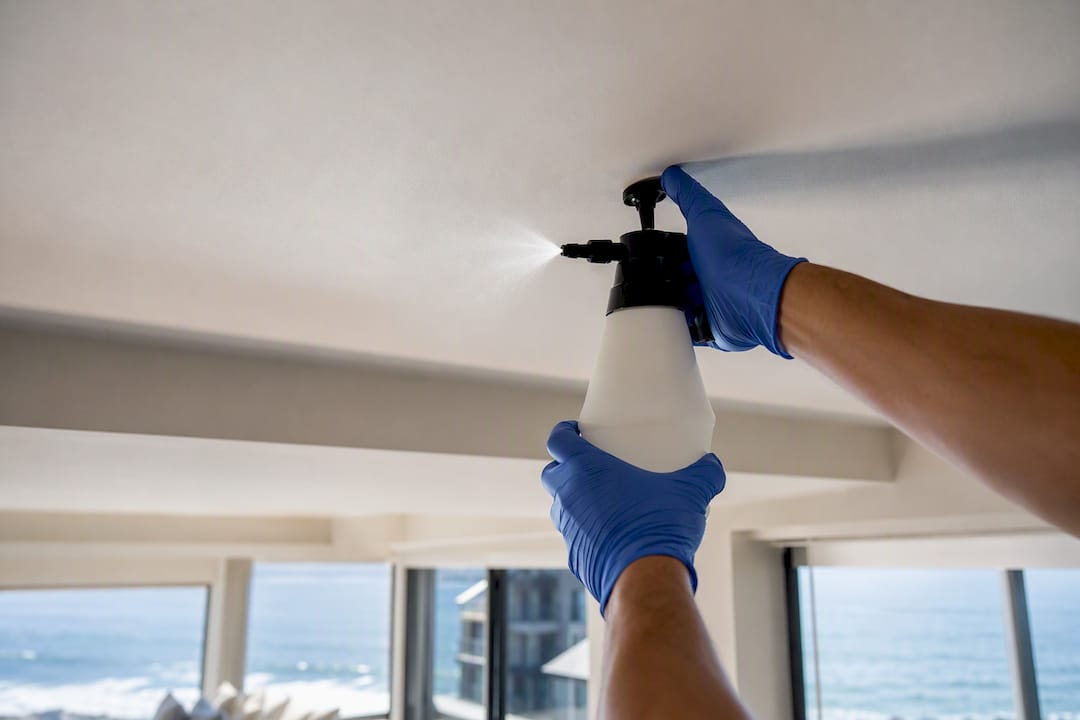
A single night’s smoke usually clears with ventilation and a good purifier within a day or two. Months or years of accumulated exposure is a different problem entirely. Chronic contamination has soaked into drywall, subflooring, and duct interiors in ways no amount of laundry or vinegar reaches. Professionals layer ventilation, targeted surface chemistry, measured carbon adsorption, and HVAC coil remediation, and they reach for safe oxidation only when a space can be sealed and left unoccupied, since ozone at effective odor-removal concentrations is a respiratory irritant unsafe for a lived-in apartment.
What Most Advice Gets Wrong About Weed Smell
Most odor advice treats this like a cleaning problem when it’s really a physics problem. Terpenes bind to fat and protein in fabric and drywall, so scrubbing harder or spraying more product doesn’t help once a surface is saturated. That’s where a lot of tenants waste weeks and money.
The advice that gets underrated is sealing. Everyone reaches for candles and sprays first because they’re immediate and satisfying, but a foam outlet gasket costs less than a candle and solves the actual entry point instead of perfuming the symptom. If you fix one thing this week, seal the gaps before you buy another purifier.
The advice that’s overrated is waiting it out. Chronic smoke exposure doesn’t resolve itself, and drywall and ductwork don’t self-clean. If you’ve sealed, laundered, upgraded filters, and it’s still there after a few weeks, that’s contamination in the structure, not stubborn air. At that point, DIY has done what it can, and the honest move is escalating to your landlord or bringing in someone who can measure and treat what you can’t see.
— Master
When It’s Time to Call in Professional Odor Removal
Sometimes the smell wins even after you’ve done everything right, and that’s your signal to bring in a specialist rather than keep guessing. If odor persists after laundering fabrics, sealing gaps, and swapping HVAC filters, or if you’re prepping a unit for sale or a new lease and can’t risk a lingering smell during showings, professional remediation is the faster and more reliable route. It’s also worth calling in help if anyone in the household has respiratory sensitivity, since secondhand smoke carries many of the same toxic compounds found in tobacco smoke.

Master Odor Removal treats the source, not the symptom, using eco-friendly, green-certified methods with no ozone and no chlorine, so treatment is safe to run in an occupied home rather than requiring you to vacate. The team has handled everything from single apartments to full luxury properties, and same or next-day scheduling means you’re not waiting weeks while the smell sets deeper into your walls and ducts. If a heavier restoration issue is involved, a restoration specialist familiar with smoke damage cleanup can also assess whether structural remediation is needed alongside odor treatment. Request an inspection through Master Odor Removal’s professional odor removal service for homes, condos, autos, and yachts and get a straight answer on what it will take to make your apartment smell neutral again.
Sources
For deeper detail beyond this guide, consult the American Nonsmokers’ Rights Foundation’s multi-unit housing guidance, RethinkTHC’s chemistry-based removal explainer, and Master Odor Removal’s residential and Airbnb odor removal resource.
- Guidance for Secondhand Marijuana Smoke in Multi-Unit Housing – American Nonsmokers’ Rights Foundation
- How to Get Weed Smell Out of House – RethinkTHC
- How Do I Get Rid of Weed Smell Out of a Room – Barney’s Farm
- My apartment smells like weed because of neighbors — what can I do? – LegalClarity
Recommended
- Weed Smell Removal in Apartments (Florida Guide) – Master Odor Removal
- How Do I Get Rid of a Bad Smell in My House? – Master Odor Removal
- Tobacco Smoke and Marjuana Smoke Odor Removal in Homes and Airbnbs – Master Odor Removal
- Professional Odor Removal: Smoke, Marijuana & Musty Odor Answers – Master Odor Removal
Recent Comments