
The top sustainable cleaning methods are microfiber cloths, steam, pH-neutral biodegradable concentrates, targeted disinfecting, refillable and reusable systems, and a short list of DIY recipes built on baking soda, vinegar, hydrogen peroxide, and castile soap. Together they cover most routine cleaning jobs in a home or business without relying on harsh sprays or throwaway packaging.
- Microfiber cloths and mops: daily wipe-downs, dusting, glass, and general surface cleaning.
- Steam cleaning: grout, upholstery, and high-touch spots where you want sanitizing without chemicals.
- pH-neutral concentrates: everyday floors and counters in busy households or commercial spaces.
- Targeted disinfecting: only after illness, raw meat prep, or in clinical-adjacent settings.
- Refillable and reusable systems: cutting plastic waste and cost per use over time.
- DIY recipes: vinegar, baking soda, hydrogen peroxide, and castile soap for most household jobs.
One stat worth remembering: microfiber cloths remove up to 99% of bacteria from hard surfaces using only water, which is why mechanical cleaning belongs at the top of this list before any chemical enters the picture.
Key Takeaways
Sustainable cleaning works best as a layered system: mechanical methods like microfiber and steam handle most jobs, targeted disinfecting covers real risk, and professional treatment steps in when odors are structural rather than surface-level.
| Point | Details |
|---|---|
| Start with microfiber | It removes up to 99% of bacteria from hard surfaces using water alone, cutting chemical use for routine jobs. |
| Match ingredients to tasks | Baking soda scrubs, vinegar descales, hydrogen peroxide disinfects lightly, and castile soap lifts grease. |
| Disinfect only when needed | Reserve EPA-registered disinfectants for illness, raw meat prep, or clinical settings, not daily wiping. |
| Switch gradually to save money | Concentrates and refillable systems lower cost per use and cut packaging waste over time. |
| Call a professional for deep-set odors | Masterodorremoval uses green-certified, non-ozone, non-chlorine methods for odors DIY cleaning can’t reach. |
Table of Contents
- Why Sustainable Cleaning Matters for Health and Air Quality
- Core Sustainable Cleaning Methods and Materials
- Surface-Specific Recipes That Actually Work
- Cleaning vs. Disinfecting: What’s Actually Required
- How to Switch to Sustainable Cleaning Without the Guesswork
- Limitations, Hazards, and When to Call a Professional
- What Professionals Know That DIY Guides Skip
- When DIY Isn’t Enough: Professional Eco-Friendly Options
- Sources
Why Sustainable Cleaning Matters for Health and Air Quality
Indoor air quality and occupant health are the real payoff of green cleaning, not just a feel-good side effect. Conventional sprays and aerosols release volatile organic compounds (VOCs) that linger indoors long after the counter looks clean, and green cleaning approaches reduce this exposure by prioritizing low-VOC, non-toxic ingredients alongside better equipment and staff practices.
There’s an environmental cost too. Conventional chemical cleaners generate substantial hazardous waste and pollution compared with biodegradable, low-toxicity alternatives. That matters more in some spaces than others:
- Schools: children breathe faster and lower to the ground, closer to residue on floors.
- Hospitality: guests notice chemical smells fast, and sensitivities vary widely.
- Home offices and nurseries: small, poorly ventilated rooms concentrate whatever you spray.
Swapping a handful of products for low-VOC alternatives is one of the simplest upgrades a household or facilities team can make this year.
Core Sustainable Cleaning Methods and Materials
Every method on this list does a specific job. Knowing which one to reach for saves time and keeps you from over-relying on chemicals for tasks that plain mechanical action already handles.
Microfiber works through fiber structure, not chemistry. The dense weave grabs dirt and bacteria mechanically, which is why it removes up to 99% of bacteria from hard surfaces using water alone. It shines on glass, counters, and stainless steel. One caveat: microfiber sheds microplastic fibers in the wash, so line-drying or using a laundry filter bag cuts that runoff.
Steam cleaning sanitizes without a single chemical input, and it works well on grout, upholstery, and high-touch hard surfaces where heat can do what a spray bottle can’t. Skip it on unsealed wood, some laminates, and anything heat-sensitive.
pH-neutral, biodegradable concentrates are the workhorse for routine floors and counters in homes and commercial buildings alike. They won’t etch stone or dull finishes the way stronger alkaline cleaners can, which makes them the safer default for daily use.
Pantry staples round out the toolkit, each with a distinct job:
- Baking soda: mild abrasive and odor absorber, good for scrubbing and deodorizing.
- Vinegar: cuts mineral buildup and neutralizes odors on non-porous surfaces.
- Hydrogen peroxide: a milder bleach alternative and light disinfectant.
- Castile soap: a plant-based surfactant that lifts grease and grime.
- Washing soda or borax: stronger alkalis for tougher jobs like grease-cutting or laundry boosting.
Refillable bottles and concentrate systems cut packaging waste and reduce cost per use compared to buying a new spray bottle every time.
Pro Tip: Color-code your microfiber cloths by room or task (one color for bathrooms, another for kitchens) to prevent cross-contamination. Commercial cleaning crews have used this trick for years, and it works just as well in a five-person household.
One safety note: never layer essential oils into cleaning mixes without research. Several common oils sensitize skin and lungs with repeated exposure, and mixing chemistries (bleach with vinegar or ammonia, for instance) can produce toxic gas. Keep formulas simple.
Surface-Specific Recipes That Actually Work
Different surfaces need different formulas, and tested homemade recipes for glass, mildew, grout, and all-purpose cleaning already exist through extension programs, so there’s no need to guess at ratios.
All-purpose spray: mix 1 cup water, 1 cup white vinegar, and a few drops of castile soap in a spray bottle. Use on counters, appliance exteriors, and sealed surfaces.
Glass and mirrors: equal parts water and vinegar in a spray bottle, wiped dry with microfiber for a streak-free finish.
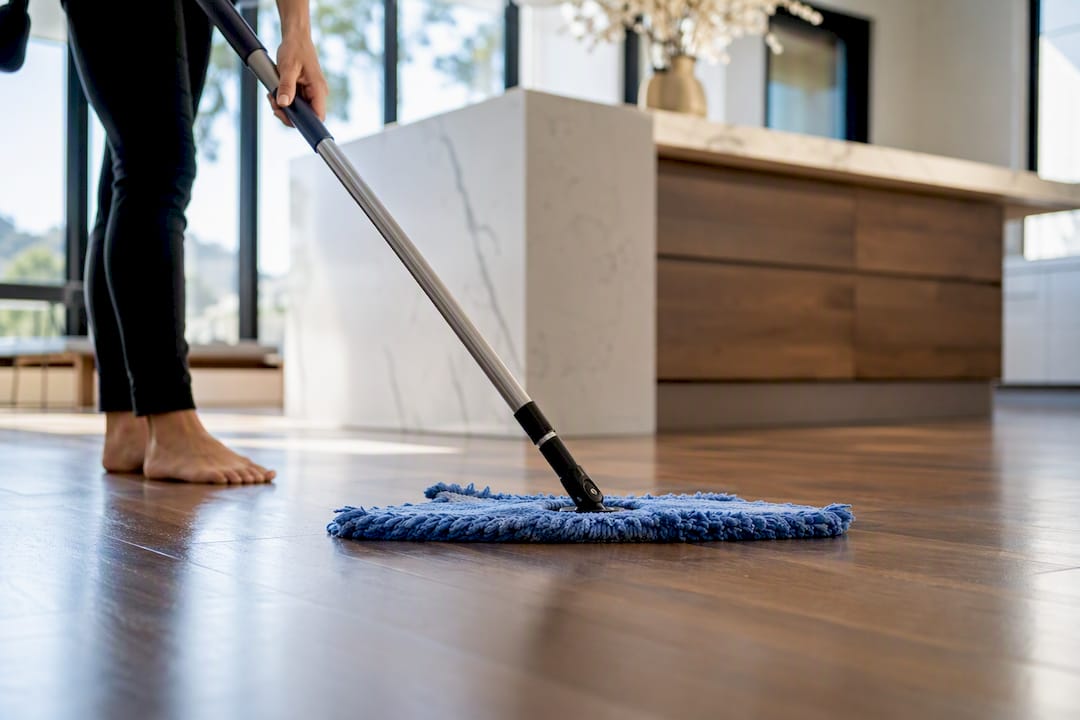
Floors: a few drops of castile soap in a bucket of warm water works for sealed hardwood and tile. Pair it with a microfiber mop for the best result with the least liquid.
Mildew and toilet bowls: baking soda scrubbed on, followed by a vinegar rinse, handles routine mildew and mineral rings.
Drains: half a cup baking soda followed by half a cup vinegar, left to fizz for 15 minutes, then flushed with hot water clears light buildup.
Wood surfaces: skip vinegar here — for the best cleaning methods, check what is the best thing to clean interior doors with to protect wood finishes. Its acidity dulls finishes over time. A drop of castile soap in water, wrung nearly dry on a microfiber cloth, is the safer choice.
Avoid vinegar on natural stone entirely. Marble, granite, and limestone etch on contact with acid, even diluted. Use a pH-neutral stone cleaner instead.
Combining methods beats relying on one. Steam loosens grime in grout lines, then a microfiber wipe with a light vinegar solution finishes the job in half the time either method takes alone.
Pro Tip: Keep one spray bottle labeled and dedicated to each recipe. Reusing bottles across different formulas without rinsing thoroughly is how accidental chemical mixing happens.
Reach for a targeted commercial product instead of a DIY recipe when you’re facing:
- Heavy grease buildup on commercial kitchen equipment.
- Active illness in the household requiring infection control.
- Hazardous spills involving unknown substances.
Cleaning vs. Disinfecting: What’s Actually Required
Cleaning removes dirt and germs by physically lifting them away. Disinfecting kills specific pathogens on a surface. They are not interchangeable, and reaching for a disinfectant every time you wipe a counter is overkill for most routine situations.
Routine daily surfaces (counters, floors, doorknobs in a healthy household) need cleaning, not disinfecting. Disinfection becomes necessary after illness in the home, after handling raw meat in the kitchen, or in clinical and elder care settings where infection risk is higher.
When disinfection is warranted, safer choices include hydrogen peroxide, isopropyl alcohol, and EPA-registered disinfectants used only as directed and only where needed. Never mix bleach with ammonia or vinegar. The combination produces toxic gas, a hazard that shows up in poison control reports every year.
Disinfect when:
- Someone in the house has been sick with a contagious illness.
- Raw meat, poultry, or eggs have touched a surface.
- You’re cleaning up after a pet accident involving bodily fluids.
- A caregiving environment requires infection-control protocols.
How to Switch to Sustainable Cleaning Without the Guesswork
Most homes carry 10 to 15 products doing the same three or four jobs, so the switch usually starts with subtraction, not addition.
- Audit what you have. Pull every bottle out of the cabinet and sort by actual function, not brand name.
- Prioritize swaps. Replace disposable wipes with microfiber, single-use sprays with a concentrate, and standard bottles with refillable ones.
- Train the household or staff. Show everyone which cloth goes where and which recipe handles which job.
- Set a reordering and laundering cadence. Concentrates last longer between purchases; microfiber needs regular washing to stay effective.
A starter kit (concentrate, baking soda, vinegar, castile soap, and a set of microfiber cloths) costs less upfront than most people expect and pays back through fewer repeat purchases and less packaging waste.
- Wash microfiber separately from lint-producing fabrics like towels.
- Skip fabric softener, which coats fibers and reduces their grabbing power.
- Replace mop heads on a set schedule in commercial settings; residential use can stretch longer.
Pro Tip: Air-dry microfiber instead of machine drying it. Heat breaks down the fibers faster and shortens the cloth’s useful life.
Limitations, Hazards, and When to Call a Professional
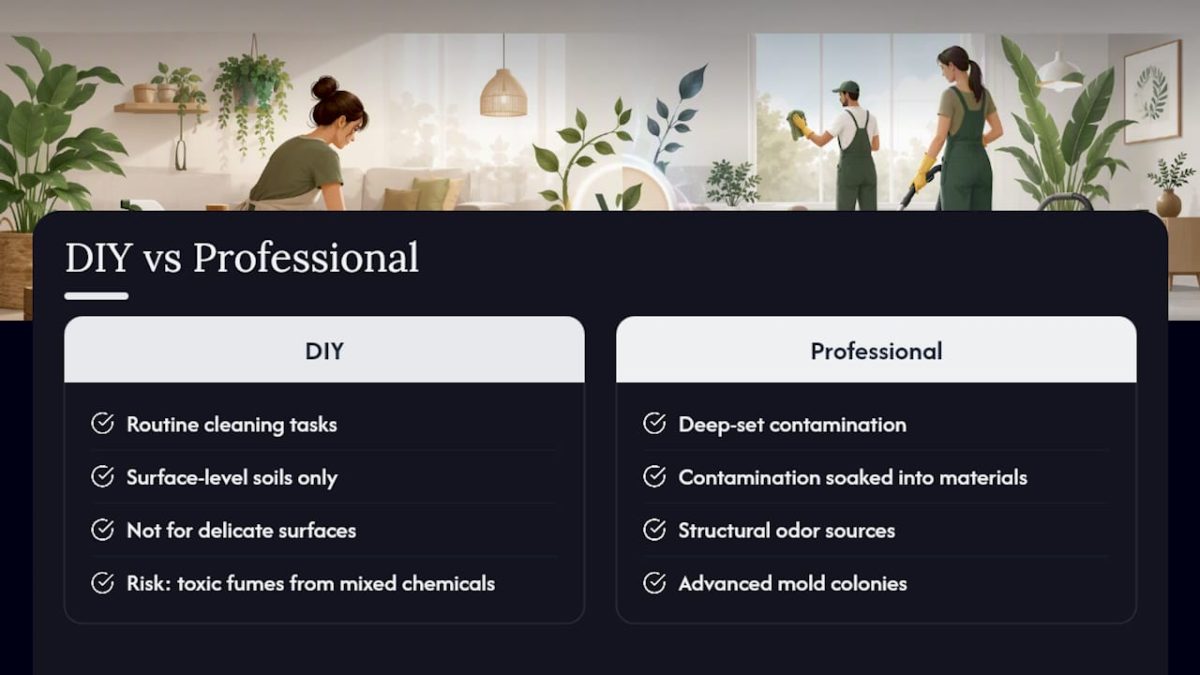
DIY methods handle the vast majority of routine cleaning, but they hit a wall against deep-set contamination, structural odor sources, or biohazard-level messes. Delicate surfaces, advanced mold colonies, and situations requiring true high-level disinfection sit outside what a spray bottle and a cloth can fix.
A few hazards deserve repeating: mixing chemistries can release toxic fumes, some essential oils sensitize skin and airways with repeated contact, and microfiber sheds microplastics in the wash. When odor or contamination has soaked into materials rather than sitting on the surface, a licensed professional using science-backed, non-ozone, non-chlorine protocols is the responsible next step.
What Professionals Know That DIY Guides Skip
Every eco-friendly odor and deep-cleaning job we take on confirms the same pattern this checklist is built around: mechanical methods and low-toxicity formulas solve most problems, and disinfectants get reserved for actual risk, not habit.
What surprises people is how often heavy chemical use is a substitute for the harder work of prevention and maintenance, not an upgrade over it. Professionals lean on risk-based decisions, matching the method to the actual hazard, rather than treating every surface like it’s contaminated.
When DIY Isn’t Enough: Professional Eco-Friendly Options
Sustainable cleaning covers daily maintenance well, but deep-set odors from pets, smoke, or mildew often live inside upholstery, carpet padding, and HVAC systems where a spray bottle can’t reach. That’s a different problem than surface grime, and it needs a different tool.

Masterodorremoval treats those cases with green-certified methods that skip ozone and chlorine entirely, the same health-first approach behind every recipe in this article, just scaled up for stubborn or structural odor sources. This isn’t a replacement for your daily routine. It’s the option for when a smell keeps coming back no matter what you try. For homes, vehicles, or commercial spaces dealing with tobacco, pet, or mildew odors that won’t quit, explore green odor elimination services or check how long a professional treatment typically takes to see if it fits your timeline.
Sources
- Green cleaning – Green Building Alliance
- Clean green: Homemade cleaners – UAEX (UADA)
- Green cleaning – UConn Sustainability
Recent Comments