
Most cigarette odor in a rental unit is fixable without gutting the place: ventilation, HVAC filter changes, and washing every hard and soft surface clear of light-to-moderate contamination within days. The fastest first move is to open every window, kill HVAC recirculation, and pull out curtains and rugs for laundering or disposal. If the smell survives a full top-to-bottom cleaning or ceilings look yellowed, stop DIYing and call a remediation specialist before repainting anything.
TL;DR:
- Proper sequence of cleaning and sealing is essential, with surface cleaning, odor-blocking primer, and repainting as the final step for effective smoke odor removal.
- Replacing HVAC filters immediately and running combination HEPA and activated-carbon purifiers continuously helps eliminate leftover smoke particles and gases from the air.
- Deep cleaning of rarely cleaned areas like inside cabinets, light fixtures, and window tracks is critical, as smoke residue often hides out of sight.
- Heavy contamination, such as from years of smoking, often requires professional remediation, including material removal and eco-friendly odor treatments, especially if DIY efforts fail.
- Keeping detailed documentation, including photos and receipts, supports deposit claims for smoke damage and ensures legal clarity during disputes.
Table of Contents
- The First 24 Hours: A Rental Unit Smoke Smell Checklist
- How Do You Remove Smoke Smell From a Rental Unit?
- HVAC and Air Cleanup: Filters, Purifiers, and Ozone Cautions
- When Should You Call a Professional for Smoke Odor?
- Can You Charge a Tenant’s Deposit for Smoke Damage?
- How Long and How Much Does Smoke Remediation Cost?
- Preventing the Next Smoke Complaint
- What Eco-Friendly Remediation Actually Changes
- Get a Straight Answer on Remediation Before You Repaint Anything
- Sources
- FAQ
The First 24 Hours: A Rental Unit Smoke Smell Checklist
What you do in the first day determines how much work is ahead of you. Smoke particles are still airborne and settling onto every surface, so speed matters more than technique at this stage.
- Open every window and create cross ventilation. Two open windows on opposite walls move air faster than one propped door.
- Position box fans to push air outward, not just circulate it. Aim one fan out a window rather than blowing room air in circles.
- Shut off HVAC recirculation immediately and swap the filter. A smoke-saturated filter keeps reintroducing odor every time the system cycles.
- Pull curtains, rugs, and other soft goods out of the unit. Wash what can be salvaged; bag the rest for disposal before it keeps off-gassing into cleaned rooms.
- Photograph everything before you touch it. Timestamped shots of yellowed walls, ashtrays, or burn marks protect both landlord and tenant if a deposit dispute follows.
None of this fixes the underlying problem. It buys time and stops the smell from soaking deeper into materials while you plan the real remediation.
How Do You Remove Smoke Smell From a Rental Unit?
Order matters more than most people expect. Cleaning wet before dry just smears soot and residue deeper into porous surfaces, and painting over an unsealed wall guarantees the smell returns within weeks. Property-management guides recommend a specific sequence: ventilate, remove porous items, clean top-to-bottom, replace filters, then seal and repaint only at the end.
Start dry, then go wet
- Vacuum and dust every surface first, ceilings included, before introducing any liquid cleaner. Dry particulate spreads if you wet it prematurely.
- Wash ceilings and walls with a heavy-duty degreaser or a diluted vinegar solution, working top to bottom so drips land on areas you haven’t cleaned yet.
- Wipe down every hard surface a second time with plain water to remove cleaner residue that can trap odor molecules.
- Change your cleaning water frequently. Reusing dirty water just redeposits smoke residue instead of lifting it.
Check the spaces people forget
- Inside cabinets and closets, where nicotine residue settles undisturbed for years.
- Behind and around light fixtures and switch plates, since smoke drifts into any gap in the wall.
- Inside window tracks and blinds, both frequent culprits when a room “smells clean but not clean.”
- Door hinges and interior trim, where painted wood traps residue in its grain; a proper cleaning method for interior doors makes a visible difference here.
Soft goods and when to give up on them
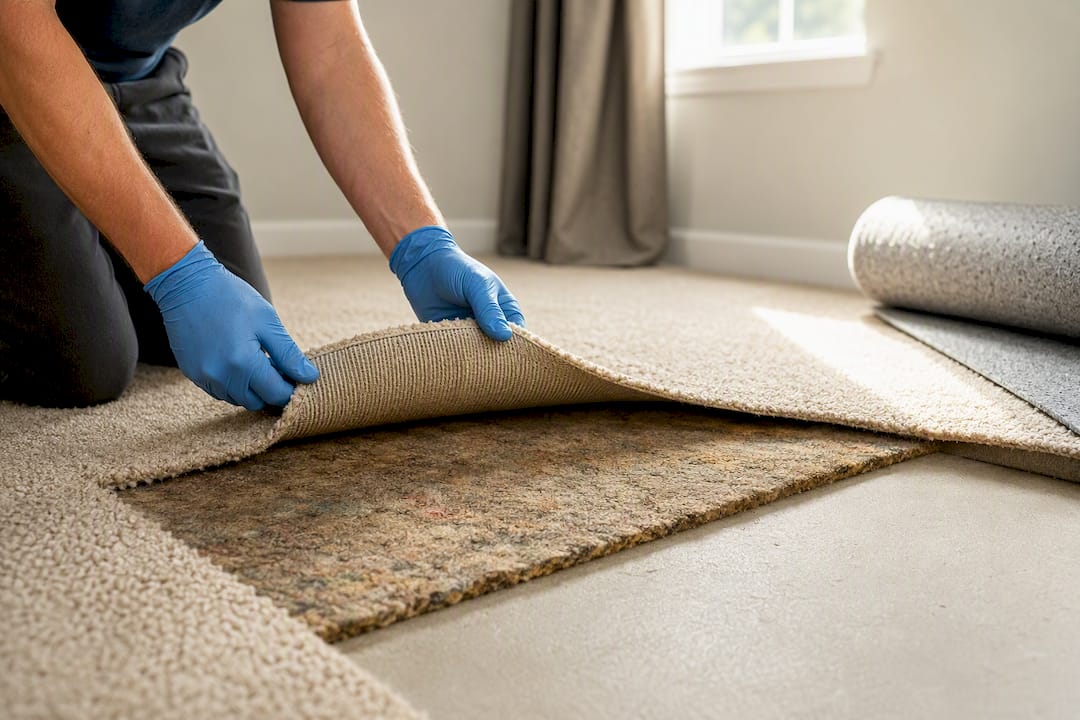
Laundering carpets, drapes, and upholstery in hot water pulls out a meaningful share of residual odor, but hot water alone won’t rescue everything. A carpet pad that has absorbed years of smoke typically needs replacement, not another wash cycle. Drapes that still smell after laundering are usually cheaper to replace than to keep treating. This is the point where DIY hits a wall for heavy contamination: the material itself is the source, and no amount of surface cleaning reaches it.
Sealing before you paint
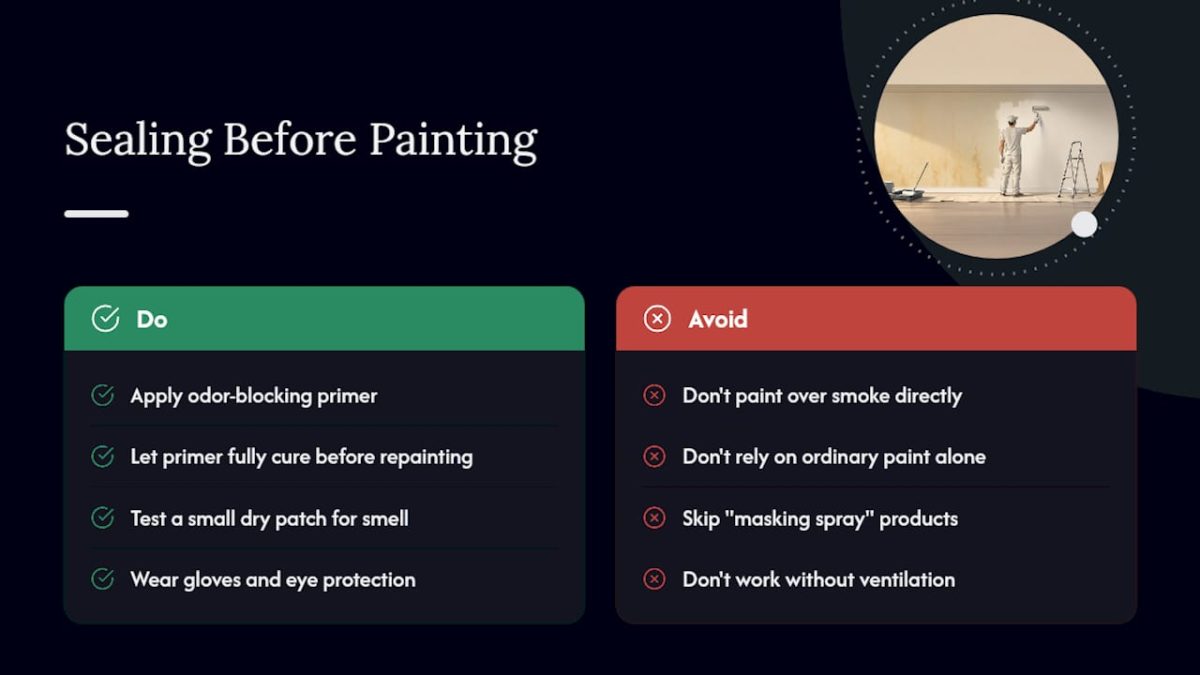
Painting over smoke-stained walls without a step in between almost never works. Thirdhand smoke residue binds to surfaces and continues off-gassing, and ordinary paint doesn’t block that. Apply an odor-blocking primer, let it cure fully, then repaint. Test a small patch first if you’re unsure whether the wall still smells once dry, and wear gloves and eye protection when working with degreasers or primer in a poorly ventilated space. Skip anything marketed as a “masking spray.” It covers the smell for an hour and does nothing about the source.
HVAC and Air Cleanup: Filters, Purifiers, and Ozone Cautions
Replace HVAC filters before you do anything else in this category. A saturated filter recirculates smoke particles every time the system runs, undoing whatever cleaning you’ve already finished.
Once the filter is swapped, run air purifiers that combine HEPA filtration with an activated-carbon layer for several days straight. The EPA’s guidance on home air cleaners draws a clear line between the two technologies: HEPA captures particulates, activated carbon absorbs the gases HEPA can’t touch. You need both layers working together, not one or the other.
- Replace filters immediately, then again after the first week of active remediation.
- Run HEPA plus carbon purifiers continuously for several days in affected rooms.
- Schedule professional duct cleaning if smoke odor persists after surface remediation is complete; residue trapped in ductwork keeps redistributing itself.
- Never introduce an ozone generator into an occupied space.
On ozone specifically: the EPA warns against unregulated ozone generator use indoors, since these devices can neutralize odor while producing harmful byproducts of their own. Ozone belongs, at most, in controlled professional settings with strict re-entry protocols, never as a DIY tool in a unit anyone is living in.
When Should You Call a Professional for Smoke Odor?
DIY has a ceiling, and certain signs tell you you’ve hit it.
- Ceilings or walls still show yellow staining after a full wash.
- The smell returns within days of finishing your cleaning routine.
- Odor is noticeable near HVAC vents even after filter replacement.
- Subfloor or drywall may be permeated, common after years of heavy indoor smoking.
- The unit shows signs of long-term heavy smoking or hoarding on top of the smoke problem.
A professional remediation visit typically includes an inspection to locate the worst-affected materials, targeted removal of anything beyond saving, deep cleaning of hard surfaces, application of odor-blocking primer, and a controlled deodorization step. Ask any company you’re considering three things: what chemicals or equipment they use, whether ozone is part of their process and what re-entry restrictions apply if so, and whether they carry eco-friendly or green-business certification. Master Odor Removal’s tobacco and marijuana smoke service uses non-ozone, non-chlorine methods specifically because occupied and high-end interiors demand a safety margin DIY ozone units don’t offer.
Pro Tip: Get a written estimate that separates labor from material replacement costs. Carpet pad and drywall swaps usually drive the bill higher than the cleaning itself, and a vague quote hides which part you’re actually paying for.
Can You Charge a Tenant’s Deposit for Smoke Damage?
Documentation is what turns a deposit deduction from a dispute into a settled matter. Move-in condition reports with timestamped photos and a signed checklist establish the baseline; without one, a landlord has a much weaker case for claiming smoke damage happened during the tenancy.
- Photograph and date every room at move-in, noting any existing odor or staining in writing.
- Keep itemized receipts and contractor invoices for any remediation work, since most states require documented, reasonable costs to justify a deduction.
- Check your state’s specific security deposit rules before withholding funds. Limits and required notice periods vary widely.
- Include a smoking addendum in the lease defining what counts as smoking on the premises, the cleaning fee structure, and the threshold at which cleaning becomes replacement.
- If a tenant disputes a deduction, local tenant-landlord mediation resources are usually faster and cheaper than small claims court; save legal counsel for genuinely contested, high-dollar cases.
How Long and How Much Does Smoke Remediation Cost?
Timelines split cleanly by severity. Light contamination, a few weeks of light smoking near an open window, typically clears in same-day to 48 hours with the checklist above. Moderate contamination stretches to 2 to 7 days, usually because soft goods need laundering time and primer needs to cure before painting. Heavy, long-term contamination can run several days to weeks, especially once carpet pad or drywall replacement enters the picture.
- DIY costs run lowest for light jobs: mostly cleaning supplies, filters, and laundering time.
- Professional remediation costs scale with what needs replacing, not just cleaning; landlord cost guidance flags carpet pad, HVAC components, and drywall as the biggest line items.
- Recovery paths include deposit deductions with documentation, and for landlords, categorizing remediation as a deductible operating expense rather than a capital improvement in most cases.
Preventing the Next Smoke Complaint
A lease addendum only works if it’s specific. Define what counts as smoking (cigarettes, cigars, vaping, and cannabis if relevant), state the flat cleaning fee that applies if violated, and spell out at what point damage triggers deposit forfeiture beyond that fee.
- Add a no-smoking or smoking-fee clause with explicit dollar amounts, not vague language like “reasonable cleaning costs.”
- Run a periodic inspection, not just move-in and move-out, checking window sills, balconies, and bathroom vents for early smoking evidence.
- Install smoke detectors that also log activity where local law allows, giving you a paper trail before odor becomes a dispute.
- Use a warning-then-fine escalation instead of jumping straight to lease termination. It resolves most cases without turning into a legal fight.
What Eco-Friendly Remediation Actually Changes
Speed and safety pull in opposite directions more often than people realize. Ozone can knock down a heavy smoke smell fast, which is exactly why it gets recommended so often online, but fast isn’t the same as safe in an occupied unit or a property you’re about to hand back to a tenant or buyer.
Non-ozone, non-chlorine methods take a little longer to plan around because they rely on source removal and proper sealing rather than one blunt chemical reaction. For luxury interiors and tight turnover windows, that tradeoff is worth it: no residual chemical byproducts, no extended re-entry restrictions, and no gamble on whether the “quick fix” actually held. The properties that stay odor-free long-term are the ones where every step got documented and every material got treated on its own terms, not blasted with a one-size-fits-all shortcut.
— Master
Get a Straight Answer on Remediation Before You Repaint Anything
Heavy contamination, a luxury unit you can’t afford to get wrong, or a turnover deadline that doesn’t leave room for trial and error: professional odor removal services are built for such situations. Rather than guessing your way through primer and purifiers, you get an inspection that identifies which materials are holding the odor and a plan that may skip ozone entirely.

Booking starts with a straightforward walkthrough: the technician inspects the affected areas, gives you a realistic timeline, and explains which eco-friendly method fits your specific contamination level before any work begins. There’s no ozone byproduct risk to manage afterward and no vague re-entry window to plan your turnover around. If your unit falls into the “cleaned it twice and it still smells” category, request a commercial or residential odor removal quote and get a specific answer instead of another product to try.
Sources
For readers who want the primary guidance behind this article: the EPA’s air cleaner guide and its ozone generator warning cover the safety side. LandlordStudio’s remediation guide and VerticalRent’s odor guide cover practical costs and sequencing. Kirtland Air Force Base’s thirdhand smoke commentary explains why residue lingers.
- Guide to air cleaners in the home | US EPA
- Third-hand smoke and your health | Kirtland AFB
- How to Get Rid of Cigarette Smells and Bad Odors in a Rental Property | LandlordStudio
FAQ
How can I remove smoke smell from a rental property?
Ventilate immediately, remove porous items like curtains and rugs, replace HVAC filters, then clean every hard surface top to bottom before sealing with odor-blocking primer and repainting. Heavy contamination in carpet pad or drywall usually needs professional remediation rather than repeated cleaning.
Can I break my lease if my apartment smells like cigarettes?
It depends on your lease terms and local habitability laws; a persistent, unaddressed smoke odor that a landlord fails to remediate after notice can sometimes support a habitability claim. Document the smell with photos and written notice to the landlord before pursuing any lease exit, and check with a local tenant-landlord agency first.
What should I do if my apartment smells like smoke?
Notify your landlord in writing and, in the meantime, ventilate the space, run a HEPA and activated-carbon air purifier, and avoid masking sprays that only hide the smell temporarily. If the odor traces back to a previous tenant’s smoking, ask what remediation the landlord plans before move-in is considered complete.
Why does my apartment randomly smell like cigarette smoke?
Thirdhand smoke residue embedded in walls, carpet, or ductwork can off-gas intermittently as temperature and humidity shift, which is why a smell can seem to come and go. HVAC systems that recirculate air through a contaminated duct or filter often explain the “random” pattern people notice most.
Recent Comments