
TL;DR:
- Most surface cleaners mask odors rather than eliminate them, making neutralizers essential for true freshness. Activated charcoal and baking soda effectively neutralize specific odors over time when used correctly, but stubborn smells often require professional removal. Combining source removal with proper absorption methods ensures lasting odor control and a healthier indoor environment.
Nobody wants to walk into a room, car, or office and get hit with a smell that cleaning products couldn’t fix. The truth is that most surface cleaners only mask odors rather than eliminate them. Knowing which items that absorb unwanted odors actually work, and how to use them correctly, makes the difference between a space that smells truly fresh and one that just smells like lavender on top of something worse. This guide breaks down the best options, how they work, and when to use each one.
Table of Contents
- Key takeaways
- 1. How to choose the right odor absorber
- 2. Activated charcoal and bamboo charcoal bags
- 3. Baking soda for odor neutralization
- 4. Odor-removing gels, sprays, and plant-based packs
- 5. Natural options: vinegar, coffee grounds, and citrus peels
- 6. Head-to-head comparison of top odor-absorbing items
- My honest take on using odor absorbers
- When DIY isn’t enough: professional odor removal
- FAQ
Key takeaways
| Point | Details |
|---|---|
| Absorption beats masking | Products that neutralize odor molecules outperform sprays that only cover smells temporarily. |
| Activated charcoal lasts longest | Charcoal bags work for up to two years and handle spaces up to 90 square feet. |
| Baking soda needs time | Give it at least 24 hours to start neutralizing acidic odors effectively. |
| Combine methods for tough smells | Pairing absorbers with source removal and enzyme cleaners gives the best results. |
| Natural options have real limits | Vinegar, citrus, and coffee grounds work well as supplements, not as standalone solutions for strong odors. |
1. How to choose the right odor absorber
Before you buy anything, you need to understand one core distinction: absorption versus masking. True odor eliminators absorb or neutralize odor molecules rather than covering them with fragrance. That matters because masking products wear off, often revealing the original smell within hours.
Odors also come in different chemical types. Pet odors and food smells tend to be acidic. Musty smells from mildew are often alkaline. Smoke and chemical odors are a mix. Choosing a product that reacts with the specific type of odor you’re dealing with is what separates a solution from a temporary fix.
Here are the qualities that define an effective odor absorber:
- Chemical neutralization: The product reacts with and breaks down odor compounds
- Adsorption capacity: How many odor molecules it can trap before becoming saturated
- Coverage area: Matched to the size of your space
- Duration: How long it stays active before needing replacement or recharging
- Safety: Non-toxic ingredients, especially for homes with pets or children
Pro Tip: Read labels carefully. If the first ingredient is a fragrance rather than an active neutralizer like activated charcoal or sodium bicarbonate, the product is a masker, not an absorber.
2. Activated charcoal and bamboo charcoal bags
Activated charcoal is one of the most reliable natural odor absorbers available. It works through a process called adsorption, where odor molecules are attracted to millions of microscopic pores on the charcoal’s surface and get trapped there. Unlike baking soda, it doesn’t react chemically with the odor. It physically captures it.
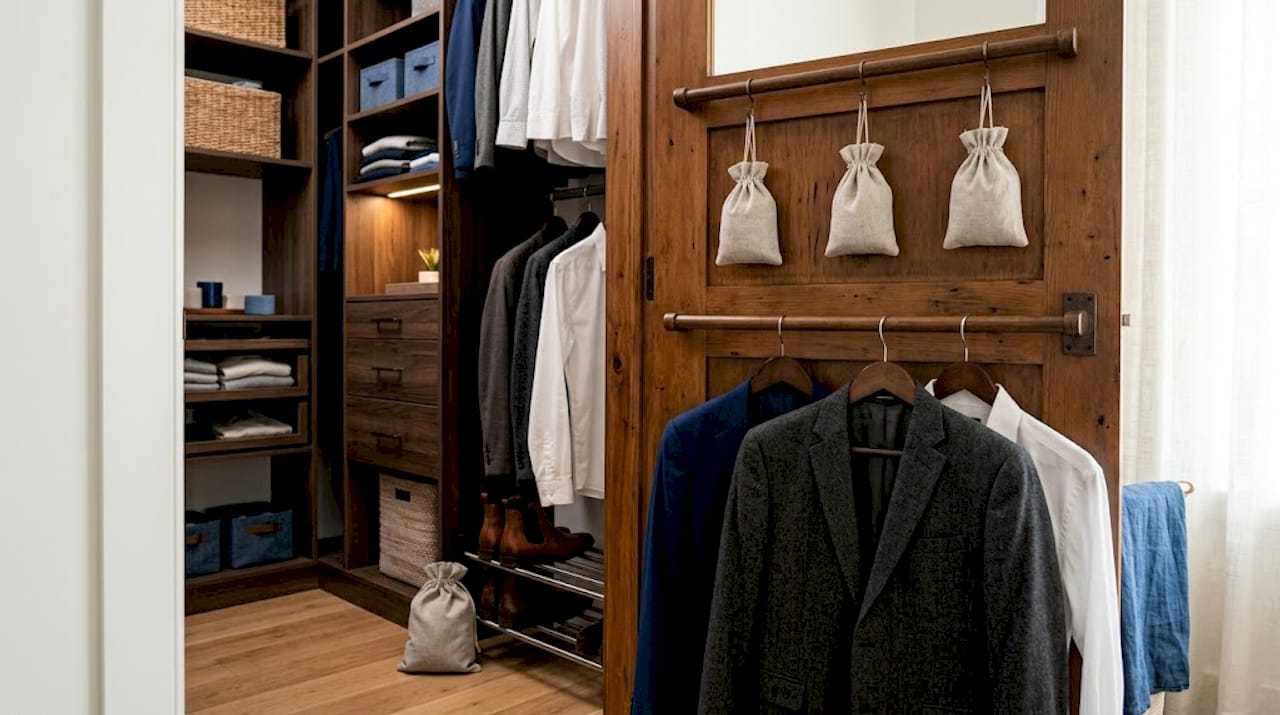
Bamboo charcoal bags are the most common form, and they are practical for everyday use. Charcoal bags cover spaces up to 90 square feet, making them well suited for closets, bathrooms, small bedrooms, and car interiors. They handle musty smells, smoke, chemical odors, and pet dander particularly well.
What sets charcoal apart from most odor absorbing products is its longevity. A quality bamboo charcoal bag can last up to two years when maintained correctly. The key is monthly recharging.
- How to recharge: Place bags in direct sunlight for one to two hours each month. UV exposure releases trapped compounds and restores the charcoal’s capacity.
- Best uses: Closets, gym bags, car seats, under sinks, refrigerators
- Limitations: Slower initial effect than sprays; requires routine sun exposure to stay effective
Pro Tip: Buy multiple small bags rather than one large one. Spreading three or four bags around a room gives more even coverage than concentrating absorption in one spot.
3. Baking soda for odor neutralization
Baking soda, or sodium bicarbonate, works differently from charcoal. Rather than trapping odors physically, it neutralizes acidic odor compounds through a chemical reaction that changes their pH. The result is that the smell itself is broken down, not captured.
This makes baking soda particularly strong against food smells, pet odors, and anything originating from acidic organic compounds. It’s also one of the most affordable and widely available deodorizing household items you’ll find. A box in the refrigerator, a sprinkle on a carpet before vacuuming, or a small dish in a closet are all legitimate applications.
The catch is patience. Baking soda needs at least 24 hours to begin working, and stubborn or deep-set odors may require enzyme cleaners used alongside it. Baking soda alone won’t penetrate deep into fibers or porous surfaces where odor compounds have settled.
- Refrigerator: Replace the open box monthly for consistent freshness
- Carpets and rugs: Sprinkle generously, let sit overnight, then vacuum thoroughly
- Shoes and gym bags: A small pouch of baking soda works better than a dryer sheet
- Closets: Place an open container on a shelf and stir weekly to expose fresh surface area
Pro Tip: For pet accidents on upholstery, apply an enzyme cleaner first to break down the urine proteins, then follow with a baking soda treatment once the surface dries. That sequence is far more effective than either product alone.
4. Odor-removing gels, sprays, and plant-based packs
This category covers some of the most convenient odor absorbing products on the market. Plant-based gels and packs use natural oils and plant extracts that evaporate slowly, neutralizing odors as they disperse. They are not air fresheners. The active compounds bind with odor molecules and eliminate them. These products last 30 to 60 days in small enclosed spaces, making them practical for cars, closets, bathrooms, and diaper pails.
Spray formats work faster. Products designed to chemically neutralize odors can tackle a room-level smell in minutes. Some trash-specific formulas are genuinely impressive on performance. Specialized trash odor fighters can reduce up to 99% of common trash smells and last 45 days on a single application.
Here’s a quick comparison of formats to help you decide:
| Product type | Duration | Best for | Scent profile |
|---|---|---|---|
| Plant-based gel packs | 30 to 60 days | Cars, closets, small rooms | Mild or unscented |
| Odor-neutralizing sprays | Instant, 2 to 6 hours | Rooms, fabrics, trash areas | Light fragrance |
| Bamboo charcoal bags | Up to 2 years | Closets, cars, bathrooms | Fragrance-free |
| Baking soda | 1 to 4 weeks | Fridges, carpets, shoes | Unscented |
Plant-based and unscented options are the better call for people sensitive to fragrances or for commercial and hospitality spaces where a neutral smell is expected. Synthetic sprays work fine for quick results, but they are a short-term tool, not a long-term strategy.
5. Natural options: vinegar, coffee grounds, and citrus peels
These are the kitchen-drawer solutions that genuinely work, within limits. They are not replacements for activated charcoal or baking soda in serious odor situations, but they are effective supplements and great for mild, everyday smells.
White vinegar is an alkaline compound that neutralizes acidic odors on contact. Fill a bowl with undiluted white vinegar and leave it in a room overnight. You’ll notice a real difference with food odors and cigarette smoke. For surface odors, a spray bottle diluted at a 1:1 ratio with water works well on counters, floors, and non-porous surfaces. The vinegar smell dissipates quickly, taking the original odor with it.
Coffee grounds have a dense, complex aroma that physically absorbs surrounding smells. They are commonly used in closets, refrigerators, and cars. The critical rule here: dry coffee grounds completely before placing them anywhere enclosed. Wet grounds grow mold fast, which creates a new problem rather than solving the old one. Place dried grounds in a breathable muslin pouch or small open dish.
Citrus peels provide a light, fresh fragrance while offering modest absorption. They work best in small, enclosed spaces like drawers or trash cans. Replace them every few days before they dry out and lose effectiveness.
A few practical notes:
- Combine vinegar treatment with charcoal bags for musty basement or closet odors
- Use coffee grounds in shoes after a baking soda treatment for deeper deodorizing
- Citrus peels work better as a complement to other items for scent removal, not as a primary solution
6. Head-to-head comparison of top odor-absorbing items
Choosing between these options comes down to your specific situation: the type of odor, the space size, how long you need coverage, and your budget. Here’s the full breakdown:
| Item | Odor types | Coverage | Active duration | Cost range |
|---|---|---|---|---|
| Activated charcoal bags | Musty, smoke, pet, chemical | Up to 90 sq ft | 1 to 2 years | $10 to $25 |
| Baking soda | Acidic, food, pet | Small areas | 2 to 4 weeks | Under $5 |
| Plant-based gel packs | General, pet, food | Small to medium rooms | 30 to 60 days | $8 to $20 |
| Odor-neutralizing sprays | General, trash, fabric odors | Any size | 2 to 24 hours | $5 to $15 |
| White vinegar | Acidic, smoke, food | Room-level | Immediate, overnight | Under $3 |
| Coffee grounds | General absorption | Small areas | 1 to 2 weeks | Under $2 |
| Citrus peels | Mild, supplemental | Very small areas | 3 to 5 days | Minimal |
For a vehicle or small closet with pet or smoke odors, activated charcoal bags give you the most value over time. For a quick fix before guests arrive, a neutralizing spray is the right call. For ongoing refrigerator freshness, baking soda remains hard to beat at its price point. Layering two or three of these based on your timeline and odor type will outperform any single product on its own.
My honest take on using odor absorbers
I’ve worked around interior odors long enough to say this plainly: odor absorbers are tools, not solutions by themselves. The most common mistake people make is placing a charcoal bag or baking soda dish in a space and expecting the smell to disappear. It won’t, if the source is still active.
Good odor control starts with source removal. Ventilate the space, vacuum thoroughly, clean the surface causing the smell. Then bring in the absorbers. In that order, they work dramatically better.
I also want to be honest about timelines. Charcoal and baking soda take time to work. If you place a charcoal bag in your car tonight and check tomorrow morning, you may not notice much. Give it several days. Persistence and patience matter here.
For mixed or extremely stubborn odors, like tobacco that has penetrated upholstery foam or mildew that has settled into a wall cavity, no combination of home products is going to fully resolve the problem. That’s not a failure of the products. It’s simply a situation that requires professional-grade treatment.
My recommendation for maintenance: rotate your charcoal bags monthly for sun recharging, replace baking soda in the fridge every four weeks, and use gel packs as a consistent low-maintenance layer in enclosed spaces. That routine handles about 80% of everyday odor challenges without any effort.
— Master
When DIY isn’t enough: professional odor removal

Some odors are simply beyond what any off-the-shelf product can handle. Smoke that has penetrated walls, pet odor embedded in subflooring, or mildew in a vehicle’s ventilation system are all situations where absorbers and sprays will reduce the smell temporarily, but never fully eliminate it. That’s where Masterodorremoval steps in.
Masterodorremoval provides professional odor elimination using eco-friendly, green-certified methods, without ozone or chlorine. The team handles homes, vehicles, commercial properties, and hospitality spaces with same or next-day service. If you’ve tried the products in this article and the smell keeps coming back, a licensed odor specialist can identify the source, treat it permanently, and restore genuine freshness. Explore their green odor elimination approach for a safer alternative to harsh chemical treatments.
FAQ
What are the best natural odor absorbers for home use?
Activated charcoal bags, baking soda, and white vinegar are the most effective natural odor absorbers for home use. Each targets different odor types, so combining them based on your specific smell and space gives the best results.
How long does it take for baking soda to absorb odors?
Baking soda takes at least 24 hours to begin neutralizing odors. Deep-set smells in carpets or upholstery may require 48 hours or longer alongside an enzyme cleaner.
Can charcoal bags really eliminate odors in a car?
Yes. Bamboo charcoal bags are effective in vehicle interiors because they cover up to 90 square feet and work fragrance-free. Place two or three bags under seats and in the trunk for best coverage, and recharge them in sunlight monthly.
What is the difference between odor absorption and odor masking?
Odor absorption means the product chemically neutralizes or physically traps odor molecules. Masking means a fragrance covers the smell without removing it. Absorbers deliver lasting results; masking products are temporary and often reveal the original smell once the fragrance fades.
When should I call a professional instead of using odor absorbers?
Call a professional when odors persist after consistent use of absorbers over several weeks, or when the source is embedded in structural materials like walls, flooring, or vehicle foam. A professional odor service can treat these situations with methods that DIY products cannot replicate.
Recent Comments