
TL;DR:
- Proper sequencing in rental property updates prioritizes safety and system repairs before cosmetic improvements. This approach prevents rework, enhances curb appeal, and accelerates lease turnarounds, ultimately increasing rental income. Addressing odors with professional treatment and standardizing materials further boosts efficiency and tenant appeal.
Freshening a rental property is the process of preparing and updating a unit to attract quality tenants quickly and command higher rent through targeted repairs, cleaning, and aesthetic improvements. Prospective tenants decide within 9 seconds of viewing a property whether it fits their needs. That window is too short to recover from a bad first impression. The good news is that a structured, hierarchy-based approach, covering safety first, then systems, then aesthetics, produces the fastest results at the lowest cost. Property owners who follow this sequence consistently reduce vacancy periods and justify higher monthly rents.
How to freshen rental properties: what to do before you start
The most common mistake property owners make is jumping straight to paint and décor before confirming the unit is safe and functional. Safety compliance comes first, then system functionality, then aesthetic appeal. Skipping this hierarchy wastes money because cosmetic work gets undone when a plumber or electrician has to open walls later.
Before ordering a single gallon of paint, walk the unit with this checklist:
- Safety systems: Test smoke detectors, carbon monoxide alarms, and GFCI outlets. Confirm all locks, deadbolts, and window latches work. Review security best practices for property managers to catch gaps you might overlook.
- Plumbing and electrical: Check for leaks under sinks, running toilets, dripping faucets, and flickering fixtures. Fix these before any cosmetic work begins.
- HVAC and ventilation: Replace filters, confirm the system heats and cools properly, and check exhaust fans in bathrooms and kitchens.
- Surfaces and structure: Note wall damage, flooring wear, grout condition, and any water staining on ceilings.
Once the inspection is complete, gather your materials. Standardizing paint colors, light bulbs, and fixtures across your rental portfolio speeds future repairs and eliminates matching delays. Choose one warm white or greige for all units and buy in bulk.
Pro Tip: Create a single supply kit per unit type, pre-stocked with your standard paint, hardware, caulk, and bulbs. Reordering becomes a one-click task instead of a scavenger hunt.
Step-by-step interior refresh for a rent-ready unit
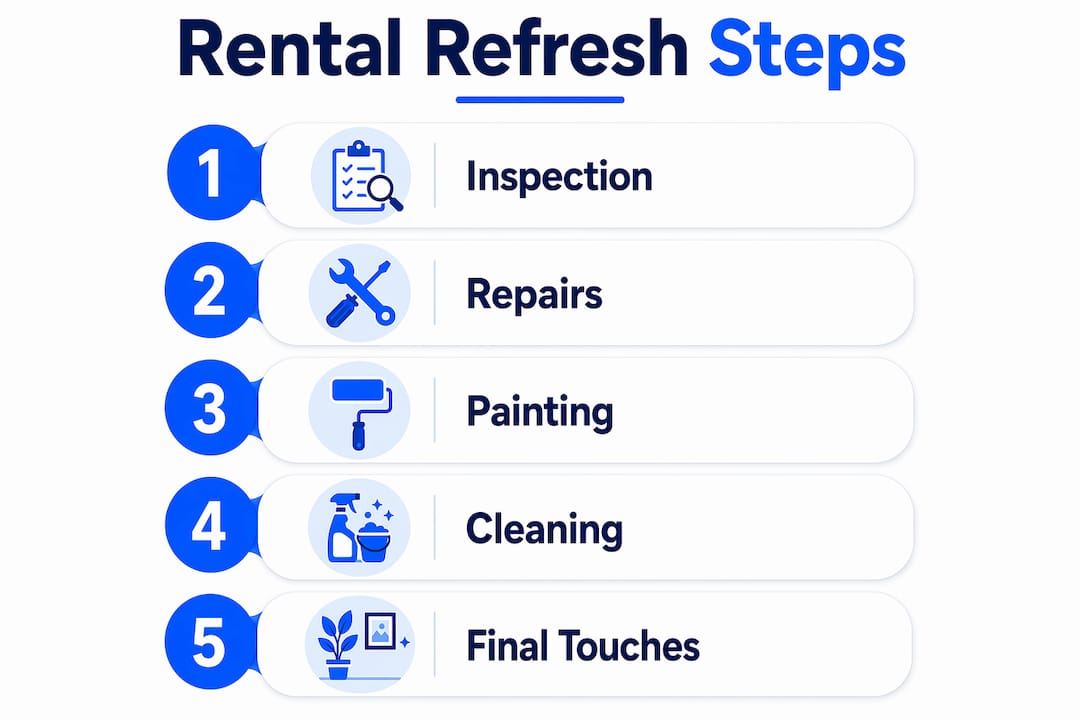
A room-by-room sequence prevents rework and keeps vendors from stepping on each other’s work. Follow this order without exception.
- Complete all repairs first. Fix plumbing, electrical, and structural issues before touching paint or flooring. A patched wall painted over a slow leak will fail inspection and cost double to redo.
- Apply odor-blocking primer. On any surface that held smoke, pet odors, or mildew, apply a shellac-based primer like Kilz or Zinsser B-I-N before painting. These primers seal odor molecules into the substrate so they cannot off-gas after the topcoat dries.
- Paint walls and ceilings. Use warm white or greige tones. Benjamin Moore Swiss Coffee is a proven choice that photographs well and appeals broadly across demographics. Repainting a 3-bedroom unit typically costs $800–$1,500, a modest investment relative to the rent increase it supports.
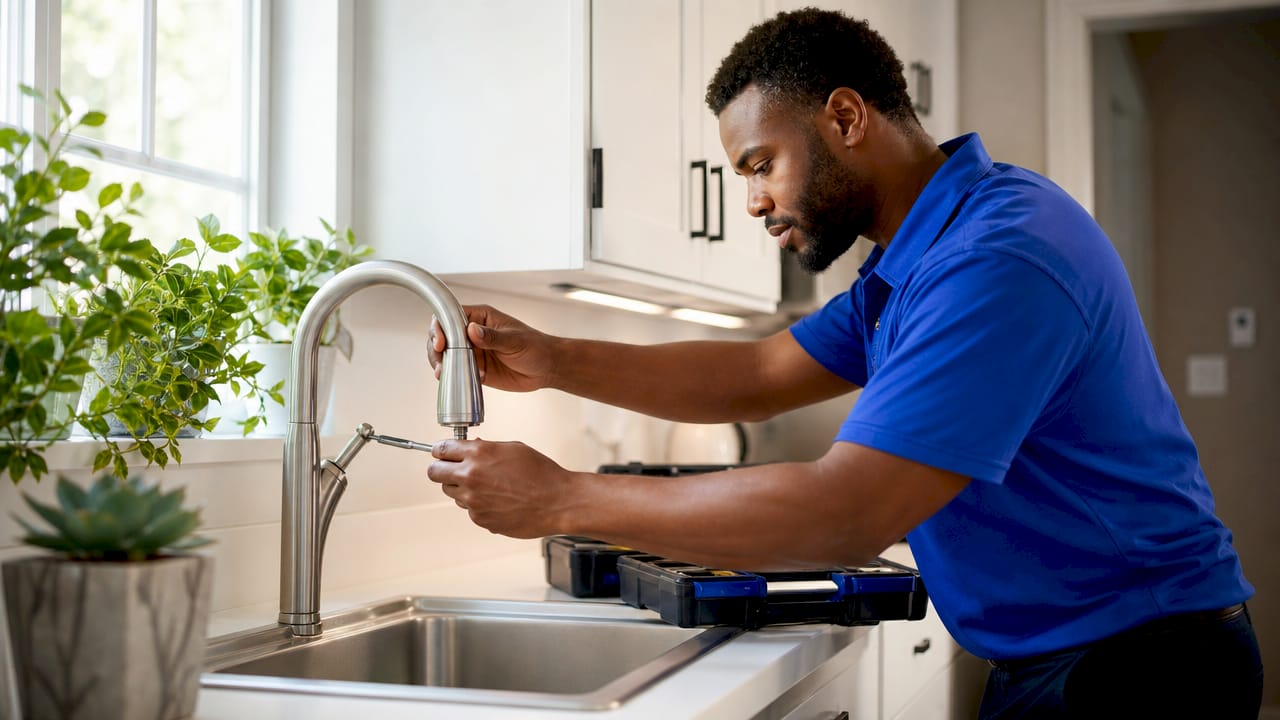
- Update hardware and fixtures. Swap dated cabinet pulls, faucet handles, and light fixtures in kitchens and bathrooms. Hardware updates run $50–$150 per room and deliver a disproportionate visual upgrade.
- Replace or refinish flooring. Address worn carpet, scratched hardwood, or cracked tile before the cleaning crew arrives.
- Deep clean last. Cleaning must happen after all repairs, painting, and flooring are complete. Starting earlier means redoing the work after dust, paint splatters, and debris accumulate.
Pro Tip: In kitchens and bathrooms, replace caulk around tubs, sinks, and countertops as a final step before cleaning. Fresh caulk signals a well-maintained unit and costs under $10 per room.
Kitchens and bathrooms carry the most weight in a tenant’s decision. Prioritize these two rooms for hardware updates, fixture replacements, and thorough grout cleaning. A clean, updated kitchen photograph can be the single factor that drives an inquiry from an online listing.
What exterior updates actually improve rental property appeal?
Curb appeal is no longer just about physical visits. Exterior photos are the first impression for digital listings, and most prospective tenants filter properties online before ever scheduling a showing. A dark, cluttered, or weathered exterior photo kills inquiries before a single conversation starts.
These updates deliver the highest return for the lowest cost:
- Pressure wash everything. Siding, driveways, walkways, and fences look dramatically better after a thorough wash. Rental rates for pressure washing equipment run low, and the visual difference is immediate.
- Paint the front door and trim. A freshly painted door in a current color, such as deep navy, forest green, or classic black, signals a well-maintained property. This single update costs under $100 in materials.
- Upgrade exterior lighting. Replace dim or dated fixtures with LED or solar path lights. Bright, well-lit exteriors photograph better and improve perceived safety.
- Declutter and maintain landscaping. Remove dead plants, trim overgrown shrubs, and add a layer of fresh mulch. Hardscaping elements like clean edging and defined borders require no ongoing maintenance.
- Check the mailbox and entryway. A rusted mailbox or cracked house numbers undermine an otherwise clean exterior. Replace both for under $30.
Low-cost exterior updates like pressure washing and LED pathway lights directly increase digital interest and drive more inquiries. More inquiries mean faster lease-up and less vacancy time.
What mistakes do property owners make when refreshing rentals?
The most expensive mistakes in a rental refresh share one root cause: wrong sequence. Fixing sequence problems costs time and money that proper planning eliminates entirely.
“Landlords who paint before fixing plumbing or electrical end up opening freshly painted walls. The hierarchy exists for a reason: safety, systems, clean, then aesthetics.” — Multifamily Methods
Watch for these specific errors:
- Cleaning before repairs and painting are done. Dust, debris, and paint overspray undo cleaning work instantly. Early cleaning leads to rework and wasted labor hours.
- Choosing pure white paint. Bright white shows every scuff and mark within weeks. Warm whites and greige tones hide normal wear far better and photograph more warmly.
- Ignoring persistent odors. Masking odors with air fresheners fails within days. Pet odors persist in rentals because dander and urine compounds absorb into subfloor materials that surface cleaning never reaches.
- Skipping safety compliance. A unit that looks beautiful but fails a smoke detector check or has a faulty GFCI outlet creates legal liability and delays move-in.
- Overloading vendors without a schedule. Booking painters, flooring crews, and cleaners on the same day without a room-by-room sequence creates bottlenecks and forces vendors to wait on each other.
The fix for most of these errors is a written turnover plan created before the previous tenant moves out. A plan forces the right sequence and prevents reactive, costly decisions.
How to coordinate vendors for fast rental turnovers
Speed matters because every vacant day costs rent. Standard rental turnovers take 5–7 days. Deep turnovers involving painting and flooring require 10–14 days. Major renovations extend to 3–4 weeks. Knowing your category before the tenant leaves lets you book vendors in advance and avoid the scheduling gaps that stretch timelines unnecessarily.
| Turnover type | Typical duration | Key vendors needed |
|---|---|---|
| Light turnover | 5–7 days | Cleaner, handyman, touch-up painter |
| Deep turnover | 10–14 days | Painter, flooring crew, cleaner, odor specialist |
| Major renovation | 3–4 weeks | Contractor, plumber, electrician, painter, cleaner |
Book vendors before the move-out date whenever possible. Painters and flooring crews in high-demand markets fill their schedules weeks out. A room-by-room sequence lets multiple vendors work simultaneously. For example, a painter can work in the living room while a plumber finishes the bathroom, as long as the cleaning crew is scheduled last.
Pro Tip: Ask your painter and flooring vendor to confirm their end date in writing. Build your cleaning appointment around that confirmed date, not an estimate. One-day scheduling errors cascade into multi-day delays.
Standardizing all materials and fixtures across units also accelerates turnovers. When every unit uses the same paint color and hardware finish, touch-up work takes hours instead of days.
Key Takeaways
Freshening a rental property effectively requires a fixed sequence: safety and systems first, then repairs, then paint and odor treatment, then final deep cleaning, with curb appeal and vendor coordination running in parallel.
| Point | Details |
|---|---|
| Safety and systems first | Fix plumbing, electrical, and compliance issues before any cosmetic work begins. |
| Odor treatment before painting | Apply odor-blocking primer on smoke or pet-affected surfaces before the topcoat. |
| Neutral paint drives higher rent | Warm whites and greige tones photograph well and justify $50–$150 monthly rent increases. |
| Clean last, always | Deep cleaning after all trades finish prevents rework and wasted labor. |
| Curb appeal wins digital listings | Pressure washing and LED lighting improve exterior photos and drive more tenant inquiries. |
What I’ve learned from years of rental turnovers
The hierarchy is everything. Property owners who skip it pay for it twice, once to do the wrong thing and again to undo it. I have seen freshly painted kitchens torn open for plumbing repairs and cleaning crews called back because a flooring crew ran a day late. The sequence is not a suggestion. It is the only way to run a tight turnover.
The detail most owners underestimate is odor. A unit can look perfect and still sit vacant because of a smell a prospective tenant noticed in the first 30 seconds. Odor-free environments command premium rents because tenants associate neutral air with cleanliness and care. Primer alone handles surface-level smoke and pet odors. But when odors have penetrated subfloor materials, drywall, or HVAC systems, primer is not enough. That is when professional treatment becomes the faster and cheaper option compared to repeated DIY attempts.
Standardizing materials across a portfolio is the other habit that separates efficient operators from reactive ones. When every unit uses the same paint, the same hardware finish, and the same bulb type, a maintenance call becomes a 20-minute fix instead of a two-hour sourcing exercise.
Finally, do not underestimate the digital marketing value of a clean exterior. The photo of your front door is competing with every other listing in your market. A $100 paint job on that door can be the reason a prospective tenant clicks your listing instead of the next one.
— Master
When professional odor removal makes the difference
Property owners who handle repairs, paint, and cleaning in-house often hit one wall they cannot solve alone: persistent odors from tobacco, pets, or mildew that survive every surface treatment.

Masterodorremoval specializes in permanent odor elimination for rental properties, using eco-friendly, green-certified methods that avoid ozone and chlorine treatments. The process targets odor compounds at the molecular level, including those embedded in subfloor materials, drywall, and HVAC systems, without leaving chemical residue behind. Same-day and next-day appointments mean odor treatment fits inside your existing turnover timeline without adding vacancy days. For property owners managing tobacco or smoke odors between tenants, Masterodorremoval delivers results that primer alone cannot match.
FAQ
How long does a standard rental refresh take?
Standard turnovers take 5–7 days. Deep turnovers with painting and flooring require 10–14 days. Booking vendors before move-out reduces this timeline significantly.
What paint color works best for rental properties?
Warm whites and greige tones like Benjamin Moore Swiss Coffee work best. They photograph well, hide normal wear, and appeal to the widest range of prospective tenants.
Why do odors return after painting a rental unit?
Paint alone does not seal odor compounds. Smoke and pet odors absorb into drywall and subfloor materials. Odor-blocking primers like Kilz or Zinsser B-I-N must be applied before the topcoat to prevent off-gassing.
What exterior update delivers the highest return?
Pressure washing siding, driveways, and walkways delivers the highest visual return for the lowest cost. Combined with a freshly painted front door, these two updates improve both physical and digital first impressions.
When should I call a professional odor removal service?
Call a professional when odors persist after priming and repainting, or when pet odors have penetrated subfloor materials or HVAC systems. Surface treatments cannot reach these embedded compounds.
Recent Comments