
For occupied homes, offices, or vehicles you can’t vacate, hydroxyl generators are the safer bet. For a vacant property or car that needs a fast, aggressive shock treatment, ozone works quicker and costs less to run. Both oxidize odor molecules, but they carry different exposure risks, different material effects, and very different timelines.
TL;DR:
- Ozone penetrates deeply into fabrics and ductwork but requires evacuation due to health risks at effective concentrations.
- Hydroxyl generators are safe for occupied spaces but work more slowly and are less effective on deeply soaked materials like urine.
- Ozone can cause material damage, including cracking rubber and fading textiles, while hydroxyl treatment is gentler on delicate surfaces.
- For heavily contaminated vacant spaces, ozone offers faster results, but in occupied or sensitive environments, hydroxyl is the safer choice.
- Combining ozone and hydroxyl is unsafe; a typical approach is to use ozone unoccupied first, then apply hydroxyl during reoccupation for residual odor control.
Table of Contents
- Ozone vs Hydroxyl Comparison: How Each Technology Actually Works
- Ozone Safety Limits and Occupancy Rules You Can’t Skip
- Effectiveness by Job: Smoke, Mold, Pets, Vehicles, and Sensitive Interiors
- A Decision Checklist for Picking Ozone or Hydroxyl
- Runtime, Ventilation, and Cost: What to Actually Budget For
- Can You Combine Ozone and Hydroxyl, or Should You Pick One?
- Why Master Odor Removal Leans Away From Ozone
- Get a Safer, Faster Odor Solution Without the Ozone Risk
- Sources
- FAQ
Ozone vs Hydroxyl Comparison: How Each Technology Actually Works
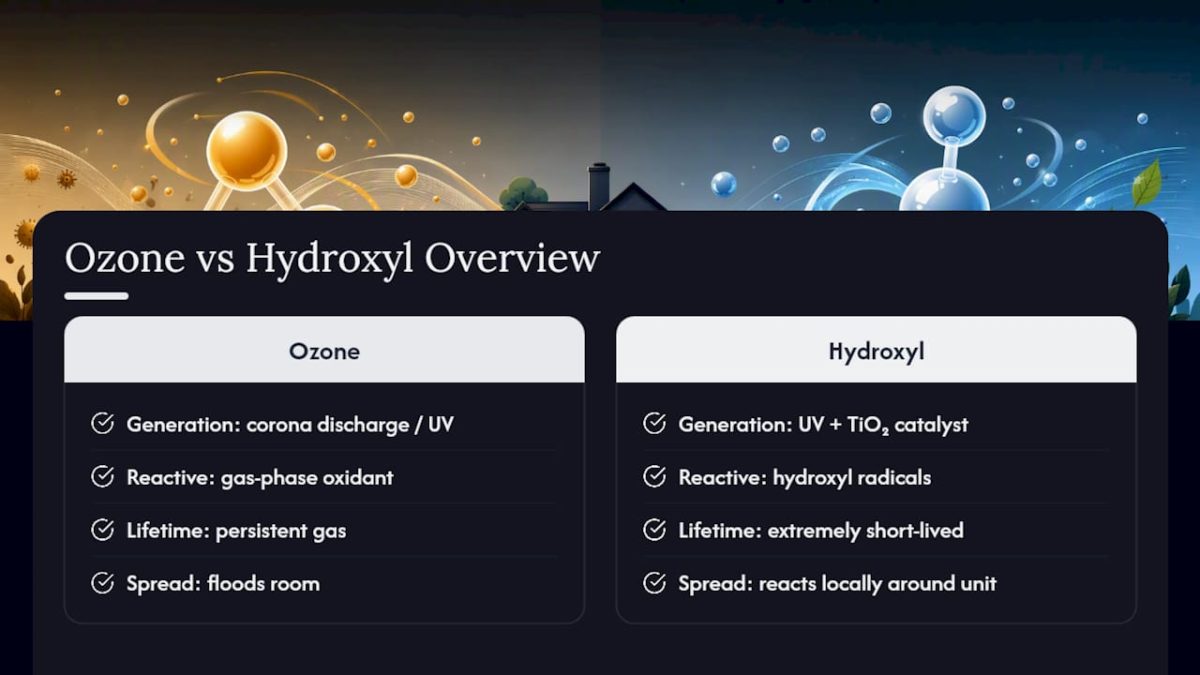
Ozone (O3) is a reactive three-oxygen molecule generated by corona discharge or UV lamps inside the unit. It’s an aggressive gas-phase oxidant that breaks apart organic compounds on contact, including the ones causing smoke, mildew, and pet odors. That same aggression is why it’s corrosive at the concentrations needed to actually kill odors.
Hydroxyl generators work differently. They pair UV light with a titanium dioxide catalyst and ambient humidity to produce hydroxyl radicals, the same short-lived oxidants that scrub pollutants out of the atmosphere. These radicals are extraordinarily reactive but live for only microseconds, so they react locally, right around the unit, rather than flooding a whole room the way ozone gas does.
Practically, that means ozone penetrates fabric, carpet, and HVAC ductwork more thoroughly because it’s a persistent gas that spreads. Hydroxyl treatment leans on air circulation and unit placement to reach the same odor sources, which is one reason jobs run longer. Ozone leaves no significant residue once it reverts to oxygen; hydroxyl treatment produces trace byproducts consistent with normal air chemistry.
Ozone Safety Limits and Occupancy Rules You Can’t Skip
The EPA is direct on this point: ozone generators marketed as air cleaners produce concentrations that can harm people and animals at the exact levels needed to eliminate odors, and the agency does not recommend them for occupied spaces. OSHA’s general industry exposure guidance keeps workplace ozone limits in the range of a fraction of a part per million over an eight-hour shift, which is far below what’s used for odor remediation. That gap is the entire reason ozone jobs require evacuation.
Hydroxyl units are built for the opposite scenario. Because they generate radicals at low, continuous concentrations rather than saturating the air with gas, manufacturers sell them for use in occupied homes, hotel rooms, and offices. That doesn’t mean zero caution. Sensitive occupants, infants, and anyone with respiratory conditions still warrant some monitoring, and rooms should stay ventilated during treatment.
Pro Tip: If you’re unsure whether a space qualifies as “occupied” for insurance or liability purposes, treat pets and plants as occupants too. Both react to ozone at concentrations people can tolerate.
Material compatibility separates the two further:
- Rubber and gaskets: Ozone accelerates cracking and degradation, a well-documented effect tracked by air quality regulators.
- Electronics: High ozone concentrations can corrode exposed metal contacts and circuit boards over repeated exposure.
- Fabrics and dyes: Ozone can fade or bleach certain textiles; hydroxyl treatment is gentler on delicate upholstery and leather.
- Humidity sensitivity: Hydroxyl output drops in dry air since the photocatalytic reaction depends partly on ambient moisture.
Effectiveness by Job: Smoke, Mold, Pets, Vehicles, and Sensitive Interiors
Ozone wins on raw speed for unoccupied, heavily contaminated spaces. A fire-damaged vacant home, a foreclosed property with years of smoke saturation, or a rental car returned reeking of cigarettes are textbook ozone jobs: shock the space, ventilate, done in a single shift. Restoration professionals commonly reach for ozone specifically because it compresses a multi-day job into hours when nobody’s living or working in the space.
Hydroxyl earns its place in occupied remediation: hotels mid-renovation with guests still checking in, hospital wings that can’t shut down, office buildings running normal hours. It’s slower but doesn’t force anyone out the door.
Some jobs beat both technologies regardless of which oxidizer you choose. Deeply saturated pet urine that’s soaked into subflooring or padding needs physical source removal first. No amount of gas-phase or radical oxidation reaches urine crystals bonded to wood fiber. That’s a documented limitation of ozone-only treatment that applies just as much to hydroxyl.
- Smoke and fire damage: Ozone for unoccupied shock treatment; hydroxyl for occupied post-fire lingering odor.
- Mold and mildew musk: Both oxidize surface odor compounds, but neither replaces mold remediation and moisture control.
- Vehicles: Ozone works fast for unoccupied dealership turnaround; hydroxyl suits rideshare vehicles that need treatment between passengers.
- Healthcare and hospitality: Hydroxyl is the default where continuous occupancy is non-negotiable.
A Decision Checklist for Picking Ozone or Hydroxyl
- Check occupancy first. If people, pets, or plants are present and can’t be relocated for 12 to 24 hours, hydroxyl is your starting point, not ozone.
- Weigh your timeline. Need the space usable again by tomorrow morning with nobody in it overnight? Ozone’s speed advantage becomes decisive here.
- Inspect materials. Rubber seals, exposed electronics, or vintage fabrics push the decision toward hydroxyl to avoid degradation.
- Confirm humidity levels. Very dry environments (arid climates, winter heating season) reduce hydroxyl output; factor in a humidifier or longer runtime.
- Check insurance and facility rules. Some property managers and insurers prohibit ozone use in occupied units outright, which settles the question for you.
- When odor source and severity are unclear, get a professional assessment before running either technology. Guessing wastes equipment time and sometimes makes the smell worse temporarily.
If two factors point in opposite directions, default to whichever option minimizes exposure risk and material damage. That’s almost always hydroxyl, with ozone reserved for clearly unoccupied, time-pressured jobs.
Runtime, Ventilation, and Cost: What to Actually Budget For
Ozone shock treatments typically run for several hours to overnight, followed by a ventilation period before reentry, while hydroxyl treatment runs longer over multiple days due to its lower intensity operation.
- Ozone consumables: Generator plates and occasionally UV bulbs, replaced periodically based on runtime hours.
- Hydroxyl consumables: UV bulbs and catalyst cells wear down and need swapping on a maintenance schedule.
- Airflow matters for both: Fans and open floor plans help ozone disperse and help hydroxyl radicals reach more surface area, since their effect is highly localized to where they’re produced.
- Humidity cost: Running a humidifier alongside a hydroxyl unit in dry conditions adds a small operational cost but meaningfully improves output.
Pro Tip: Track total treatment time against a firm move-in or reopening date before you commit to hydroxyl for a large space. If the timeline doesn’t have multiple days of slack, ozone plus a longer ventilation buffer may finish faster overall.
Can You Combine Ozone and Hydroxyl, or Should You Pick One?
A common professional sequence works well: physically remove the odor source, run ozone shock treatment while the space is unoccupied, ventilate thoroughly, then bring in hydroxyl units during reoccupation to manage any lingering trace VOCs. That’s sequencing, not simultaneous use.
Never run both technologies in the same space at the same time. The chemistry of ozone gas reacting with actively generated hydroxyl radicals isn’t well characterized, and there’s no established safety data to justify the risk. Absolute no-go situations include occupied spaces with infants, elderly residents, or anyone with respiratory illness present during ozone treatment, and any property where insurance or local code bans ozone outright.
Why Master Odor Removal Leans Away From Ozone
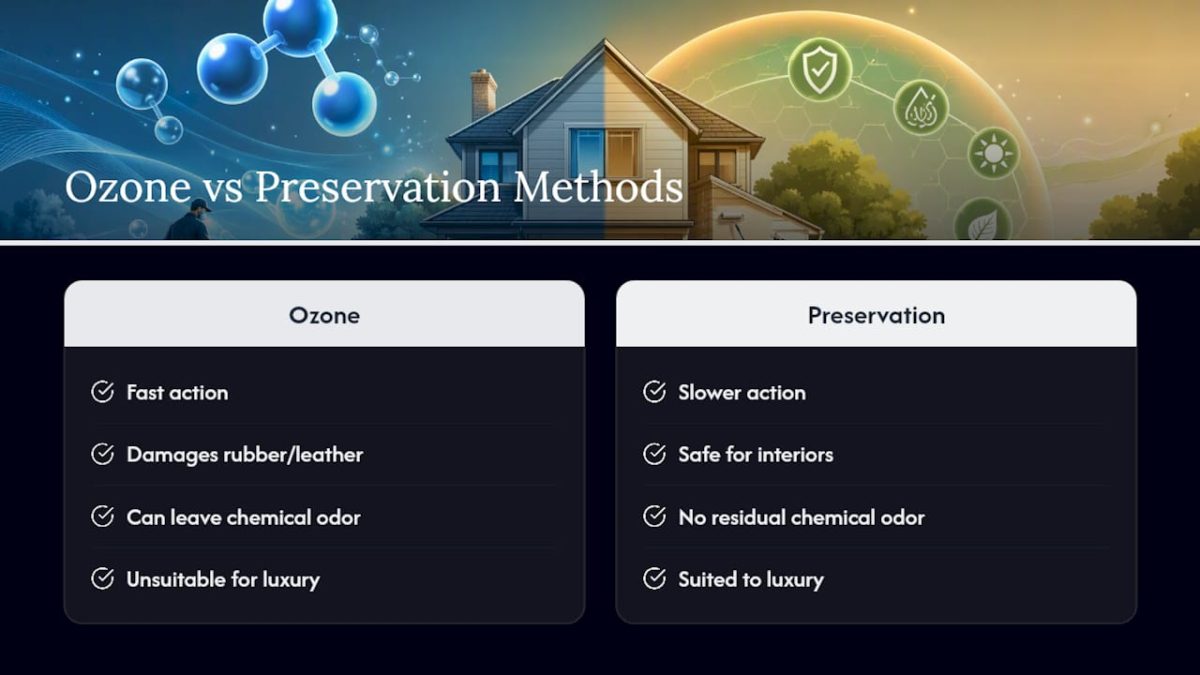
Ozone’s speed is real, but so is its downside: cracked rubber trim, faded leather, residual chemical smell when jobs go wrong. For luxury vehicles, yachts, and high-end hospitality interiors, that risk isn’t worth the time saved.
Master Odor Removal built its process around eco-certified, non-ozone methods for a reason: clients with valuable interiors don’t get a second chance if a treatment damages leather or electronics. Occupied sites, sensitive materials, and reputational risk all push toward the same conclusion. Preservation-first methods protect the asset while still solving the smell permanently.
— Master
Get a Safer, Faster Odor Solution Without the Ozone Risk
Master Odor Removal handles permanent odor elimination for homes, vehicles, yachts, and hospitality venues using green-certified methods that skip ozone and chlorine. That matters most exactly where this comparison gets tricky: occupied properties, luxury interiors, and any job where a mistake with rubber trim or fine fabric costs more than the treatment itself.

Hire a professional when you’re dealing with deep saturation, materials you can’t risk damaging, or occupants who simply can’t relocate for a multi-day treatment cycle. Same or next-day service means you’re not stuck choosing between speed and safety. Get a commercial or luxury interior odor assessment scheduled and find out what a permanent fix actually looks like.
Sources
Regulatory and technical background for the safety claims above comes from the EPA’s ozone generator guidance, PubChem’s ozone chemical profile, and peer-reviewed work on hydroxyl radical reactivity.
- Ozone generators that are sold as air cleaners | US EPA
- Ozone | O3 | PubChem
- Reactive oxygen species and hydroxyl radical roles — PMC
- Ozone vs Hydroxyl Generators: The Honest Comparison Guide – Bio3Blaster
FAQ
Are hydroxyl generators better than ozone?
Neither is universally “better.” Hydroxyl is the safer pick for occupied spaces and sensitive materials, while ozone is faster and cheaper for vacant, heavily contaminated jobs.
Is hydroxyl safe to breathe?
Hydroxyl radicals are designed to be generated at low concentrations for occupied use, unlike ozone, though sensitive individuals should still keep the space ventilated during treatment.
What is the difference between hydroxyl and ozone?
Ozone is a persistent gas that oxidizes odors throughout a space but requires evacuation at effective concentrations; hydroxyl radicals are short-lived, localized oxidants generated continuously and safely around occupants.
Do hydroxyl generators remove odors?
Yes. Hydroxyl radicals oxidize a broad range of odor-causing organic compounds, though performance depends on humidity and proper unit placement since their effect stays close to where they’re produced.
Recent Comments