
Yes. Most smoke odors, even stubborn cigarette smell soaked into a jacket or car seat, can be significantly reduced or fully removed from leather. The safest, most reliable approach follows a set order: ventilate the item, surround it with passive absorbers like activated charcoal or baking soda, clean gently with a pH-neutral product, then condition. Skip a step or rush it, and you risk trapping the smell deeper or damaging the hide itself.
TL;DR:
- Use activated charcoal or baking soda inside the item and repeat the process multiple times over several days for best results.
- Avoid masking sprays or over-wetting, as they often worsen the odor by trapping smell deeper into leather.
- Leather items like jackets, handbags, and car seats require tailored treatments, including airing, brushing, and careful cleaning, to remove smoke odor effectively.
- Harsh chemicals such as bleach, ammonia, or alcohol can damage leather and should be avoided, with pH-neutral cleaners being the safest choice.
- If DIY cycles fail after two to three weeks and multiple attempts, professional environmentally friendly odor removal services are recommended.
Table of Contents
- Leather Smoke Smell Removal: What to Do in the First 48 Hours
- How Do You Remove Smoke Smell From Different Leather Items?
- Which Cleaners Are Safe for Smoke-Damaged Leather?
- Baking Soda vs. Charcoal vs. Coffee Grounds: Which Absorber Works Best?
- How Long Does It Actually Take to Remove Smoke Smell?
- When Should You Call a Professional Odor Removal Service?
- Conditioning and Long-Term Odor Prevention
- What Most Smoke Removal Advice Gets Wrong
- Getting Professional Help When DIY Reaches Its Limit
- Sources
Leather Smoke Smell Removal: What to Do in the First 48 Hours
Before you reach for any cleaner, the goal is containment and airflow. What you do in the first two days determines how much work is ahead of you.
- Move the item into shaded, ventilated air. A covered porch, an open garage, or a room with a fan works. Skip direct sun, which dries and cracks leather, and skip heat vents, which can set the odor rather than release it.
- Brush off loose soot before anything else. A soft-bristle brush or a vacuum with a brush attachment lifts surface residue that would otherwise smear into the grain once you introduce any liquid.
- Introduce an absorber right away. Baking soda or activated charcoal placed inside pockets, bags, or a sealed container starts pulling odor molecules out of the leather almost immediately.
- Spot-test any cleaner on a hidden patch and wait a full 24 hours before treating the visible surface.
- Plan on repeating the absorber cycle. One pass rarely finishes the job.
- If nothing improves after a couple of rounds, that is your signal to consider a professional rather than pushing harder with home remedies.
The instinct to spray something floral over the smell is understandable and almost always backfires. Fragrance layered on top of smoke tends to combine into something worse, and aggressive masking sprays and over-wetting typically make the odor problem harder to solve, not easier.
How Do You Remove Smoke Smell From Different Leather Items?
Leather goods trap smoke differently depending on their construction, so a jacket, a handbag, a sofa, and a car seat each need a slightly different game plan.
Leather jackets
Brush the exterior first, then turn pockets inside out and drop a small cloth sachet of baking soda into each one. For the body of the jacket, hang it inside a large garment bag or plastic tote with a bowl of activated charcoal underneath, and seal it for several days. Once the odor has faded, wipe the leather with a pH-neutral cleaner on a soft cloth, working in small sections. Let it air dry fully before conditioning as recommended.
Handbags and purses
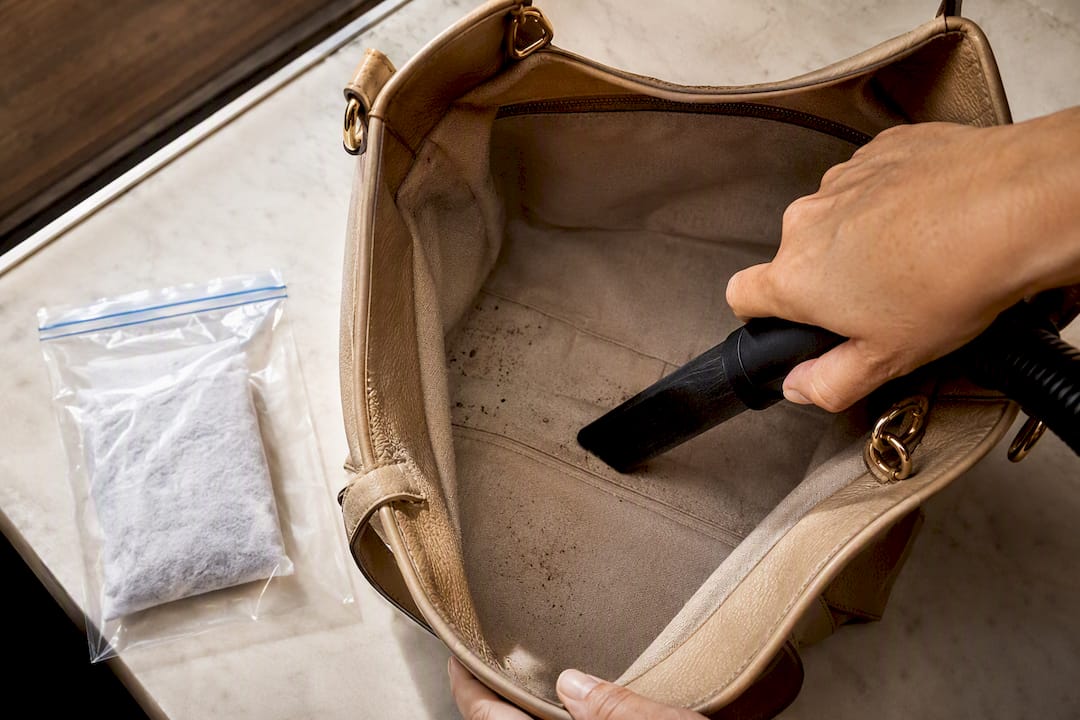
Empty the bag completely and vacuum the interior with a narrow attachment to pull out ash and debris hiding in seams. Place an absorbent sachet inside a sealed zip bag along with the purse, rather than pouring loose powder directly onto dyed or painted leather surfaces, to avoid chalky residue or uneven color. Treat the fabric lining separately from the exterior leather. Lining often holds smoke longer than the leather itself, since smoke settles into both the hide and any attached textiles or padding, and treating only the outer leather usually leaves a residual smell behind.
Furniture and sofas
Vacuum every cushion, seam, and crevice with a soft brush attachment before applying anything wet. Never soak cushions. Leather furniture cushions often have foam inside that holds moisture and odor far longer than the outer hide, so keep application light. Set open containers of baking soda or charcoal around and underneath cushions, and leave the room sealed if possible to concentrate the effect. A gentle surface wipe-down with a pH-neutral cleaner comes after the absorbers have had a few days to work. Multiple treatment cycles are often necessary for full odor removal.
Car seats
Ventilate the entire cabin with doors open for at least an hour before you start, since smoke smell in leather car seats often lingers in the surrounding air and re-deposits on the leather as fast as you remove it. Place multiple small absorber containers on the floor, in cupholders, and tucked into seat creases rather than relying on a single bowl. Avoid parking in hot sun during treatment. Heat speeds odor release from fabric but can also bake smoke compounds deeper into leather upholstery. Skip the hairdryer trick some guides recommend. Direct heat on leather seating risks cracking and discoloration. If the smell keeps returning after airing out the car, a professional treatment for leather seats and car interiors reaches ventilation systems and padding that home methods cannot touch.
Which Cleaners Are Safe for Smoke-Damaged Leather?
Stick to cleaners made specifically for leather, applied with a soft cloth rather than sprayed or poured directly onto the surface. pH-neutral leather cleaners protect the natural oils in the hide that keep it supple, while harsher products strip them out along with the smoke smell.
Diluted white vinegar, mixed one part vinegar to three parts water, can help break down entrenched odor on tougher, finished leather. Use it sparingly and only after a spot test, since vinegar’s acidity can dry out the surface with repeated use. Rubbing alcohol shows up in a lot of odor-removal advice online, but it carries real risk of stripping color and drying leather to the point of cracking. Skip it unless a product label specifically approves it for your leather type.
Avoid these entirely:
- Bleach or any chlorine-based cleaner
- Ammonia and glass cleaners
- Household degreasers or all-purpose sprays
- Heavy perfume sprays or fabric refresheners
Spot test protocol: pick a hidden spot, such as the inside hem of a jacket or the underside of a cushion. Apply a small amount of cleaner, wait 24 hours, then check for color change, stiffness, or texture shift before treating anything visible.
Pro Tip: Keep a small notebook or phone note tracking which spots you’ve already spot-tested and what happened. Smoke removal is a multi-day process, and it’s easy to forget which patch was the test.
Baking Soda vs. Charcoal vs. Coffee Grounds: Which Absorber Works Best?
Not every absorber suits every situation. Here’s how the common options stack up:
- Activated charcoal works best on smoke that has settled deep into the leather. Its high surface area adsorbs odor compounds more effectively than baking soda, which is why it’s the standard choice for a sealed-container treatment lasting several days to a few weeks. Recharge it in direct sunlight periodically, or swap in fresh charcoal if the smell persists.
- Baking soda handles lighter, surface-level odor well and doubles as a general air absorber in a closed space. Use the sealed-box method for wearable items, or dust it lightly over furniture and vacuum thoroughly afterward to avoid residue buildup.
- Coffee grounds can absorb odor too, but they introduce their own strong scent. Only use this method if you’re fine trading cigarette smell for coffee smell, and never on light-colored leather, which can stain.
- Commercial odor sachets and HEPA air purifiers with carbon filters help at the room level, clearing ambient smoke that would otherwise re-settle onto leather you just treated.
How Long Does It Actually Take to Remove Smoke Smell?
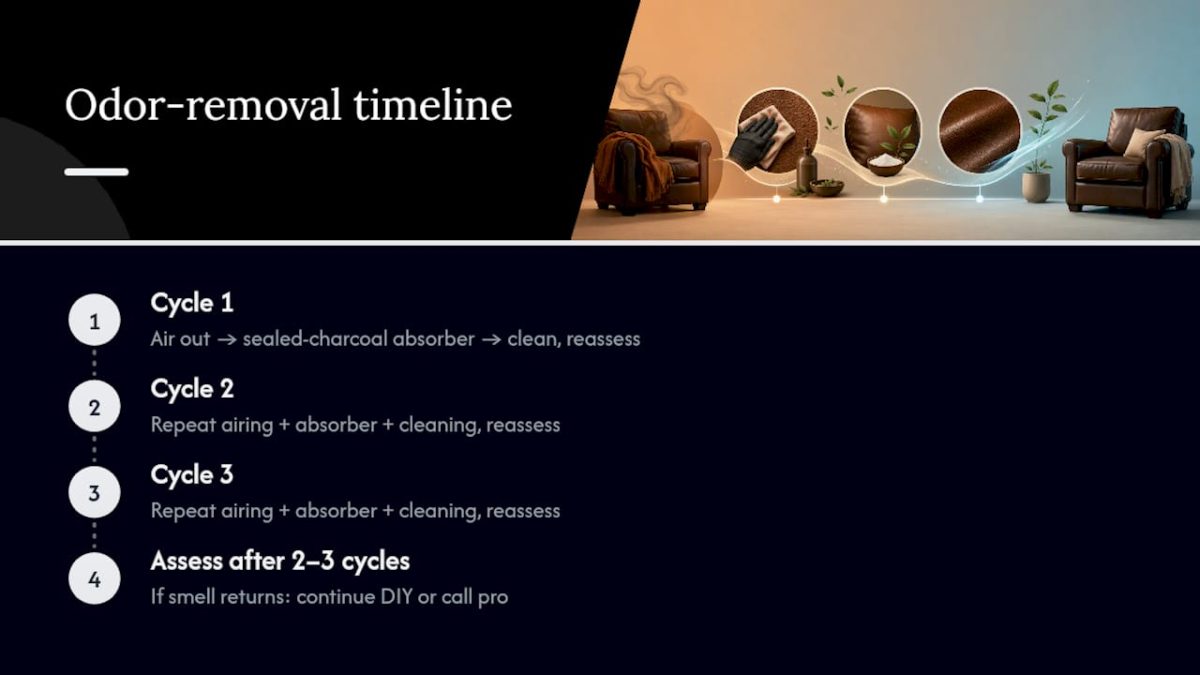
Surface-level smoke odor on leather often improves noticeably within a few days of airing out and one absorber cycle. Deeper, embedded smoke, the kind that’s been sitting in a jacket or car seat for a long time, usually needs several sealed-charcoal passes over a period of days or weeks.
Watch for two signals. If the smell fades and stays faded after you air the item out again, you’re making real progress. If the odor comes roaring back a day after airing, or you can smell it distinctly inside the lining or padding rather than on the surface, that points to embedding that a quick treatment won’t fix.
A reasonable rule of thumb: give yourself two to three full absorber and cleaning cycles, roughly two to three weeks, before deciding whether to keep going or call in help. Beyond that point, diminishing returns on DIY effort usually mean the odor has settled somewhere absorbers can’t reach.
When Should You Call a Professional Odor Removal Service?
DIY methods run into a hard wall when smoke has soaked into linings, foam padding, or cavities you simply can’t access with a brush or a sachet. If you’ve run two or three full treatment cycles and the smell keeps returning, that’s the clearest sign it’s time to bring in help. High-value furniture and full vehicle interiors are also worth professional evaluation before you risk a wrong DIY move on an expensive piece.
A reputable eco-friendly service brings tools most households don’t have: trained technicians, controlled extraction equipment, and neutralizing treatments that reach deep into padding and seams rather than just masking the surface. Professional-grade steam and neutralizing processes can resolve cases where home remedies plateau, particularly on furniture where the smell has migrated into foam cushioning.
Before hiring anyone, ask:
- What methods do they use, and do they avoid ozone and chlorine treatments?
- Do they guarantee results, and what happens if the odor returns?
- How much experience do they have specifically with leather, as opposed to fabric upholstery?
- What’s the realistic turnaround time for your item?
Master Odor Removal’s eco-friendly process relies on non-ozone, non-chlorine neutralization methods carried out by trained technicians, which is worth knowing as a benchmark when you’re vetting any provider in this space.
Conditioning and Long-Term Odor Prevention
Only condition leather once it’s completely dry and the odor is genuinely gone, not just masked. Conditioning too early traps whatever’s left underneath a fresh layer of oil. Choose a pH-balanced conditioner and apply it sparingly. A little goes a long way, and over-conditioning can leave leather feeling greasy or attract dust.
For storage, breathable garment bags or covers beat sealed plastic every time. Plastic traps moisture, which can encourage mildew and lock odors in rather than letting them dissipate. A small dehumidifier in a damp closet helps, and rotating wearable leather items rather than leaving one jacket hanging for months keeps air moving around the hide.
- Air leather out after any exposure to smoke, even brief exposure
- Keep smoking away from leather furniture and car interiors entirely going forward
- Tuck a small odor absorber into closets and garment bags as routine maintenance
- Run an air purifier in rooms where leather furniture lives if anyone in the household smokes
Pro Tip: Keep a spare packet of activated charcoal in your glove compartment or coat closet. Catching a fresh smoke exposure within the first day is far easier than fighting odor that’s had weeks to settle in.
What Most Smoke Removal Advice Gets Wrong
Most guides treat smoke removal as a one-time fix: spray something, wipe it down, done. That’s not how leather works. Leather is porous in ways people don’t expect, and smoke doesn’t just sit on top of it. It works into the fibers and, in furniture and jackets with linings, into the padding underneath, which is exactly why a single cleaning pass so often disappoints.
The bigger mistake I see in conventional advice is reaching for stronger chemicals when the first attempt doesn’t fully work. Vinegar, then alcohol, then something even harsher. That escalation is backwards. Leather punishes aggressive chemistry with cracking, fading, and stiffness that no amount of conditioner fully reverses. Patience with mild methods beats force with harsh ones, every time.
If there’s one thing to prioritize, it’s sequencing: dry and brush first, absorb second, clean third, condition last. Rushing that order, or skipping straight to a spray bottle, is where most home attempts go wrong. And when embedded odor survives two or three honest attempts at that sequence, that’s real information. It means the smoke has gone somewhere absorbers can’t reach, and no amount of repeating the same steps will change that.
— Master
Getting Professional Help When DIY Reaches Its Limit
Charcoal sachets and patience solve most surface smoke problems, but embedded odor in padding, linings, or seat foam sits beyond what a home treatment can reach. Professional services offering eco-friendly, non-ozone, non-chlorine treatments can access cavities and cushioning that DIY methods cannot, applied by trained technicians rather than trial and error.

This fits car owners fighting cigarette smell in leather seats, homeowners with a smoke-damaged leather sofa, and anyone managing a vacation rental or dealership vehicle where the smell has to be gone for good, not just faded for a week. The service walks through exactly what treatment involves and what to expect, including realistic turnaround windows for different item types. If you’ve already tried airing, absorbers, and gentle cleaning without full success, the next step is a straightforward one: request a same or next-day evaluation and find out what a controlled, eco-safe treatment can do that another round of baking soda can’t.
Sources
For more detail on the techniques covered here, see this guide to removing smells from leather and this breakdown of deodorizing leather without damage. Vehicle owners can also check this diagnostic guide to car odor sources for related ventilation strategies.
- How to Get Smell Out of Leather
- How To Deodorize Leather Without Damaging It – Leather Care Guru
- How to Get Smoke Smell Out of Leather Jackets, Furniture, and Car Seats – Tannery Talk
Recent Comments