
Yes, cigar smell can be removed permanently, but heavy or long-set odor usually needs a multi-step deep clean plus an HVAC purge, not just a spray and a prayer. Light, recent odor often responds to a thorough DIY pass in an afternoon. Heavy or months-old odor almost always requires fabric extraction and duct treatment, and sometimes a professional visit.
Start your first hour with these:
- Open every door and window for at least 20 to 30 minutes of cross ventilation.
- Pull out ash, wrappers, and trash immediately.
- Vacuum every reachable surface, then swap in a new cabin air filter.
Quick severity check: if you can still smell cigar after a night with windows cracked and a fresh filter installed, you’re dealing with embedded residue, not just lingering air. That’s your signal to move from surface cleaning to extraction.
Key Takeaways
Permanently removing cigar smell from a car requires treating oily thirdhand residue in fabric and HVAC ducts, not just masking airborne scent.
| Point | Details |
|---|---|
| Start with ventilation and debris removal | Air out the cabin, remove trash and ash, and vacuum before applying any cleaner. |
| Surface cleaning isn’t enough for heavy odor | Cigar residue is oily and needs steam or hot-water extraction to fully lift from fabric. |
| The HVAC system is often the real culprit | Replace the cabin air filter and purge the intake to stop recirculating trapped smoke. |
| Charcoal and baking soda absorb, they don’t clean | Use them for light odor or as a finishing step after deep cleaning, not as a stand-alone fix. |
| Escalate to a pro for embedded, long-set odor | Masterodorremoval treats heavy cigar residue with green-certified, non-ozone methods built for vehicle interiors. |
Table of Contents
- Getting Started: Ventilation, Debris Removal, and Tools
- Cleaning Hard Surfaces, Glass, and Mats
- Why Fabric and Leather Need More Than a Wipe-Down
- Stopping Your HVAC From Recirculating the Smell
- Do Charcoal and Baking Soda Actually Work?
- DIY or Professional? How to Decide
- Keeping Cigar Smell From Coming Back
- What Makes Masterodorremoval’s Approach Different
- Ready to Book a Vehicle Odor Treatment
- Sources
Getting Started: Ventilation, Debris Removal, and Tools
Before you touch a cleaner, air the car out. Open all four doors and the trunk for 20 to 30 minutes, and point a box fan into the cabin if you have one. Skip direct sun during this stage. Heat can bake residue deeper into vinyl and foam before you’ve had a chance to lift it.
- Empty the ashtray and console completely, including any butts wedged in cup holders.
- Remove all trash, floor mats, and loose fabric items like jackets or gym bags that absorbed smoke.
- Pull together your tools: a vacuum with a crevice attachment and upholstery brush, microfiber towels, an interior cleaner, baking soda, and activated charcoal.
Having everything staged before you start saves you from tracking dirt back through a half-cleaned car.
Cleaning Hard Surfaces, Glass, and Mats
Cigar smoke leaves a thin, sticky film on every hard surface it touches, and vacuuming alone won’t lift it.
- Run the crevice tool along seat tracks, seam gaps, and the space under the seats where ash and debris settle.
- Vacuum the trunk and door pockets, too. Cigar residue travels further than most people expect.
- Wipe the dashboard, door panels, and center console with an interior cleaner and a clean microfiber towel, working in small sections.
- Clean interior glass separately. Smoke film on windows shows up as a hazy streak under sunlight even after the cabin smells better.
- Pull the floor mats out and launder or hose them down, then scrub the ashtray with soap and water.
Pro Tip: Change your microfiber towel every few panels. Once it’s saturated with the oily film, you’re just smearing residue around instead of removing it.
Why Fabric and Leather Need More Than a Wipe-Down
Cigar smoke is oilier and heavier than cigarette smoke, and that oil bonds to fabric fibers, foam padding, and headliner material in a way surface cleaning can’t touch. This is often called thirdhand smoke: residue that keeps releasing odor long after the smoke itself has cleared, and it usually needs heat and extraction to break down, not just soap.
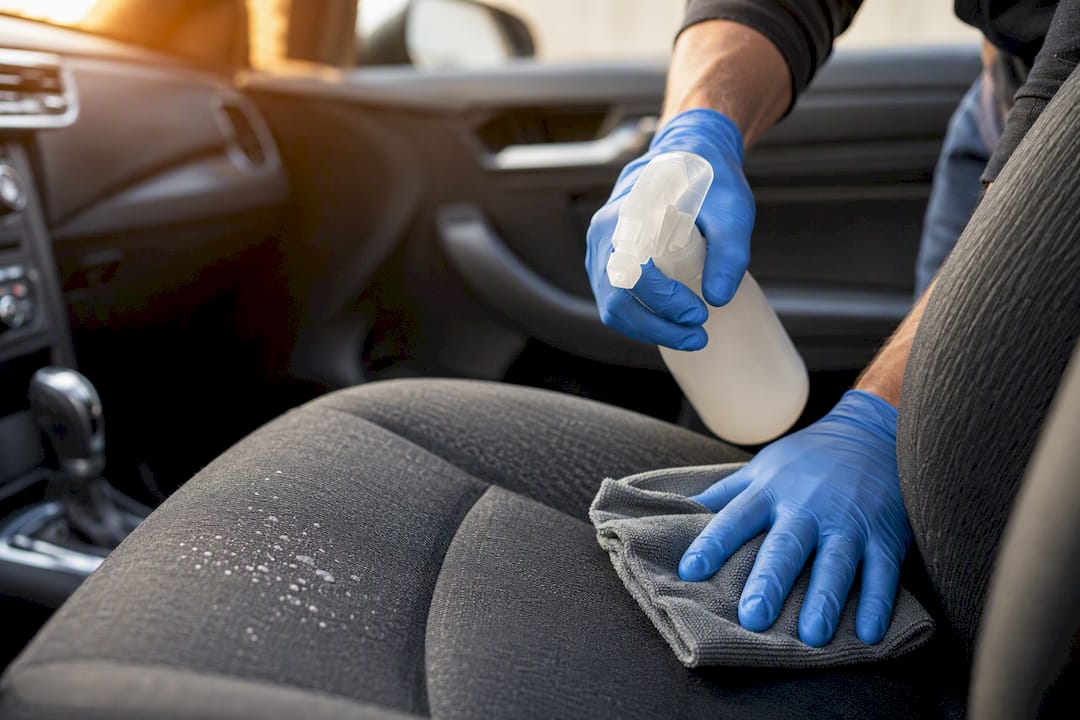
- Apply an upholstery cleaner or fabric shampoo and let it dwell per the label before extraction.
- Rent a hot-water extractor from a hardware store, or use a steam cleaner on seats, carpets, and the headliner. Steam and hot-water extraction dissolve embedded residues far more reliably than shampooing alone.
- If the odor is severe or the headliner is fabric backed with foam, consider a professional extraction. Overwetting a headliner can cause it to sag or separate from its backing.
Leather needs its own approach. Use a leather-specific cleaner, never a generic all-purpose spray, and follow with a conditioner to replace oils stripped during cleaning. Avoid soaking the seams, since trapped moisture can seep into the foam underneath and create a mildew problem on top of your smoke problem. A dedicated tobacco-residue guide covers how that residue behaves differently across leather, vinyl, and cloth.
Stopping Your HVAC From Recirculating the Smell
If the car smells fine when parked but the odor returns the moment you turn on the vents, your HVAC system is the source. The cabin air filter traps smoke particles, then blows that same contaminated air back at you every time the fan runs.
- Replace the cabin air filter first. It’s usually behind the glove box or under the dash, though location varies by make and model, so check your owner’s manual if you can’t find it.
- Purge the ductwork by running the fan on high while spraying an HVAC-safe cleaner into the exterior air intake, typically located near the base of the windshield.
- Wipe down every visible vent with a microfiber towel, and use vent-cleaning foam or a small brush to reach into the slats.
- If odor persists after a filter swap and purge, the blower motor housing or deeper ductwork may be holding residue that needs professional attention.
Dealer service guidance confirms this sequence, filter first, then duct purge, as the standard fix for recurring smoke smell tied to the HVAC. For a closer look at why this keeps happening even after a full interior clean, see our breakdown of HVAC-driven odor.
Pro Tip: If you can smell cigar more strongly with the AC on than with it off, stop cleaning fabric and go straight to the HVAC system. You’re chasing the wrong source.
Do Charcoal and Baking Soda Actually Work?
Activated charcoal and baking soda absorb airborne odor molecules effectively, but only with time and only on light, surface-level smell. Set an open container of charcoal or a shallow dish of baking soda in the cabin overnight, or ideally for two to three days, then vacuum up any residue.
- Baking soda works well sprinkled directly onto carpets and seats before vacuuning.
- Activated charcoal bags are reusable and work best in enclosed spaces like a closed car overnight.
- Both are absorbers, not cleaners. They pull scent from the air, not oil from the fibers.
Independent guides on cigar odor removal note that these products rarely solve heavy, embedded cigar residue on their own. Masking sprays are worse: they cover smell temporarily, and heat from sunlight or the HVAC system often releases the underlying odor again within days. Ozone generators can neutralize odor at a molecular level, but they carry real risk. Ozone can degrade rubber, some plastics, and dashboard materials, and it requires the vehicle to be sealed and unoccupied during treatment. That’s part of why non-ozone molecular neutralization has become the preferred professional method for odor that charcoal and baking soda can’t touch.
DIY or Professional? How to Decide
Run through this checklist honestly before you commit another weekend to cleaning:
- Odor intensity: Faint smell that fades after airing out usually means DIY is enough.
- How long it’s been present: Odor that’s been building for months has had time to soak deeper into foam and padding.
- Extent of exposure: Regular smoking in the car versus a handful of incidents changes how far residue has spread.
- Visible residue: Yellow film on windows or a sticky dashboard signals oil buildup that a wipe-down won’t fully clear.
Professionals go further than a home cleaning kit allows. Expect hot-water extraction on seats and carpet, full HVAC duct purging, and molecular neutralization treatments that target odor at the source instead of masking it, plus headliner and foam-pocket work that needs a trained hand to avoid water damage.
DIY typically runs a full afternoon to a weekend, depending on how many rounds of cleaning you need. Professional jobs vary in cost based on vehicle size and how deep the contamination goes, with pricing shaped by whether HVAC treatment and headliner extraction are needed on top of standard upholstery work.
Pro Tip: If you’re buying a used car and catch a whiff of stale cigar during the test drive, factor professional remediation into your offer. Sellers rarely disclose it, and it’s one of the harder resale issues to fix cheaply.
Keeping Cigar Smell From Coming Back
The cheapest fix is never having to do this again. A few habits go a long way:
- Smoke outside the vehicle entirely, or if that’s not possible, keep windows down and use a portable ashtray with a lid.
- Do a quick vacuum and wipe-down monthly if anyone smokes in the car regularly.
- Replace the cabin air filter regularly, or sooner if you notice reduced airflow.
- Use seat covers you can remove and wash, especially in a vehicle you plan to sell.
- Book a periodic professional check if you’re maintaining a car for resale or a dealership lot. Buyers notice smell before anything else.
What Makes Masterodorremoval’s Approach Different
Masterodorremoval specializes in permanently eliminating interior odors, cigar smoke included, using green-certified methods that skip ozone and chlorine entirely. That matters for anyone with leather seats, sensitive electronics, or a newer vehicle where aggressive chemical treatment can shorten the life of interior materials.
Instead of masking or relying on ozone’s material risks, the approach targets odor molecules directly with safer, sustainable techniques suited to high-end interiors. For dealerships and private owners preparing a car for resale, that permanence protects value in a way a can of air freshener never will.
— Master
Ready to Book a Vehicle Odor Treatment
If you’ve already vacuumed, shampooed the seats, and swapped the cabin filter and the smell still greets you every time you start the car, that’s the point where DIY has done what it can do. Masterodorremoval offers mobile vehicle odor remediation with same or next-day availability, so you’re not waiting weeks to get your car back to normal.

A typical visit starts with an inspection to gauge how deep the residue has set, followed by an estimated treatment window and a plan for any HVAC or upholstery work needed. Every treatment uses green-certified, non-ozone methods designed for vehicles, including luxury interiors where harsh chemicals aren’t an option. If you’re not sure how long a job like yours might take, check typical service timelines before you book. When you’re ready to get a real assessment instead of guessing at another spray bottle, schedule your vehicle odor removal and get a straight answer on what it’ll take to fix it for good.
Sources
For deeper technique or professional booking, these pages fill in the gaps this guide covers at a high level:
- How to Remove Cigar Smell From a Car for Good – CarXplorer
- How to Get Smoke Smell Out of a Car – Hendrick Chevrolet Monroe
- Get Rid Of Cigar Smell In Your Car: A Complete Guide – WisePickers
- How to Get Rid of Cigar Smell in a Car – Case Elegance
Recent Comments