
Kitchen odors linger in home sale listings because cooking releases oily particles that bond to porous surfaces like cabinet wood, drywall paint, and upholstery fibers. Poor ventilation traps those particles instead of exhausting them, and high humidity helps odor molecules bind even deeper into materials. Grease buildup on range hood filters, dried-out plumbing P-traps, and residue inside appliances all act as slow-release odor reservoirs that no amount of airing out will fix. The compounding problem is nose blindness: sellers stop registering smells they live with daily, while buyers walking in from fresh outdoor air notice them within seconds of crossing the threshold.
Before your home goes on the market, understanding these root causes is what separates a quick sale from a listing that sits:
- Cooking particles from frying, fish, and spices linger for days, settling into filters, cabinets, and soft furnishings
- Inadequate exhaust systems allow odor-laden air to recirculate rather than vent outside
- High humidity accelerates how deeply odor molecules bind to walls and surfaces
- Grease films coat range hood filters, backsplash tiles, and cabinet interiors, creating persistent odor reservoirs
- Dry P-traps in kitchen drains release hydrogen sulfide, methane, and ammonia when the water seal evaporates
- Nose blindness causes sellers to underestimate odor intensity that buyers immediately detect
Why kitchen odors persist in listings: the root causes
Cooking odors travel as airborne oily particulates that coat every surface they contact. Cabinets near the stove, range hood filters, wall paint, and nearby ceiling sections all absorb these particles over time. Standard cleaning often misses this invisible film, which is why a kitchen can look spotless and still smell like last week’s stir-fry.
Ventilation is the other half of the problem. Homes with undersized or poorly maintained exhaust systems recirculate cooking air instead of pushing it outside. When kitchen exhaust fans run but vent into an attic or a clogged duct rather than outdoors, they do nothing useful. Humidity makes the situation worse by helping odor molecules adhere more aggressively to porous materials like wood, grout, and painted drywall.
- Inadequate exhaust systems: Range hoods that vent indoors or have clogged ductwork trap cooking air in the kitchen
- Grease-saturated filters: Range hood filters loaded with grease re-release odors every time the stove runs
- Porous cabinet surfaces: Unfinished or lightly sealed wood absorbs cooking vapors and holds them long-term
- High humidity: Moisture in the air helps odor particles bind to walls, ceilings, and soft furnishings
- Plumbing P-traps: The water seal in a kitchen drain can evaporate in 2–3 weeks, opening a direct path for sewer gases into the kitchen
- Appliance residue: Microwave interiors, oven walls, and garbage disposal grinding chambers harbor food particles that generate ongoing odor
- Cooking method: Frying, fish, and heavily spiced dishes produce the most stubborn odor layers because their particles are denser and oilier
Pro Tip: Check your range hood filter by holding it up to a light source. If you cannot see light through it, the filter is saturated with grease and is actively releasing odor rather than capturing it. Replace it before listing photos.
How to prevent kitchen odors from embedding before you list
Prevention is far cheaper than remediation. The goal during the listing phase is to stop adding new odor layers while the existing ones are being cleaned out.
Ventilation is your first line of defense. Run the range hood exhaust fan during every cooking session and keep it running for at least 15 minutes after you finish. Open windows on opposite sides of the kitchen to create cross-ventilation that actually moves air out of the space rather than just stirring it around.
- Stop high-odor cooking immediately: Avoid frying, fish, garlic-heavy dishes, and strong spices at least one week before listing photos and showings
- Use odor absorbers: Bowls of baking soda, activated charcoal, or coffee grounds placed inside cabinets and on counters absorb ambient odor between showings
- Seal spice containers: Store all spices in airtight containers to prevent passive off-gassing into cabinet interiors
- Run water in seldom-used drains: Pour water down the kitchen sink drain weekly to keep the P-trap seal intact and block sewer gas entry
- Clean the garbage disposal: Food particles trapped under the rubber splash guard and inside the grinding chamber generate odor that spreads through the entire kitchen
- Replace HVAC filters: A loaded furnace filter recirculates odor-laden air through every room; fresh air circulation before showings requires a clean filter
- Wipe light bulbs: Cooking residue collects on bulb surfaces and re-releases odor when the bulbs heat up during a showing
Pro Tip: Ask a neighbor or friend who has never been in your home to do a quick walk-through before you list. Nose blindness is real, and a fresh set of nostrils will catch what you have stopped noticing after years of living there.

Effective ways to eliminate entrenched kitchen odors before selling
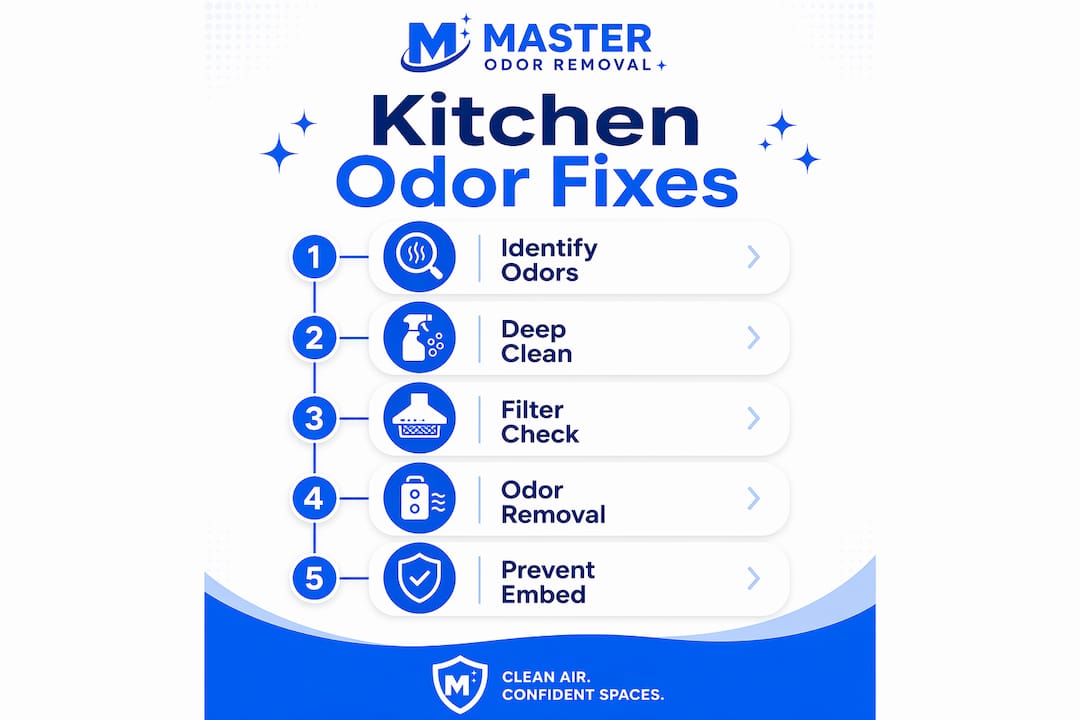
When odors are already embedded, prevention strategies alone will not get you to neutral. You need to physically remove the odor source from every surface it has colonized.
Start with the range hood. Clean or replace the filter entirely, then degrease the hood interior, the surrounding wall, and the ceiling above the stove. These surfaces accumulate the densest concentration of cooking particulates in any kitchen. For cabinet interiors, a degreasing cleaner applied to every shelf and door panel breaks down the oily film that standard all-purpose sprays leave behind. If your cabinets have unfinished interiors, removing grease from cabinets before any repainting or refinishing is the only way to prevent the odor from bleeding back through new paint.
- Deep clean cabinet interiors and exteriors: Use a degreasing agent on all surfaces, paying special attention to the areas directly above and beside the stove
- Wash walls, backsplash, and ceiling: Oily cooking particles coat vertical and overhead surfaces; a TSP substitute or degreasing cleaner cuts through the film
- Replace range hood filters: Cleaning a heavily saturated filter rarely restores full function; replacement is faster and more effective
- Clean HVAC vents near the kitchen: Grease and cooking particles collect in vent covers and inside duct openings, re-releasing odor every time the system runs
- Run air purifiers with HEPA and activated carbon filters: HEPA captures airborne particles while activated carbon adsorbs gaseous odor compounds; place units in the kitchen and adjacent rooms during the listing period
- Address plumbing sources: Pour water into dry drains, clean the garbage disposal with ice and salt followed by citrus peels, and inspect under-sink areas for slow leaks that generate mold odor
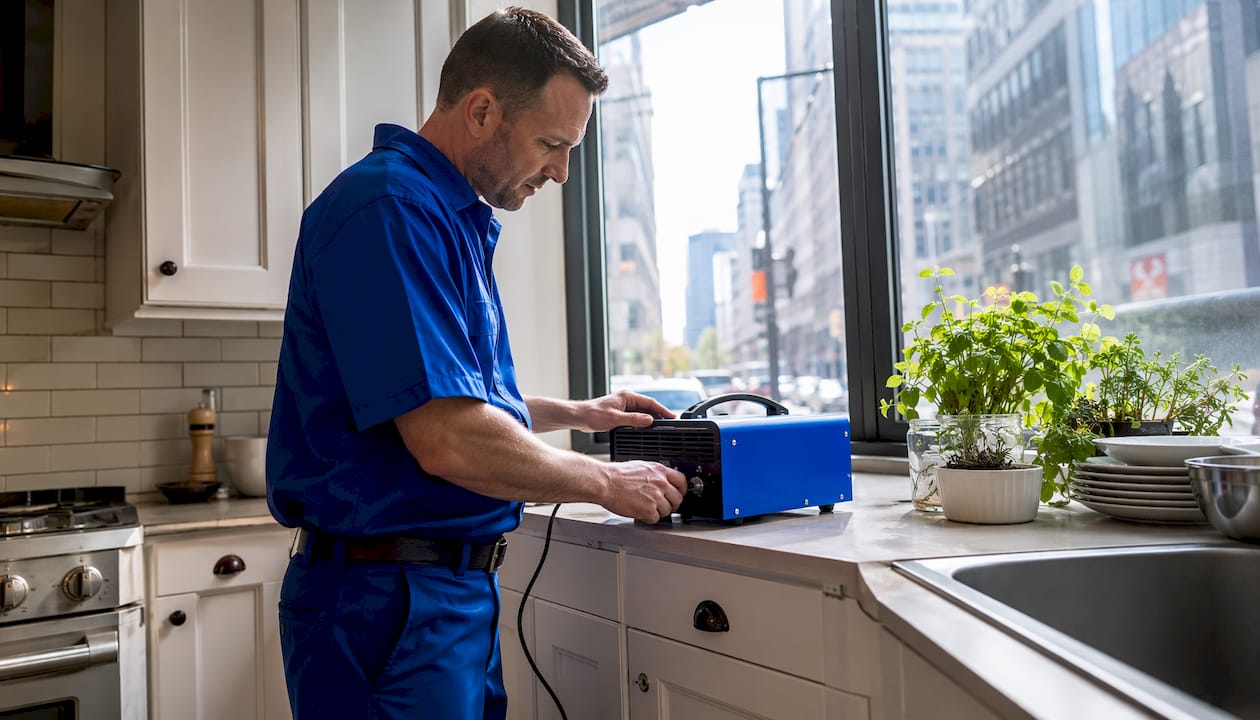
- Professional odor remediation: When deep cleaning does not resolve the problem, licensed odor remediation specialists use enzyme-based treatments and specialized equipment to neutralize compounds embedded in walls and subfloor materials
For sellers dealing with years of accumulated cooking odors, a move-in/move-out odor removal service addresses the problem at a level that standard cleaning cannot reach. The timeline matters too: plan for odor remediation to be complete at least one week before listing photos, so the home has time to air out and reach a genuinely neutral baseline.
Pro Tip: Never mask kitchen odors with candles, plug-in air fresheners, or scented sprays before a showing. Buyers and their agents recognize the tactic immediately, and it raises suspicion about what is being hidden underneath.
Why eliminating kitchen odors matters for your home sale
Real estate professionals are direct about this. As Kimberly Schmidt, a real estate pro with Compass in San Diego, puts it plainly: “If I can smell it, I cannot sell it.”
“Grease and spices from old meals linger, especially in curtains, range hood filters, and kitchen cabinets,” noted one real estate agent, adding that buyers walking into a kitchen that smells like last night’s dinner immediately start questioning whether the ventilation is adequate rather than admiring the layout.
Buyers associate odors with hidden maintenance problems: poor ventilation, mold, plumbing failures, or long-term neglect. Even when the actual cause is something as simple as a grease-saturated range hood filter, buyers rarely know that in the moment. They assume the worst because they are trying to protect themselves from future repair costs.
The consequences are concrete:
- Reduced offers: Buyers use odors as negotiation leverage, requesting price reductions, repair credits, or professional cleaning as conditions of sale
- Shorter showing times: Buyers cut tours short when a smell creates discomfort, meaning they leave before seeing the home’s best features
- Longer days on market: Fewer strong buyer reactions translate to fewer offers and slower momentum, which compounds the problem as a listing ages
- Buyer suspicion of masking: Agents observe that buyers are hyper-sensitive to artificial fragrances, interpreting heavy scents as an attempt to hide a deeper defect rather than solve one
Kelly Dellinger, a real estate pro at Akers Ellis Real Estate, describes nose blindness as one of the most common pre-listing mistakes: sellers become so accustomed to the smells in their home that they underestimate how strongly those odors register for a buyer walking in cold. Relying on a plug-in air freshener as a fix, Dellinger notes, “only makes things worse.”
The goal is not a pleasant scent. It is no scent at all. Buyers who smell nothing walk through the whole house. Buyers who smell something start calculating what it will cost them to fix it, and that calculation always comes out of your asking price. Addressing odor issues before listing is almost always less expensive than the price reduction that results from a home sitting on the market.
Key Takeaways
Persistent kitchen odors in home sale listings stem from oily cooking particles embedded in porous surfaces, inadequate ventilation, and plumbing issues that require targeted remediation, not masking, to resolve before buyers arrive.
| Point | Details |
|---|---|
| Odors embed in surfaces | Cooking particles coat cabinets, walls, and filters, requiring degreasing cleaners, not just standard wipe-downs. |
| Dry P-traps release sewer gas | Kitchen drain seals evaporate in 2–3 weeks; run water weekly to keep the trap charged and block odor entry. |
| Stop high-odor cooking early | Avoid frying, fish, and strong spices at least one week before listing photos to prevent new odor layers. |
| Masking raises buyer suspicion | Buyers and agents treat heavy fragrances as a signal of hidden defects; aim for neutral, not scented. |
| Professional remediation is an option | When deep cleaning falls short, licensed odor removal specialists use enzyme-based treatments to neutralize embedded compounds. |
Ready to list odor-free? Masterodorremoval can help

Persistent kitchen odors do not have to follow your listing. Masterodorremoval specializes in permanent interior odor elimination using eco-friendly, green-certified methods that neutralize odor compounds at the molecular level without ozone or chlorine treatments. Same-day and next-day availability means you can get the kitchen to a genuinely neutral baseline before photos, showings, or open houses.
Whether you are dealing with years of embedded cooking odors, a garbage disposal that no amount of scrubbing has fixed, or a kitchen that simply does not pass the fresh-air test, the odor removal specialists at Masterodorremoval deliver results that hold. Learn more about how Masterodorremoval approaches odor removal done right for sellers who need to move fast and list clean.
Recent Comments