
TL;DR:
- Smoke residues chemically bond with porous surfaces and remain active long after smoking stops. Effective removal requires molecular neutralization, surface sealing, and high-capacity carbon filtration working together. Professional treatment targets all layers to eliminate persistent odors permanently.
Smoke-free rooms still smell because cigarette smoke compounds form chemical bonds with porous surfaces, not just the air. This is a chemistry problem, not a housekeeping failure. The industry term for this phenomenon is thirdhand smoke contamination, defined as the residual nicotine and toxic chemicals that cling to walls, carpets, upholstery, and HVAC systems long after smoking stops. Standard cleaning, air fresheners, and even repainting address the surface but leave the molecular residue intact. Effective odor elimination requires molecular neutralization, activated carbon filtration, and surface remediation working together.
Why smoke-free rooms still smell: the chemistry behind it
Smoke odor persistence is a chemistry problem, not a cleaning problem. Nicotine, tar, and volatile organic compounds (VOCs) do not simply float in the air and disappear when a window opens. They bond chemically to drywall, carpet fibers, upholstery foam, and the interior surfaces of HVAC ducts. Once bonded, these compounds become part of the material itself.
The process creates tobacco-specific nitrosamines and other carcinogens that off-gas over months or years. Off-gassing means the contaminated surface slowly releases these compounds back into the air, which is why a room can smell stale weeks after the last cigarette. Temperature and humidity changes accelerate this release, making the odor seem to come and go unpredictably.
Human olfactory perception adds another layer of complexity. Odorless yet harmful pollutants can persist even when you cannot detect a smell. This means a room that passes the “sniff test” may still carry significant chemical contamination. Property managers who rely on smell alone consistently underestimate the problem.
Smoke particles also travel. Air movement from foot traffic, fans, and HVAC systems carries particles into rooms that were never used for smoking. The particles then deposit on whatever porous surface they contact first. Key surfaces where smoke residue concentrates include:
- Carpets and rugs: High microscopic surface area traps and holds significant smoke residue
- Upholstered furniture: Foam and fabric absorb VOCs deeply, making surface cleaning ineffective
- Drywall: Porous gypsum board absorbs nicotine and tar into its core
- Curtains and soft furnishings: Lightweight fabrics accumulate residue quickly due to constant air exposure
- HVAC duct interiors: Residue deposits on duct walls and recirculates throughout the building
Why do common odor removal efforts usually fail?
Standard cleaning removes visible dirt and surface grime. It does not break the molecular bonds between smoke compounds and porous materials. Wiping down walls with a general cleaner leaves the nicotine layer intact beneath the surface, where it continues to off-gas.
Repainting is one of the most common mistakes property managers make. Applying standard paint over smoke-damaged drywall without a specialized sealant primer traps the residue temporarily. As humidity and temperature fluctuate, the odor bleeds back through the paint layer within weeks. The room smells fresh for a short time, then reverts. This cycle frustrates property owners who believe they have solved the problem.
Air fresheners and masking sprays work by adding a competing scent, not by neutralizing the chemical compounds causing the odor. The smoke residue remains fully intact. Once the masking fragrance fades, the original smell returns, often stronger because the room has been sealed with the residue still present.
Air purifiers are frequently misunderstood. HEPA filters capture airborne particles effectively, but VOCs remain unless the unit contains a substantial activated carbon filter. Most consumer-grade air purifiers include only a thin carbon layer that saturates quickly. A saturated carbon filter can actually re-release captured compounds back into the room air, making the situation worse.
Pro Tip: Before repainting any smoke-affected room, apply a shellac-based or oil-based sealant primer specifically rated for smoke and nicotine. Standard latex primer will not block odor bleed-through.
Common reasons odor removal efforts fall short:
- Using general-purpose cleaners that do not break chemical bonds
- Repainting without sealant primer over contaminated drywall
- Relying on air fresheners or scented candles as a permanent fix
- Installing air purifiers with insufficient activated carbon media
- Skipping fabric treatment and focusing only on hard surfaces
How do professional odor removal methods actually work?
Effective odor elimination requires a three-layer approach treating fabrics, air, and surfaces simultaneously. Treating only one layer leaves the other two as active odor sources. This is why partial treatments always produce partial results.
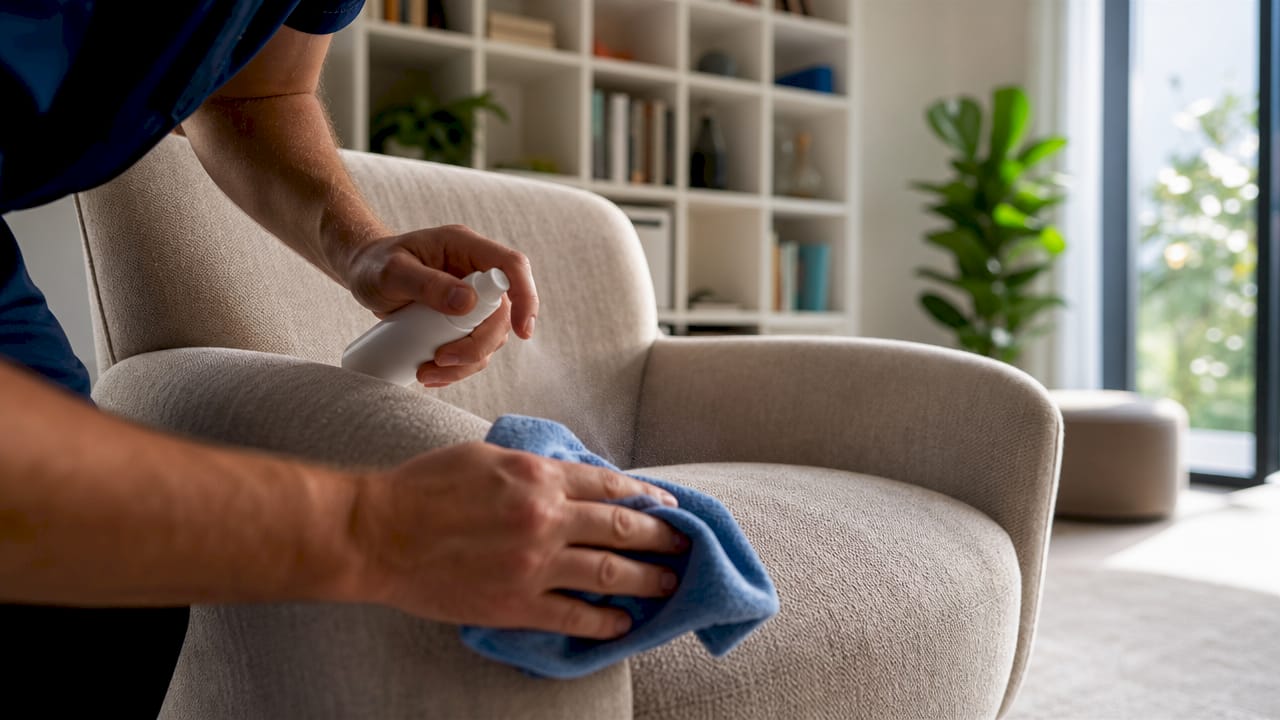
Layer 1: Molecular treatment of fabrics and soft surfaces
Fabrics require molecular neutralizers, not just steam or detergent. Steam cleaning alone is insufficient because it does not break the chemical bonds between smoke compounds and fiber. Molecular neutralizers react directly with the odor-causing compounds, converting them into non-odorous substances. Carpets, upholstery, curtains, and mattresses all need this treatment before any other step.
Layer 2: High-capacity activated carbon air filtration
Air purifiers used for smoke odor removal must contain a substantial activated carbon bed, not a thin carbon sheet. The carbon weight determines how many VOC molecules the filter can adsorb before saturation. Professional-grade units use several pounds of carbon media. Filters must be replaced on a schedule because a saturated filter stops working and can reverse the process.
Layer 3: Surface cleaning and sealant application
Hard surfaces, including walls, ceilings, and floors, need cleaning with a product designed to lift nicotine and tar residue. After cleaning, any drywall or wood surface that will be repainted requires a sealant primer. The primer locks remaining residue into the substrate so it cannot off-gas through the new paint layer.
Pro Tip: HVAC duct cleaning is not optional in a full smoke remediation. Residue deposited inside ducts will continue recirculating through the building until the ducts are cleaned and filters replaced.
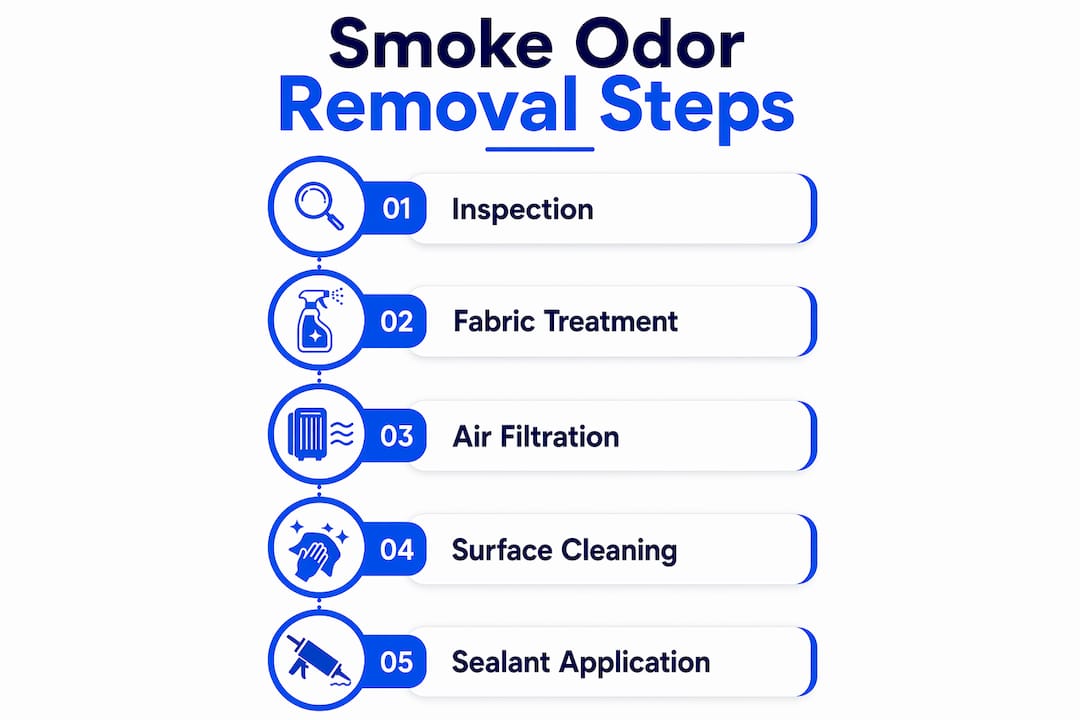
The full professional process follows this sequence:
- Inspect all surfaces and fabrics to map contamination extent
- Apply molecular neutralizers to all porous fabrics and soft furnishings
- Clean all hard surfaces with a nicotine-specific cleaning agent
- Apply sealant primer to walls and ceilings before repainting
- Clean HVAC ducts and replace all filters with high-capacity carbon units
- Run high-capacity activated carbon air purification continuously during and after treatment
- Verify results with a follow-up inspection after 48–72 hours
The tobacco smoke residue removal process Masterodorremoval uses follows this integrated sequence, which is why results hold over time rather than fading after a few weeks.
What practical steps can you take to manage smoke odors?
Start with a thorough inspection before spending money on any treatment. Look for yellow or brown staining on walls, ceilings, and around air vents. These stains indicate nicotine and tar deposits. Check fabrics by pressing a white cloth against upholstery or carpet and examining it for yellow residue transfer.
HVAC filters are the first mechanical fix. Replace them immediately with filters that include a meaningful activated carbon layer. Routine HVAC maintenance, including duct inspection and cleaning, prevents residue from recirculating. Set a replacement schedule for carbon filters based on the manufacturer’s guidance, not just when you notice a smell returning.
When selecting an air purifier, check the carbon media weight listed in the product specifications. A unit with less than one pound of activated carbon will saturate quickly in a smoke-affected room. Units designed for tobacco smoke remediation typically list carbon weight as a key specification.
For fabrics, professional laundering or dry cleaning removes surface residue from washable items. Non-washable items like sofas and carpets need on-site molecular treatment. Replacing heavily contaminated carpets is sometimes the most cost-effective option when residue has penetrated deep into the padding beneath.
Pitfalls to avoid:
- Relying on scented sprays or plug-in air fresheners as a long-term fix
- Repainting without cleaning and sealing walls first
- Replacing only surface materials while leaving contaminated drywall behind
- Using air purifiers without verifying their carbon media weight
- Declaring a room odor-free based on smell alone without addressing chemical contamination
When odor persists after these steps, the contamination has likely penetrated deeply into drywall, subfloor materials, or ductwork. That is the point to engage a professional smoke odor removal specialist.
How do smoke odors travel into rooms that were never used for smoking?
HVAC systems are the primary conduit for smoke residue cross-contamination. Air circulation spreads nicotine residues from a smoking area through shared ductwork, depositing compounds in every room the system serves. A guest room two floors above a smoking lounge can accumulate measurable residue within days of the HVAC running.
Shared walls also transfer odor. Smoke compounds migrate through drywall seams, electrical outlets, and plumbing penetrations. In multi-unit buildings, a single smoking tenant can contaminate adjacent units through these pathways. The contamination is invisible and odorless at first, making it easy to miss until it reaches detectable levels.
Property managers dealing with building-wide odor complaints need a building-level strategy, not room-by-room fixes. Key cross-contamination pathways to address include:
- Shared HVAC ductwork connecting smoking and non-smoking zones
- Common wall penetrations including outlets, pipes, and conduits
- Shared ventilation stacks in multi-unit residential buildings
- Fabric furnishings in common areas that absorb and re-release residue
- Elevator interiors and lobbies where residue-carrying air concentrates
A room-by-room approach without addressing the HVAC system produces temporary results at best. The system will recontaminate treated rooms within days. For workplace odor management, the same principle applies across office floors connected by shared ventilation.
Key Takeaways
Smoke-free rooms retain odors because smoke compounds form chemical bonds with porous surfaces, and eliminating those odors requires molecular neutralization, surface sealing, and high-capacity carbon filtration working together.
| Point | Details |
|---|---|
| Thirdhand smoke is the core problem | Nicotine and VOCs bond chemically to surfaces and off-gas for months, not days. |
| Common fixes are temporary | Air fresheners, standard cleaning, and repainting without sealant primer do not break chemical bonds. |
| Carbon filter quality matters | Air purifiers only remove smoke VOCs when they contain sufficient activated carbon media; thin layers saturate quickly. |
| HVAC systems spread contamination | Shared ductwork carries residue into rooms that never had direct smoking, requiring building-level treatment. |
| Professional treatment follows three layers | Effective removal combines molecular fabric treatment, surface cleaning with sealant primer, and high-capacity air filtration. |
What I’ve learned from treating rooms that “shouldn’t” smell
The most common frustration I hear from property managers is this: “We banned smoking years ago, so why does the room still smell?” The answer is always the same. The ban stopped new contamination. It did nothing about the residue already bonded to every porous surface in the room.
The chemistry does not care about policy. Nicotine deposited in drywall in 2018 is still off-gassing in 2026 if no one treated it. I have walked into rooms that had been “smoke-free” for a decade and found yellow nicotine staining behind outlet covers that had never been removed. The residue was there the entire time, slowly releasing into the air.
The second misconception I encounter constantly is that more cleaning equals better results. Property managers sometimes have rooms scrubbed repeatedly with no improvement. Cleaning removes surface dirt. It does not neutralize a chemical bond. You need a different tool for a different problem. Molecular neutralizers exist precisely because soap and water cannot do this job.
The third thing I want property managers to understand is that carbon filter weight is not a marketing detail. It is the single most important specification when selecting an air purifier for smoke remediation. A unit with a thin carbon sheet will saturate in days in a heavily contaminated room. A unit with several pounds of carbon media will last weeks and actually remove VOCs from the air. Check the spec sheet before buying.
Patience matters too. Even after a complete professional treatment, some off-gassing continues as deeper residue slowly migrates to the surface. Running high-capacity air purification for several weeks after treatment captures this residue before it recontaminates the room. The process takes time, but the results are permanent when done correctly.
— Master
When persistent smoke odors need professional attention
Smoke odors that survive repeated cleaning, repainting, and air freshener applications are not a sign of a dirty property. They are a sign that the contamination has penetrated beyond what surface-level methods can reach.

Masterodorremoval specializes in science-backed odor elimination for exactly these situations. The approach combines molecular neutralizers for fabrics, sealant-grade surface treatment for walls and ceilings, and high-capacity activated carbon air filtration. All treatments are eco-friendly and free of ozone or chlorine. Same-day and next-day service is available for residential properties, commercial spaces, and hospitality venues. If a room has been smoke-free for years but still carries the smell, the residue is still there. Masterodorremoval finds it and eliminates it permanently. Contact the team for a property assessment and a treatment plan built around your specific contamination level.
FAQ
Why does a smoke-free room still smell after cleaning?
Standard cleaning removes surface dirt but does not break the chemical bonds between smoke compounds and porous materials. Nicotine and VOCs remain bonded to walls, carpets, and upholstery and continue off-gassing until treated with molecular neutralizers.
What is thirdhand smoke?
Thirdhand smoke is the residual nicotine and toxic chemicals that remain on surfaces after smoking stops. These compounds continue forming carcinogens and off-gassing for months or years, independent of any active smoking.
Do air purifiers remove smoke odors from rooms?
Air purifiers remove smoke odors only when they contain sufficient activated carbon media. HEPA filters capture particles but leave VOCs intact. Consumer units with thin carbon layers saturate quickly and stop working.
Can repainting a room eliminate smoke smell permanently?
Repainting without a sealant primer does not eliminate smoke smell. Odors bleed back through standard paint as humidity and temperature fluctuate. A shellac-based or oil-based sealant primer applied after surface cleaning is required to block odor bleed-through.
How does smoke odor spread to rooms where no one smoked?
HVAC systems carry nicotine residues through shared ductwork, depositing compounds in every connected room. Smoke compounds also migrate through shared walls, electrical outlets, and plumbing penetrations in multi-unit buildings.
Recent Comments