
TL;DR:
- Effective commercial freshness combines odor source control, ventilation management, scenting, and visual updates. Proper cleaning sequences, HVAC upgrades, and strategic scenting enhance air quality and client perception. Ongoing maintenance and thorough odor source identification are essential for lasting results.
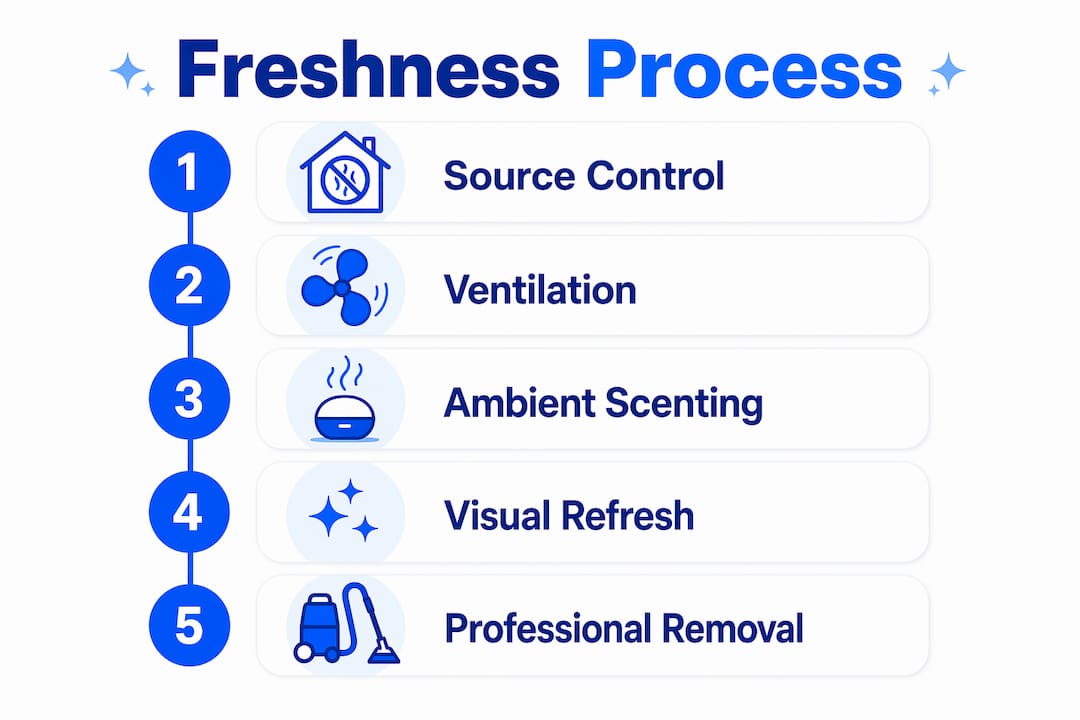
Freshening a commercial space is defined as the systematic process of eliminating odor sources, improving air quality, and refreshing the visual environment to create a consistently clean and inviting atmosphere. Property managers and business owners who know how to freshen commercial spaces effectively go far beyond routine cleaning. They combine source odor control, HVAC management, ambient scenting technology, and visual updates into one coordinated approach. This guide covers each layer in practical terms, with specific tools, schedules, and techniques you can apply immediately.
What are the foundational cleaning practices to freshen commercial spaces?
The foundation of any freshness program is source control, not masking. The EPA identifies source control as the most effective strategy before introducing any scent or air cleaning technology. That means eliminating the origin of odors and dust before layering in any other solution.
The cleaning sequence matters more than most property managers realize. HEPA-filtered backpack vacuums reduce airborne dust by 30% one hour after cleaning compared to traditional vacuums. That number reflects a real difference in air quality for staff and clients who occupy the space throughout the day. Traditional vacuums without HEPA filtration actually reintroduce fine particles into the air, worsening conditions rather than improving them.
Follow this sequence for every commercial zone:
- Vacuum all surfaces first using a HEPA-filtered backpack vacuum before any wiping or mopping begins.
- Wipe hard surfaces with low-VOC, green-certified cleaning solutions after vacuuming is complete.
- Clean high-touch points daily including door handles, reception counters, elevator buttons, and restroom fixtures.
- Deep clean soft furnishings weekly including upholstered chairs, carpets, and fabric partitions that trap odors.
- Schedule monthly zone audits to identify areas where odors or dust accumulate between regular cleanings.
For cafes and food service environments, cleaning tips go further. Grease traps, drain lines, and refrigeration coils are common odor sources that standard janitorial schedules miss. Address these monthly at minimum.
Pro Tip: Never skip the vacuum-first sequence. Wiping dusty surfaces without vacuuming first simply spreads particulates across the room and into the air.
One often-overlooked scenario is renovation activity. Dust and fumes from construction spread through HVAC systems and contaminate the entire building if work zones lack proper containment. Use plastic sheeting and maintain negative pressure in any active renovation area to protect the rest of your commercial space during the work.
How can ventilation and air quality management improve freshness?
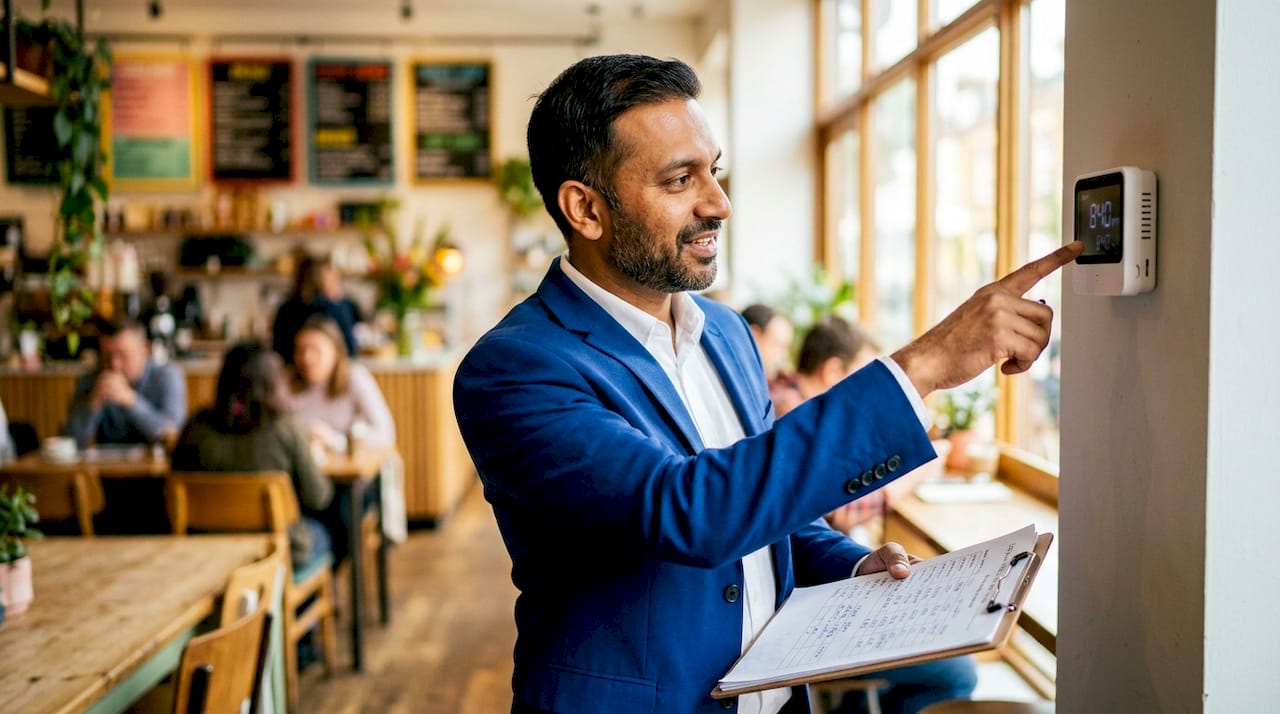
Ventilation is the single most powerful tool for maintaining a fresh commercial atmosphere. Most property managers set HVAC schedules once and forget them. Reprogramming airflow to match actual occupancy data produces measurable results. One office reduced CO2 levels from 1,100 ppm to 680 ppm in one week simply by adjusting its ventilation schedule to match real occupancy patterns. Lower CO2 means sharper thinking for staff and a noticeably fresher feel for clients.
Key air quality upgrades to prioritize:
- Upgrade to MERV 13+ filters in your HVAC system to capture fine particulates, allergens, and airborne contaminants that lower-rated filters miss.
- Add standalone HEPA purifiers with activated carbon filters in high-traffic zones like reception areas and meeting rooms when full HVAC upgrades are not feasible. Air purifiers with HEPA and carbon filters deliver sustained particulate reduction in exactly these spaces.
- Control humidity between 40% and 60% to prevent mold growth, which is a primary source of musty odors in commercial buildings.
- Never block supply or return vents with furniture, signage, or storage. Blocked vents create dead zones where stale air and odors concentrate.
- Schedule HVAC maintenance quarterly including coil cleaning, drain pan inspection, and duct checks to prevent the system itself from becoming an odor source.
Pro Tip: Install a simple CO2 monitor in your busiest zones. When readings exceed 1,000 ppm, increase fresh air intake immediately. The monitor pays for itself in staff productivity alone.
For retail environments, ventilation improvements also contribute to measurable increases in property value over time. A well-ventilated space signals quality maintenance to both tenants and buyers.
What role does ambient scenting play in commercial freshness?
Ambient scenting is the controlled introduction of fragrance into a commercial environment to reinforce cleanliness and enhance brand perception. Done correctly, it is one of the most powerful tools in a property manager’s kit. Properly executed scenting can increase customer dwell time by 44% and lift category sales by 15–30% within 90 days. Those results depend entirely on correct implementation.
Scenting technology: standalone vs. HVAC-integrated
| Feature | Standalone diffusers | HVAC-integrated nebulizers |
|---|---|---|
| Best for | Single zones, small spaces | Large open-plan floors |
| Installation | Plug-and-play, no contractor | Requires HVAC access |
| Coverage | One room per unit | Entire air handler zone |
| Cost | Lower upfront | Higher upfront, lower per-zone |
| Control | Manual or app-based | Centralized scheduling |
Most commercial buildings require one diffuser per distinct zone. HVAC-integrated scenting works best with shared return plenums, which are rare in multi-zone buildings. For most offices, retail stores, and cafes, standalone diffusers placed at zone entry points deliver more consistent results.
Implementation best practices:
- Start intensity at 30–40% and adjust upward over the first week based on occupant feedback. Beginning at low intensity prevents the overpowering effect that makes clients associate scent with poor air quality rather than cleanliness.
- Rotate scents seasonally to prevent nose blindness. Staff and regular clients stop noticing a fixed scent within weeks, eliminating its effect entirely. Seasonal scent rotation keeps the ambiance fresh for both groups.
- Select clean, neutral fragrances for offices and healthcare-adjacent spaces. Reserve bolder scents for retail and hospitality environments where brand identity supports them.
- Never use scent to mask odors. Fragrance is a sensory tool, not a substitute for ventilation or odor removal. Over-scenting signals to clients that something is being hidden.
Pro Tip: Pair your scenting program with HVAC filtration upgrades. Combining subtle fragrance with proper filtration enhances both perceived and actual air quality, which is the combination that drives real results.
How does a visual refresh complement a freshness strategy?
A clean-smelling space that looks tired still reads as neglected. Visual freshness signals care and attention to clients before they process any other sensory input. The good news is that a visual refresh rarely requires a full refit.
Re-merchandising and rearranging existing fixtures creates frictionless, intuitive customer flow without spending on new furniture or construction. Troy Ware, a retail environment specialist, notes that balanced sightlines and logical product groupings modernize a space’s feel more effectively than new paint alone.
Practical visual refresh steps for property managers and business owners:
- Update signage fonts and graphics to replace dated typography. Outdated signage ages a space faster than worn flooring.
- Rebalance sightlines by removing visual clutter at eye level. Clear sightlines make spaces feel larger and cleaner.
- Introduce live plants in reception areas and common zones. Plants signal active maintenance and improve perceived air quality.
- Replace worn soft furnishings selectively. A single reupholstered chair at reception has more visual impact than replacing all chairs in a back office.
- Improve lighting temperature in key zones. Switching to 3,000–4,000 Kelvin LED lighting in reception and retail areas creates a cleaner, more welcoming appearance.
The visual layer works in concert with your cleaning and scenting program. When clients see clean surfaces, smell a neutral fragrance, and move through a well-organized space, the combined impression is one of genuine quality. Each element reinforces the others.
Key Takeaways
Freshening a commercial space requires source odor elimination, proper ventilation, calibrated scenting, and a visual refresh working together as one coordinated system.
| Point | Details |
|---|---|
| Source control comes first | Eliminate odors at their origin before introducing any scent or air technology. |
| Cleaning sequence matters | Vacuum with HEPA equipment before wiping to reduce airborne dust by 30%. |
| Ventilation drives air quality | Reprogramming HVAC to match occupancy can cut CO2 levels nearly in half within one week. |
| Scenting requires calibration | Start diffusers at 30–40% intensity and rotate scents seasonally to prevent nose blindness. |
| Visual updates signal cleanliness | Re-merchandising and updated signage refresh a space’s appeal without costly construction. |
What I’ve learned from real commercial freshness projects
The most common mistake I see property managers make is treating scent as the solution rather than the finish. They install a diffuser, choose a pleasant fragrance, and consider the job done. Within two weeks, the odor complaint returns because the source was never addressed. Scent applied over an unresolved odor problem does not neutralize it. It creates a layered smell that clients find worse than the original.
The projects that produce lasting results always start with a thorough source audit. That means pulling out furniture, inspecting drain lines, checking HVAC coils, and identifying every location where organic material accumulates. Only after that audit is complete does scenting or visual work add real value.
The second pattern I’ve observed is over-investment in technology before fixing basics. A $3,000 HVAC-integrated nebulizer in a building with clogged return vents and MERV 8 filters will underperform a $200 standalone diffuser in a properly maintained space. Get the workplace odor fundamentals right first, then layer in technology.
The properties that consistently receive positive feedback from tenants and clients are the ones with a written maintenance schedule, a quarterly scent review, and a clear escalation path when odors appear. Freshness is not a one-time project. It is an ongoing operational standard.
— Master
Professional odor removal for commercial properties

When in-house cleaning and ventilation adjustments are not enough, the problem is almost always a deeply embedded odor source that surface-level methods cannot reach. Masterodorremoval specializes in permanent odor elimination for commercial spaces, using eco-friendly, green-certified methods that avoid ozone and chlorine treatments entirely. The team addresses tobacco, mildew, food, and smoke odors at the molecular level, restoring genuinely neutral interiors for offices, retail environments, hospitality venues, and more.
Same-day and next-day service is available for property managers who need fast results. Learn more about Masterodorremoval’s commercial odor removal specialists and request a tailored assessment for your property.
FAQ
What is the most effective first step to freshen a commercial space?
Source control is the most effective first step. The EPA recommends eliminating the origin of odors before introducing any scent or air cleaning technology.
How often should commercial HVAC filters be replaced?
MERV 13+ filters in commercial buildings should be inspected monthly and replaced every 60–90 days depending on occupancy and air quality readings.
Can scent diffusers replace proper ventilation in a commercial space?
No. Fragrance is a sensory tool, not a substitute for ventilation. Over-scenting without proper airflow signals poor air quality to clients rather than cleanliness.
What is nose blindness and why does it matter for commercial scenting?
Nose blindness occurs when staff and regular clients stop detecting a fixed scent after repeated exposure. Seasonal scent rotation prevents this and keeps the ambient fragrance effective for everyone in the space.
How do I address odors during a commercial renovation?
Use plastic sheeting and maintain negative pressure in active work zones. Without proper containment, dust and fumes spread through HVAC and contaminate the entire building’s air supply.
Recent Comments