
TL;DR:
- Tobacco odor in walls results from thirdhand smoke residues that bond chemically with porous surfaces and off-gas over years. Ventilation and cleaning alone do not eliminate these embedded compounds, which require thorough removal, sealing, and professional treatment. Addressing all contamination reservoirs, including HVAC systems and soft furnishings, is essential for permanent odor elimination and healthier indoor environments.
Tobacco odor in walls is caused by thirdhand smoke, the toxic residue of nicotine and other chemicals that embed in porous surfaces long after smoking stops. This is not a surface-level smell you can air out or mask with a candle. The Cleveland Clinic, the EPA, and the Thirdhand Smoke Resource Center all confirm that these residues can persist for months or years, releasing odor continuously into your living space. If you have moved into a home where someone smoked, or if you are trying to remove tobacco smell from your own walls, understanding what you are actually dealing with is the first step toward fixing it.
What is thirdhand smoke and why does it cause lasting tobacco odor on walls?
Thirdhand smoke is the term used by researchers and health authorities to describe the residual tobacco chemicals that settle on surfaces after a cigarette is extinguished. It is distinct from firsthand smoke, which the smoker inhales directly, and secondhand smoke, which others breathe in the air. Thirdhand smoke is what remains after the air clears. It sticks to walls, ceilings, carpets, furniture, and dust particles.
The chemical makeup of thirdhand smoke is what makes it so persistent. Nicotine, formaldehyde, benzene, and dozens of other compounds bond chemically to surfaces rather than simply sitting on top of them. Drywall, wood trim, and latex paint are all porous materials. They absorb these compounds the way a sponge absorbs water. Once absorbed, the chemicals do not simply evaporate. They off-gas slowly over time, which is why you can walk into a room that has not been smoked in for years and still detect the smell.
The scale of this persistence is striking. Thirdhand smoke residue has been found on apartment surfaces more than five years after the last smoking occurred, sometimes at levels comparable to actively smoked-in homes. That finding means a fresh coat of paint over contaminated drywall does not solve the problem. The odor source is still there, locked inside the wall material itself.
Key chemical behaviors that explain why removal is so difficult:
- Surface bonding: Nicotine reacts with nitrous acid in the air to form tobacco-specific nitrosamines, which are carcinogenic compounds that bond tightly to painted and unpainted surfaces.
- Dust absorption: Tobacco chemicals adhere to airborne dust particles, which then settle into every crack, corner, and fabric surface in the room.
- Layered buildup: Years of smoking create multiple layers of residue inside paint and drywall, not just on the surface.
- Reactivation: Heat and humidity cause embedded compounds to off-gas more aggressively, which is why the smell often seems worse in summer.
The EPA confirms that ventilation alone does not remove thirdhand smoke. Opening windows moves air around but does nothing to extract chemicals bonded to your walls. This is the core reason why deodorizing cigarette smell requires more than airing out a room.
How do you identify if tobacco odor in your home comes from thirdhand smoke?
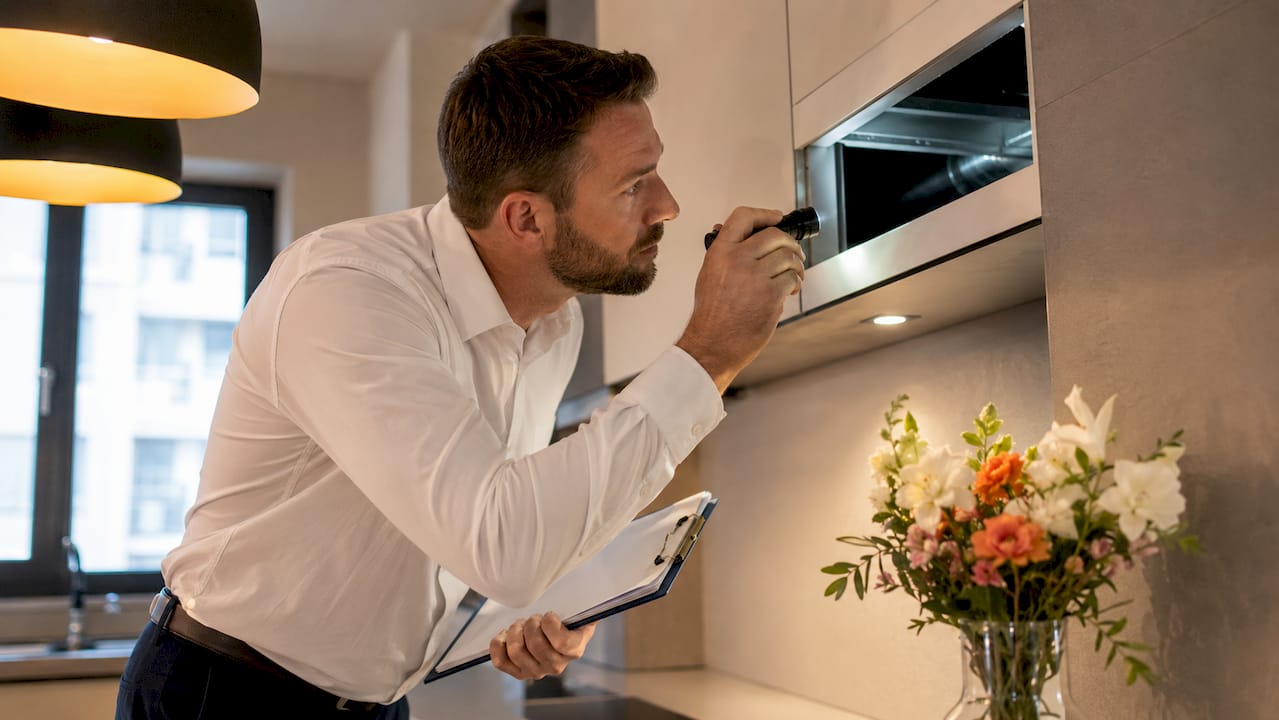
The most important thing to understand about thirdhand smoke contamination is that you cannot always smell it. Odor detection by smell alone is unreliable. A home can have significant residue levels without triggering an obvious odor, especially if you have been living in the space and have grown accustomed to the baseline smell.
That said, there are clear signs that point to thirdhand smoke as the source of tobacco odor in your walls:
- Yellow or brown staining on walls and ceilings: Tobacco stains on walls are a direct sign of tar and nicotine buildup. These stains often appear near light switches, window frames, and vents where airflow concentrates residue.
- Persistent smell after cleaning: If you have wiped down surfaces and the smell returns within days, the odor source is inside the material, not on it.
- Smell that intensifies with heat: Warm weather or running the heat causes embedded chemicals to off-gas more actively, producing a stronger smell.
- Odor in rooms where no one smoked: In multi-unit housing, tobacco residue travels between units through shared walls, ductwork, and electrical outlets. You can have a contamination problem without ever having smoked in your unit.
HVAC systems are a major and often overlooked source of recontamination. Tobacco residue in ducts and filters continuously recirculates through your home every time the system runs. Cleaning walls while leaving a contaminated HVAC system untouched is like mopping a floor while a muddy pipe drips overhead.
Pro Tip: Before buying or renting a home, ask about the smoking history of the property and adjacent units. Request an inspection of HVAC filters. A brown or yellow filter in a home listed as non-smoking is a reliable indicator of thirdhand smoke contamination.
Odor removal methods compared: what actually works on tobacco-contaminated walls?
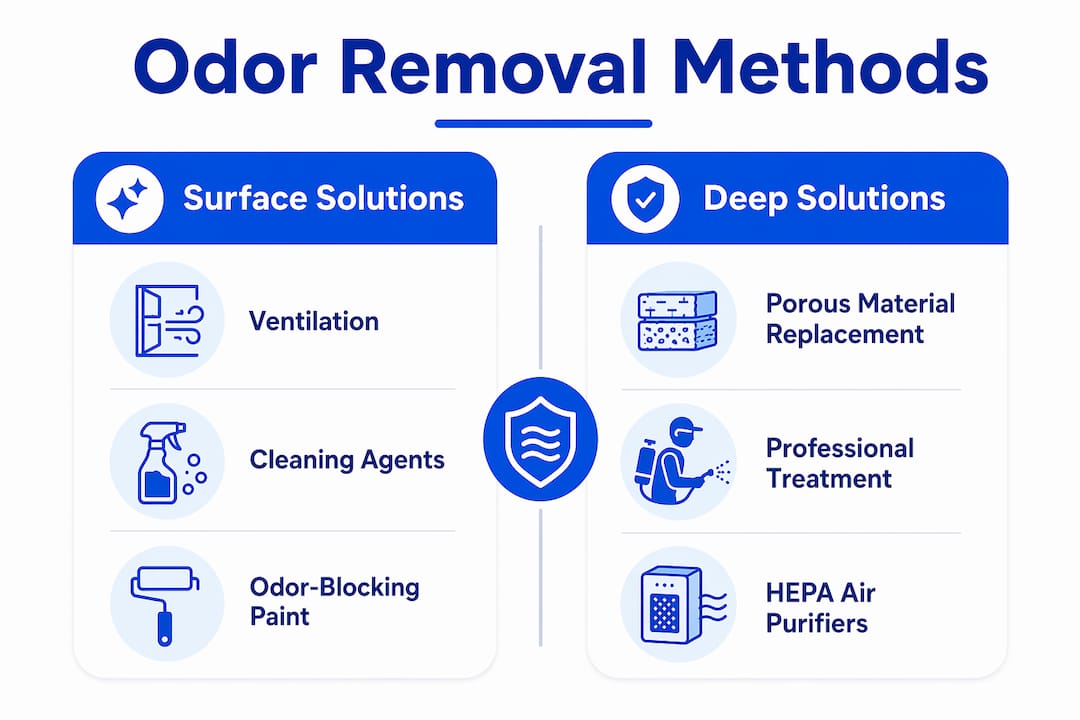
Not all tobacco smoke smell solutions are equal. Some approaches address surface odor. Others reach the embedded contamination. The difference determines whether the smell comes back.
| Method | What it does | Limitation |
|---|---|---|
| Ventilation and airing out | Dilutes airborne odor temporarily | Does not remove bonded surface residue |
| Household cleaners | Removes surface dirt and light residue | Cannot penetrate porous materials |
| TSP (Trisodium Phosphate) cleaning | Cuts through tar and nicotine buildup on walls | Requires careful handling; does not seal residue |
| Odor-blocking primer and paint | Seals residue inside walls to stop off-gassing | Only effective after thorough cleaning; fails if applied over heavy buildup |
| Porous material replacement | Eliminates contaminated reservoirs entirely | Costly; necessary for carpets, curtains, and insulation |
| Professional odor removal | Targets all contamination reservoirs with specialized equipment | Highest cost; most complete results |
Trisodium Phosphate, commonly called TSP, is the cleaning agent most professionals recommend before painting over tobacco residue. It cuts through the greasy tar layer that standard cleaners leave behind. Without this step, paint adhesion fails and odor rebounds through the new paint within weeks.
Odor-blocking primers from brands like Zinsser BIN or Kilz Premium are specifically formulated to seal nicotine and smoke compounds inside the wall surface. They work, but only when applied over a properly cleaned surface. Applying primer directly over heavy tobacco stains on walls without cleaning first is one of the most common mistakes homeowners make.
Replacing porous materials is non-negotiable in heavily contaminated spaces. Carpets, curtains, upholstered furniture, and even ceiling tiles act as reservoirs that continuously re-release odor into the air. Cleaning walls while leaving contaminated carpets in place means the smell will return.
Pro Tip: When repainting after tobacco contamination, apply two coats of shellac-based primer rather than one coat of water-based primer. Shellac bonds more aggressively to nicotine compounds and provides a more reliable seal against odor rebound.
Practical steps to remove tobacco smell from your home
Eliminating tobacco odor from walls and surfaces requires a systematic approach. Treating one area while ignoring others guarantees the smell returns.
Inspect and replace HVAC filters immediately. Contaminated filters recirculate tobacco particles every time your system runs. Replace filters and schedule a professional duct cleaning if the system has been running in a smoked-in space. Better indoor air quality starts with clean air pathways.
Clean all hard surfaces with TSP solution. Mix TSP according to package directions and wash walls, ceilings, baseboards, and trim. Wear gloves and eye protection. TSP is effective but caustic. Let surfaces dry completely before any further treatment.
Remove or deep-clean all porous materials. Carpets, drapes, upholstered furniture, and mattresses either need professional cleaning or replacement. The Cleveland Clinic recommends replacing contaminated soft materials as part of any serious thirdhand smoke mitigation effort. Cleaning alone rarely eliminates odor from heavily saturated fabrics.
Apply odor-blocking primer before repainting. Use a shellac-based or high-adhesion oil-based primer on all cleaned wall surfaces. Two coats provide better sealing than one. Follow with a quality latex topcoat. This step is covered in detail in Masterodorremoval’s guide to smoke residue and repainting.
Use eco-friendly odor neutralizers on remaining surfaces. Enzyme-based or plant-derived neutralizers break down odor compounds chemically rather than masking them. Apply to hard surfaces, inside cabinets, and along baseboards after cleaning.
Call a professional when DIY methods fall short. Professional odor removal services use thermal fogging and other specialized methods that penetrate wall cavities and reach contamination that surface cleaning cannot access. For severe cases, professional intervention is the only reliable path to permanent odor elimination.
Pro Tip: After completing all cleaning and repainting steps, run an air purifier with a HEPA and activated carbon filter for at least two weeks. This captures any residual particles that off-gas during the curing period after painting.
Key Takeaways
Tobacco odor in walls is a thirdhand smoke problem that requires source elimination, not just surface cleaning or masking.
| Point | Details |
|---|---|
| Thirdhand smoke is the core cause | Nicotine and chemicals bond chemically to porous wall surfaces and off-gas for years. |
| Ventilation alone fails | The EPA confirms airing out does not remove surface-bonded tobacco residue. |
| HVAC systems spread contamination | Dirty ducts and filters recirculate tobacco particles throughout the home continuously. |
| Cleaning before repainting is mandatory | TSP cleaning followed by shellac-based primer is required to prevent odor rebound through new paint. |
| Professional help delivers complete results | Thermal fogging and specialized equipment reach contamination that DIY methods cannot access. |
Why I believe most people underestimate this problem
I have worked on tobacco odor cases where homeowners had repainted three times and still could not remove tobacco smell from their walls. Every single time, the root cause was the same. They treated the symptom, not the source.
The chemistry of thirdhand smoke is genuinely unforgiving. Nicotine does not just sit on a wall. It reacts with compounds in the air and transforms into new chemicals that bond even more aggressively to surfaces over time. A room that smelled faintly of smoke five years ago can have a higher concentration of harmful residue today than it did when someone was actively smoking in it. That is not intuitive, and most people never learn it until they have already spent money on solutions that did not work.
The health dimension makes this more serious than a comfort issue. Children are especially vulnerable to thirdhand smoke exposure because they touch surfaces, put hands in mouths, and breathe air closer to the floor where dust concentrations are highest. If you have children in a home with tobacco odor, the urgency of proper remediation goes beyond smell.
My honest recommendation is to treat any home with visible tobacco stains on walls or a persistent cigarette smell as a contaminated property requiring a full remediation plan. That means addressing every reservoir: walls, HVAC, soft furnishings, and hidden cavities. Partial efforts produce partial results. The smell comes back, and so does the frustration.
Eco-friendly methods work well when applied correctly and in the right sequence. The goal is not to overpower the odor with chemicals. The goal is to eliminate the source entirely and seal what cannot be removed. That is the only approach that holds up over time.
— Master
How Masterodorremoval can eliminate stubborn tobacco odors permanently
Tobacco odor embedded in walls and building materials requires more than a cleaning crew with spray bottles. Masterodorremoval specializes in the permanent elimination of tobacco odor from homes, rental properties, and commercial spaces using eco-friendly, green-certified methods that do not rely on ozone or chlorine treatments.

The team at Masterodorremoval addresses every contamination reservoir in a single treatment plan, from HVAC systems and wall surfaces to soft furnishings and hidden cavities. Same-day and next-day service is available, and every job is backed by a satisfaction guarantee. If you are dealing with tobacco odor that keeps coming back despite your best efforts, professional odor removal is the reliable next step. Contact Masterodorremoval for a personalized assessment and a treatment plan built around your specific situation.
FAQ
What causes tobacco odor to stay in walls for years?
Thirdhand smoke residue, made up of nicotine and other tobacco chemicals, bonds chemically to porous wall materials like drywall and paint. These compounds off-gas slowly over time, releasing odor continuously even years after smoking has stopped.
Does repainting walls remove tobacco smell?
Repainting alone does not remove tobacco smell. Walls must be cleaned with a TSP solution first, then sealed with a shellac-based odor-blocking primer before applying new paint. Skipping the cleaning step causes odor to bleed through the new paint within weeks.
Can tobacco odor travel from a neighbor’s unit into mine?
Yes. In multi-unit housing, tobacco residue spreads through shared walls, ductwork, and electrical outlets. Residents who have never smoked can still have significant thirdhand smoke contamination in their units.
Is tobacco odor in walls a health risk?
Thirdhand smoke residue contains carcinogenic compounds that enter the body through skin contact, inhalation, and ingestion. Children face the highest risk because of their contact with contaminated surfaces and their proximity to dust on floors.
When should I call a professional for tobacco odor removal?
Call a professional when the smell persists after cleaning and repainting, when tobacco stains on walls reappear through fresh paint, or when the contamination involves HVAC systems and wall cavities that surface cleaning cannot reach.
Recent Comments