
TL;DR:
- Effective commercial kitchen odor control involves a multi-stage system that combines baffle filtration, UV-C or electrostatic precipitation, and activated carbon filtration to reduce odors by up to 95 percent. Proper sequencing protects system components, reduces maintenance costs, and minimizes fire and regulatory risks. Implementing professional design and smart monitoring ensures long-term performance and compliance in high-volume kitchen environments.
Commercial kitchen odor control is the systematic process of removing cooking odors, grease vapors, and volatile organic compounds from kitchen exhaust before they reach staff, neighbors, or the surrounding environment. The industry term for the full process is “kitchen exhaust treatment,” and it relies on multiple technologies working in sequence rather than any single device. Systems like ZERO+ from UVTech and Capture Ray from Halton represent the current standard. Done correctly, odor control protects your staff, satisfies regulators, and keeps your neighbors from filing complaints that could shut you down.
What is commercial kitchen odor control and how does it work?
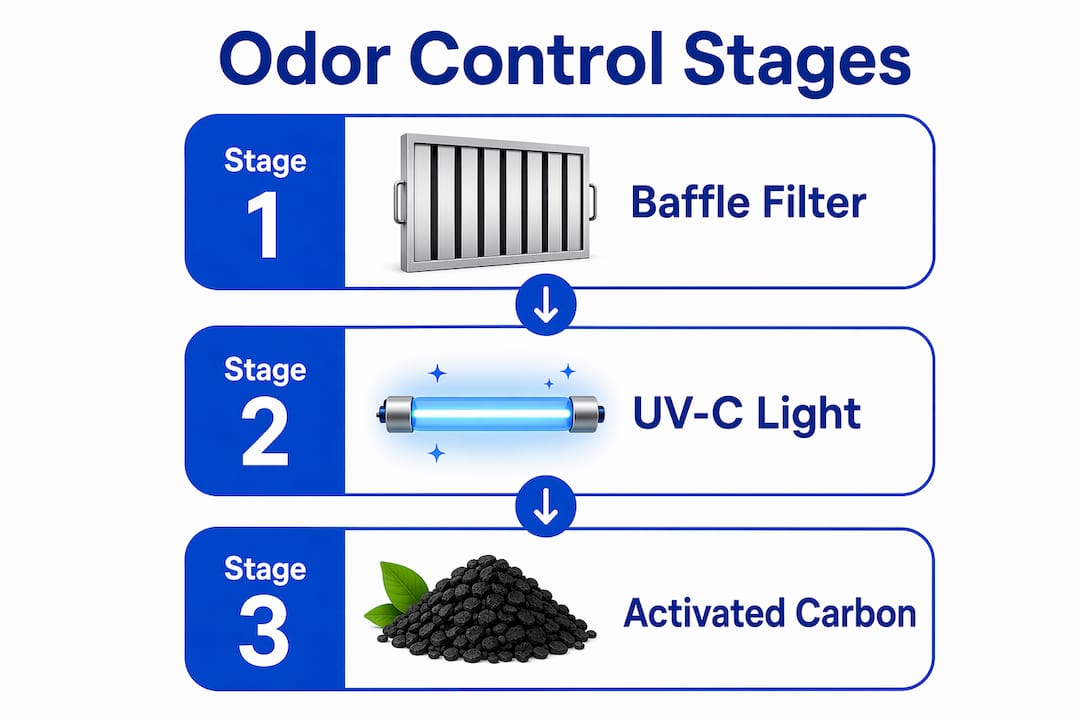
Commercial kitchen odor control combines three core technologies in a fixed sequence: high-efficiency baffle filtration, UV-C or electrostatic precipitation, and activated carbon polishing. Each stage targets a different particle size and chemical compound. Skipping a stage or reversing the order causes rapid system failure and higher operating costs.
The process starts at the exhaust hood. Baffle filters capture large grease droplets before they enter the ductwork. This protects every downstream component from being overwhelmed by heavy grease loads. Without this first stage, the entire system degrades within weeks.
The second stage uses UV-C light or electrostatic precipitation. UV-C light breaks down odor molecules and fine aerosol particles through photochemical reactions. Electrostatic precipitators charge fine particles and collect them on grounded plates. Both methods target the submicron grease aerosols that baffle filters cannot catch. Systems like the Halton Capture Ray UV-C unit combine UV-C with electrostatic capture for maximum aerosol removal in a single unit.
The third stage is activated carbon filtration. Carbon adsorbs the residual volatile organic compounds that survive the first two stages. This is the final odor polishing step, and it only works when the upstream stages have already removed the bulk of grease and aerosols. The three-stage ecology chain is the recognized best practice for commercial kitchen exhaust treatment.
Pro Tip: Never evaluate an odor control system by a single technology. Ask vendors to specify all three stages and confirm the exact sequence before purchasing.
| Technology | Primary Target | Key Advantage |
|---|---|---|
| Baffle Filtration | Coarse grease droplets | Low cost, easy to clean |
| UV-C Light | Fine aerosols, VOCs | Breaks down odor molecules chemically |
| Electrostatic Precipitation | Submicron grease particles | High capture rate for fine aerosols |
| Activated Carbon | Residual VOCs and odors | Final polishing, highest odor reduction |
How effective is commercial kitchen odor control?
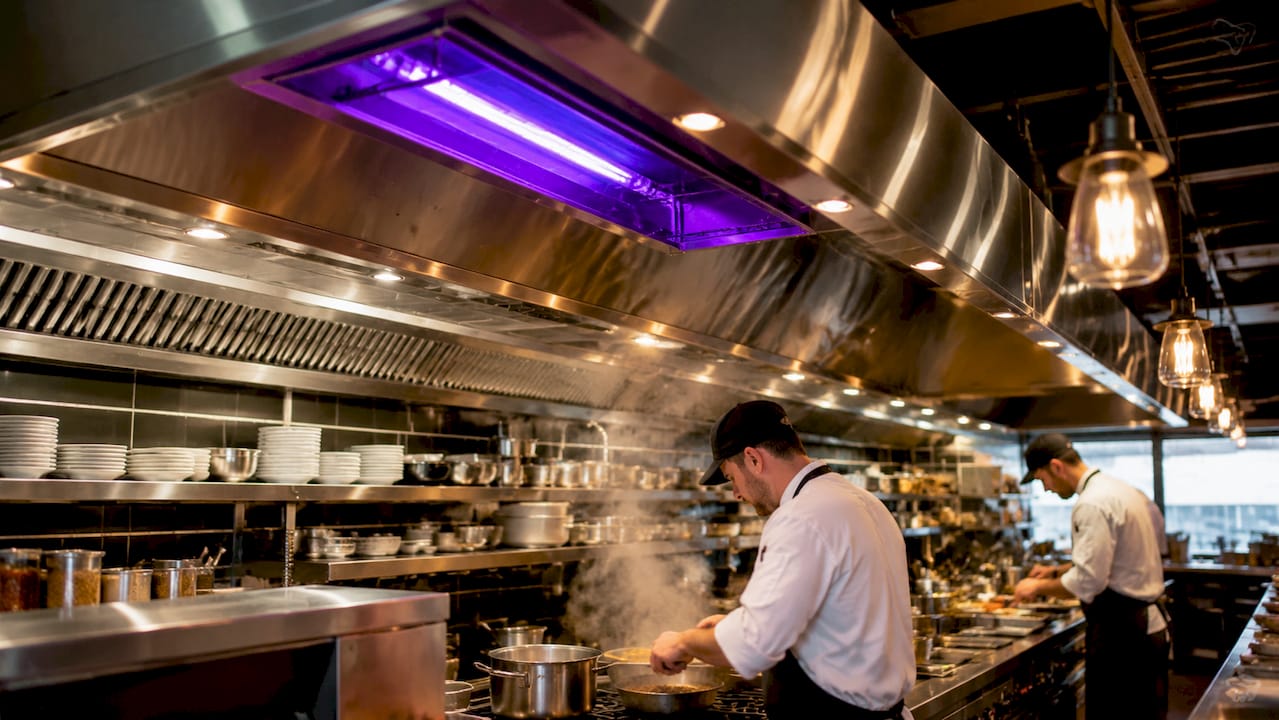
The measurable results from properly engineered systems are significant. Odor load reduction of 74–95% is achievable with multi-stage systems, and duct cleaning costs drop by 70–75%. That level of reduction means most kitchens can extend mandatory cleaning intervals dramatically, cutting both labor costs and operational disruption.
Fire safety is a direct benefit that operators often overlook. Odor control systems remove combustible grease aerosols from exhaust ducts and suppress spark propagation. Grease buildup in ductwork is one of the leading causes of commercial kitchen fires. A system that reduces grease accumulation by up to 95% is also a fire prevention investment, not just a comfort upgrade.
Community relations and regulatory compliance are equally concrete benefits. Failing to manage kitchen odors can trigger neighbor complaints, municipal intervention, or legal action in dense urban areas. Restaurants operating near residential buildings or in mixed-use developments face the highest exposure. A documented odor control system gives you a defensible position with regulators and a practical argument against nuisance claims.
Pro Tip: Request a baseline odor measurement before installation and a post-installation measurement at 30 days. That data becomes your compliance record if a neighbor complaint ever reaches a municipal authority.
| Benefit | Measured Impact |
|---|---|
| Odor load reduction | 74–95% with multi-stage systems |
| Duct cleaning cost savings | 70–75% reduction in cleaning frequency |
| Grease buildup in ducts | Reduced by up to 95% |
| Fire risk | Lower due to reduced combustible grease accumulation |
| Regulatory exposure | Reduced through documented compliance |
Why does technology sequencing matter so much?
Sequence is not a preference. It is an engineering requirement. Placing carbon filters prematurely causes rapid saturation with grease, collapsing their lifespan from months to weeks. A carbon filter that costs hundreds of dollars and should last a quarter becomes a monthly expense when installed before grease capture stages.
Humidity adds another layer of complexity. High humidity negatively impacts activated carbon adsorption, reducing its capacity to capture VOCs. Kitchens that produce large amounts of steam, such as those with high-volume boiling or steaming equipment, may need pre-dehumidification or alternative adsorbents like silica gel before the carbon stage. Ignoring humidity in system design is one of the most common and costly mistakes operators make.
Different kitchen types require different sequencing priorities. A fryer-intensive kitchen produces heavy grease aerosols and requires a robust electrostatic or UV-C stage before carbon. A bakery produces fewer grease aerosols but more flour dust and VOCs, shifting the emphasis toward carbon capacity and dust pre-filtration. No single technology fits every kitchen. Design must match the actual emissions profile of your cooking equipment.
Here is what correct sequencing protects against:
- Carbon filter saturation from unfiltered grease
- UV-C lamp fouling from heavy grease coating
- Electrostatic plate overload from coarse particle bypass
- Humidity-driven carbon capacity collapse in steam-heavy kitchens
- Increased fire load from grease accumulation in ductwork
Pro Tip: Ask your system designer for a stage-by-stage pressure drop calculation. If they cannot provide one, they have not engineered the system for your specific cooking load.
What practical steps should operators take when implementing odor control?
Getting the system right from the start saves money and avoids retrofits. Follow these steps when selecting and operating kitchen exhaust treatment equipment.
Audit your cooking load first. Identify which equipment produces the highest grease and odor output. Fryers, charbroilers, and woks generate far more aerosols than ovens or steamers. Your system must be sized for peak output, not average output.
Design for peak surges, not steady state. Static odor control systems often fail during peak kitchen hours because they cannot respond to sudden increases in vapor and grease load. Specify systems with variable-speed fans or real-time monitoring that adjusts output based on actual kitchen activity.
Build a maintenance schedule before installation. UV-C lamps degrade over time and require scheduled replacement. Maintenance includes UV tube cleaning and carbon filter changes, and modern control panels alert operators when performance drops below threshold. Build these costs into your operating budget from day one.
Verify compliance with local fire and environmental codes. Many jurisdictions require specific filtration standards for commercial kitchen exhaust. The National Fire Protection Association’s NFPA 96 standard governs kitchen ventilation in the United States. Confirm your system meets or exceeds those requirements before installation.
Plan for retrofit if you are in an existing building. Older ductwork may not accommodate multi-stage systems without modification. A qualified engineer should inspect the existing exhaust path before specifying equipment. Undersized ductwork creates back-pressure that reduces system effectiveness and can damage equipment.
Consider staff comfort and workplace odor removal as part of the ROI calculation. Staff who work in kitchens with effective exhaust treatment report lower fatigue and fewer respiratory complaints. That translates to lower turnover and fewer sick days, both of which have measurable cost impact.
Operators who treat odor control as a one-time installation rather than an ongoing system consistently underperform on odor reduction targets. Treat it as infrastructure, not equipment.
Key takeaways
Effective commercial kitchen odor control requires a precisely sequenced multi-stage system combining baffle filtration, UV-C or electrostatic precipitation, and activated carbon to achieve 74–95% odor reduction while cutting maintenance costs and fire risk.
| Point | Details |
|---|---|
| Three-stage sequencing is required | Baffle filtration, UV-C or electrostatic, then carbon must run in that exact order. |
| Carbon filters fail early if misplaced | Installing carbon before grease capture stages causes rapid saturation and costly replacements. |
| Odor reduction reaches 74–95% | Properly engineered multi-stage systems deliver measurable, documented odor load reduction. |
| Duct cleaning costs drop 70–75% | Effective grease capture reduces cleaning frequency and lowers labor and maintenance expenses. |
| System design must match cooking type | Fryer-heavy kitchens and bakeries require different stage emphasis and sizing approaches. |
What i have learned after years of working with commercial odor problems
The single biggest mistake I see operators make is buying a single-technology solution because it was cheaper at the point of sale. A standalone carbon filter or a standalone UV-C unit will not hold up in a real commercial kitchen. The cooking load overwhelms any single stage within months, and the operator ends up spending more on replacement media than a properly engineered system would have cost.
What actually works is treating odor control the same way you treat fire suppression: as a life-safety and liability system that requires professional design, professional installation, and scheduled professional service. The operators I have worked with who take that approach rarely have neighbor complaints or regulatory problems. The ones who cut corners on system design are the ones calling us after a municipal notice arrives.
The future of kitchen exhaust treatment is moving toward smart monitoring. Systems that track UV-C lamp output, carbon saturation levels, and real-time airflow are already available from manufacturers like UVTech and Halton. That data lets you replace components on condition rather than on a fixed schedule, which reduces costs and prevents unexpected failures during service. If you are specifying a new system in 2026, smart monitoring should be a baseline requirement, not an optional upgrade.
Partnering with specialists who understand both the engineering and the regulatory side of kitchen exhaust treatment is the fastest path to a system that performs. The habits that reduce indoor odors matter too, but they are no substitute for a properly designed exhaust treatment system in a high-volume commercial kitchen.
— Master
How Masterodorremoval helps commercial kitchen operators get it right
Masterodorremoval specializes in professional odor removal for commercial spaces, including restaurants and food service environments. The team brings hands-on experience with multi-stage exhaust treatment systems, eco-friendly methods, and compliance-focused approaches that protect operators from regulatory exposure and neighbor complaints.

Masterodorremoval uses green-certified practices and avoids ozone or chlorine treatments, making the process safe for staff and guests. Same-day and next-day service availability means you are not waiting weeks to address an active odor problem. Whether you need a full system assessment, targeted treatment after a grease fire, or ongoing odor control support for a high-volume kitchen, Masterodorremoval delivers results backed by licensed professionals and a satisfaction guarantee.
FAQ
What is commercial kitchen odor control?
Commercial kitchen odor control is the process of removing cooking odors, grease vapors, and volatile organic compounds from kitchen exhaust using a multi-stage system of baffle filtration, UV-C or electrostatic precipitation, and activated carbon. The goal is to protect staff, neighbors, and equipment while meeting fire and environmental regulations.
How much odor reduction can a commercial kitchen system achieve?
A properly engineered multi-stage system reduces odor load by 74–95% and cuts duct cleaning costs by 70–75%. Results depend on correct technology sequencing and system sizing for the specific cooking load.
Why is activated carbon always the last stage in odor control?
Activated carbon must be the final stage because upstream grease capture protects it from rapid saturation. Placing carbon before baffle or UV-C stages causes it to clog with grease within weeks, destroying its odor-adsorbing capacity.
What happens if a restaurant ignores kitchen odor control?
Ignoring odor control can lead to neighbor complaints, municipal intervention, or legal action, particularly in urban or mixed-use buildings. Beyond community impact, uncontrolled grease buildup in ductwork significantly increases fire risk.
Does humidity affect kitchen odor control systems?
Yes. High humidity reduces activated carbon’s adsorption capacity, making it less effective at capturing residual odors. Kitchens with heavy steam output may require pre-dehumidification or alternative adsorbents like silica gel to maintain system performance.
Recent Comments