
TL;DR:
- Maintaining an odor-free workspace involves controlling airflow, cleaning routines, and odor sources systematically. Ventilation, filter replacement, and targeted cleaning are essential for long-term odor management. Addressing odor sources directly and fostering a culture of responsibility are key to professional indoor air quality.
Maintaining an odor-free workspace is defined as the systematic control of airflow, cleaning schedules, and odor sources to keep indoor air neutral and professional. The standard industry term for this practice is indoor air quality management, and it covers everything from HVAC filter cycles to employee scent etiquette. A fresh office is not a luxury. It directly affects how clients perceive your business and how productively your team performs. The methods that work combine ventilation optimization, targeted cleaning routines, and smart odor neutralization. None of them require heavy fragrances or expensive equipment. What they do require is consistency.
How to maintain an odor-free workspace through ventilation
Ventilation is the single most powerful tool for keeping workplace odors under control. Fresh air dilutes pollutants before they concentrate at nose level. Without it, even a clean office can develop a stale, unpleasant smell within hours.
Office equipment is a bigger odor contributor than most managers realize. Printers, copiers, and computers release VOCs into shared air through their heating elements and plastic components. Those compounds travel through shared HVAC systems and affect the entire floor, not just the room where the equipment sits.
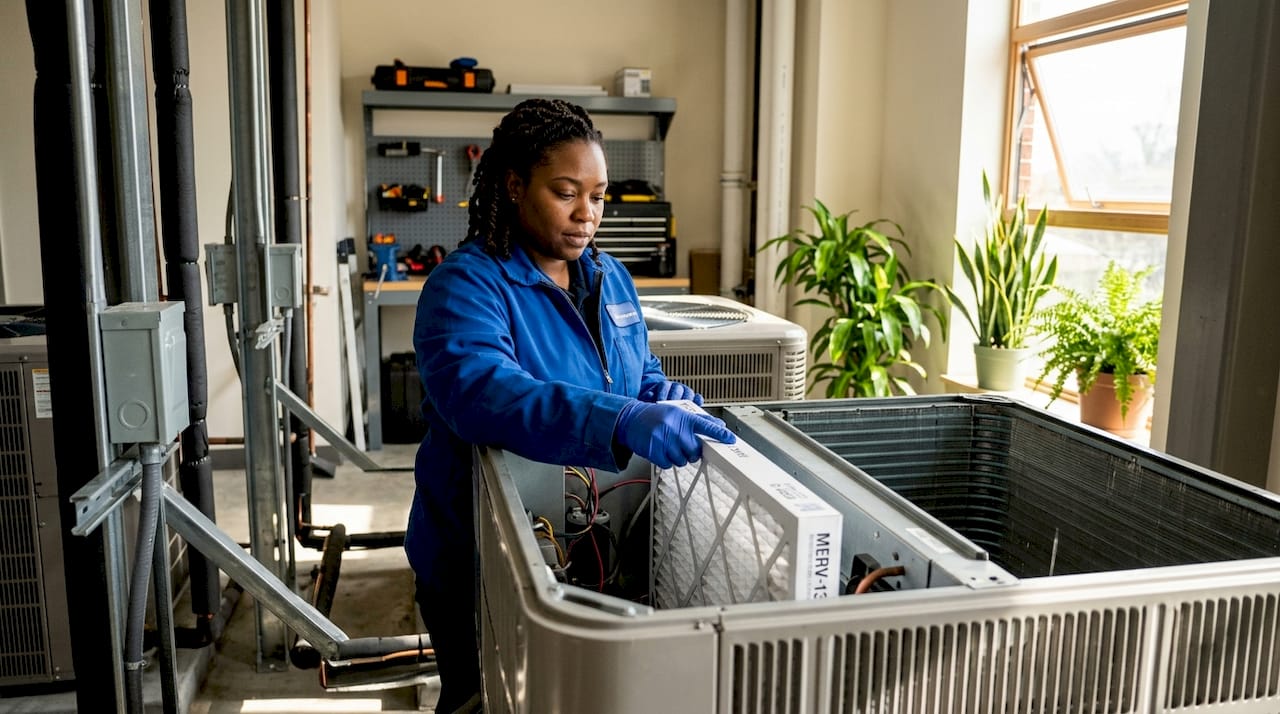
The fix starts with your filters. MERV-11 or MERV-13 filters trap mold spores and fine particulates that carry odors, and they need replacement every 60–90 days. Skipping that cycle means your HVAC system actively redistributes trapped odors rather than filtering them out.
Pro Tip: Place air purifiers with activated carbon filters near high-output equipment like printers and copiers. Activated carbon captures gaseous compounds that standard HVAC filters miss entirely.
Beyond filters, here are the ventilation practices that make the biggest difference:
- Open windows during low-traffic hours to flush stale air, even for 10–15 minutes in the morning.
- Inspect air vents and grilles quarterly for dust buildup, which restricts airflow and traps odor particles.
- Prioritize ventilation near equipment that generates heat or emissions to prevent VOC spread through shared ducts.
- Schedule duct cleaning annually in high-traffic commercial spaces, not just when problems appear.
- Consider air purifiers with HEPA and carbon filters for conference rooms and break areas where odors concentrate fastest.
Routine HVAC filter replacement and duct cleaning are the foundation of sustained odor control. Everything else builds on top of that foundation.
What daily cleaning practices keep an office smelling fresh?
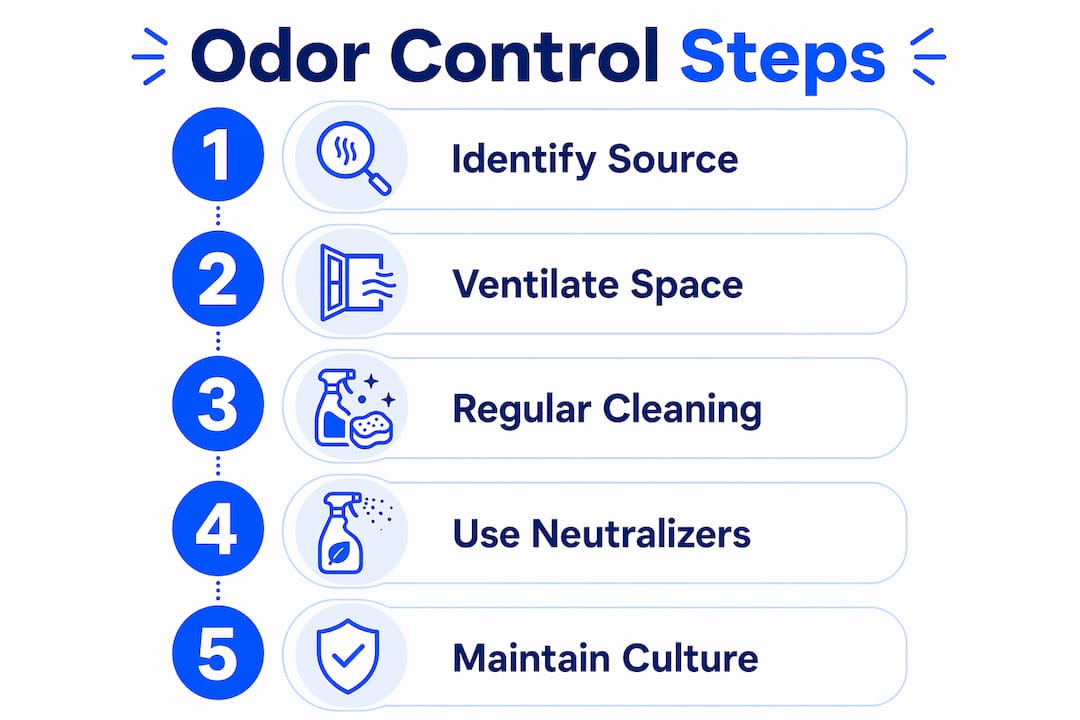
Cleaning frequency matters more than cleaning intensity. A thorough weekly scrub does not undo five days of accumulated food waste, trash, and biological odors. The most effective approach ties cleaning schedules to traffic patterns rather than fixed times.
Adaptive cleaning schedules timed to start-of-day, post-lunch, and end-of-day peaks prevent odor buildup far better than a single daily pass. Post-lunch is the most overlooked window. Break rooms and restrooms accumulate the most odor-generating material in that 60-minute period, and leaving it until end-of-day allows smells to set.
Your choice of cleaning product is also a direct odor variable. Fragrance-free, eco-certified cleaning agents reduce indoor VOCs and avoid the chemical smell that many offices mistake for “clean.” Heavy synthetic fragrances in cleaning products degrade indoor air quality and irritate employees with sensitivities. Products certified by Green Seal or EPA Safer Choice meet both performance and air quality standards.
Pro Tip: A thorough office deep clean, covering dusting, electronics, and upholstered surfaces, takes roughly 90 minutes and removes embedded odors that surface-level daily cleaning misses. Schedule one every two weeks in high-traffic offices.
The non-negotiable daily habits for a fresh office:
- Dispose of all garbage daily to prevent biological contamination. Overnight trash is the most common source of persistent morning odors.
- Ban perishable food storage at desks. Food left in drawers or on surfaces generates odors within hours.
- Clean the office refrigerator on a fixed weekly schedule, not when someone complains.
- Wipe down break room surfaces after the lunch rush, not just at end of day.
- Use microfiber cloths instead of standard rags. Microfiber traps particles rather than spreading them across surfaces.
The goal is to remove odor sources before they become odor problems. Cleaning is prevention, not correction.
Which odor control products actually neutralize smells?
The distinction between masking and neutralizing is the most important concept in odor management. Masking adds a competing scent on top of an existing one. Neutralizing breaks down or absorbs the odor molecule itself. Most commercial air fresheners mask. That is why the smell returns within hours.
Activated charcoal and baking soda are the most effective natural neutralizers for workplace use. Activated charcoal absorbs gaseous compounds through its porous surface. Baking soda neutralizes acidic odor molecules chemically. Both work without adding any competing scent to the air.
Subtle natural scents and live greenery signal a well-maintained space rather than a space with something to hide. A single potted plant or a light diffuser with eucalyptus or citrus does more for office atmosphere than a battery of synthetic air fresheners. The key word is subtle. Stacking multiple fragranced products creates an overwhelming mix that clients and employees find just as unpleasant as the original odor.
| Method | How It Works | Best Use Case | Limitation |
|---|---|---|---|
| Activated charcoal | Absorbs gaseous odor compounds | Break rooms, restrooms, storage areas | Needs replacement every 30–60 days |
| Baking soda | Neutralizes acidic odor molecules | Refrigerators, trash areas, carpets | Short effective range |
| HEPA + carbon air purifier | Filters particles and gases simultaneously | Conference rooms, high-traffic areas | Requires filter maintenance |
| Live plants | Absorb some VOCs, signal freshness | Open office areas, reception | Minimal impact on strong odors |
| Synthetic air freshener | Adds competing scent | Not recommended for professional spaces | Masks rather than eliminates |
The table above makes the hierarchy clear. Mechanical filtration and natural absorbers outperform fragrance products in every professional setting. Reserve any fragrance use for a single, low-intensity source placed near a ventilation point for even distribution.
How does workplace culture affect office odor management?
Technical systems handle the air. People create the odors. No HVAC upgrade eliminates the problem of a colleague reheating fish in the break room or wearing heavy cologne in a shared space. Culture and policy fill that gap.
The most effective offices treat odor management as a shared responsibility, not a facilities issue. Here is how to build that culture:
- Set a scent policy. Define reasonable limits on personal fragrances, including perfume, cologne, and scented lotions. Frame it as a health and comfort policy, not a personal criticism. Many employees have fragrance sensitivities that go unreported.
- Communicate openly about food odors. Post clear guidelines in break rooms about which foods are appropriate to heat or store. Specific examples work better than vague requests. “No fish, no reheated curry” is clearer than “be considerate.”
- Log odor complaints by time and location. Tracking odor patterns lets facility managers identify whether a smell originates from a specific piece of equipment, a particular area, or a recurring behavioral pattern. That data turns reactive complaints into targeted fixes.
- Assign area ownership. When a team is responsible for the cleanliness of their immediate workspace, odor problems surface faster and get resolved at the source rather than escalating to facilities.
- Normalize the conversation. A neutral-smelling workplace signals professionalism to clients and improves employee comfort. Making that goal explicit gives staff a reason to participate rather than ignore the issue.
Behavioral change is slower than buying an air purifier, but it produces more durable results. The habits that reduce indoor odors long-term are almost always behavioral, not technological.
Key takeaways
Keeping a workspace odor-free requires removing odor sources first, then supporting that effort with proper ventilation, adaptive cleaning schedules, and natural neutralizers rather than fragrance products.
| Point | Details |
|---|---|
| Ventilation comes first | Replace MERV-11 or MERV-13 filters every 60–90 days and inspect vents quarterly to prevent odor recirculation. |
| Clean to traffic patterns | Schedule cleaning at start-of-day, post-lunch, and end-of-day rather than once daily to prevent odor buildup. |
| Neutralize, do not mask | Use activated charcoal, baking soda, or HEPA and carbon air purifiers instead of synthetic air fresheners. |
| Culture drives compliance | Log odor complaints by time and location, set scent policies, and assign area ownership to make odor control a team habit. |
| Source removal is the priority | No fragrance or filter system compensates for unaddressed odor sources like uncollected trash or VOC-emitting equipment. |
What i’ve learned after years of removing stubborn workspace odors
The most common mistake I see in professional spaces is treating odor as a fragrance problem. Managers buy plug-in air fresheners, diffusers, and scented cleaning products, and then wonder why the smell returns by Tuesday. It returns because the source was never addressed.
Source removal is the only permanent solution. Everything else is maintenance. A printer releasing VOCs into a poorly ventilated server room will defeat any air freshener you put next to it. A refrigerator cleaned once a month will generate odors that no amount of baking soda fully contains. The technical systems, HVAC filters, air purifiers, and cleaning schedules, exist to support a clean baseline. They cannot create one from scratch.
The human factor is underestimated almost universally. I have worked in spaces where the HVAC was immaculate and the cleaning crew was excellent, but one employee’s habit of leaving food waste at their desk created a persistent odor problem that no equipment could solve. Policy and culture are not soft add-ons to an odor management program. They are load-bearing elements.
My practical advice: start with a walk-through at the beginning and end of the workday, using your nose as the primary instrument. Note where odors are strongest and at what time. That data tells you whether the problem is equipment, behavior, cleaning timing, or ventilation. Then fix the source. Add fragrance last, if at all, and keep it subtle. A workspace that smells like nothing is a workspace that smells professional.
— Master
When in-house efforts are not enough
Some odors resist routine maintenance entirely. Tobacco smoke, mildew embedded in walls, and persistent food odors absorbed into upholstery and flooring require professional-grade treatment that goes beyond what cleaning crews and air purifiers can deliver.

Masterodorremoval specializes in permanent odor elimination for commercial spaces using eco-friendly, green-certified methods. No ozone. No chlorine. The team addresses the source at a molecular level, not the symptom at nose height. For businesses that need results before a client visit or lease renewal, workplace odor removal with same or next-day availability means you are not waiting a week for a solution. If your space has an odor that cleaning has not resolved, explore professional odor removal services built specifically for commercial environments.
FAQ
What causes persistent odors in office spaces?
Persistent office odors typically originate from VOC-emitting equipment, accumulated food waste, inadequate HVAC filtration, or materials like carpet and upholstery that absorb and re-release odor compounds over time.
How often should office HVAC filters be replaced for odor control?
MERV-11 or MERV-13 filters should be replaced every 60–90 days. Longer intervals allow trapped odor particles and mold spores to recirculate through the ventilation system.
Are air fresheners effective for keeping workplace odor-free?
Synthetic air fresheners mask odors rather than eliminate them, and heavy fragrance use can degrade indoor air quality. Activated charcoal, baking soda, and HEPA and carbon air purifiers are more effective for professional spaces.
How do you find the source of an office odor?
Log the time and location of odor complaints to identify patterns. Most persistent office odors trace back to a specific source, such as a piece of equipment, a waste area, or a behavioral habit, rather than general air quality.
When should a business call a professional odor removal service?
Call a professional when odors persist after addressing ventilation, cleaning schedules, and odor sources. Embedded odors in flooring, walls, or upholstery require treatment methods beyond standard facility maintenance.
Recent Comments