
TL;DR:
- A service contract for odor removal is a binding document that clearly outlines the scope, methods, pricing, and liability terms of professional odor neutralization services, protecting both parties. It specifies whether odors are neutralized or masked, details the treatment frequency, and itemizes add-on services with transparent pricing. Choosing a detailed, written agreement ensures legal protection, clarity of expectations, and consistent service, especially for jobs exceeding $200.
A service contract for odor removal is a legally binding agreement that defines the scope, frequency, pricing, and liability terms for professional odor neutralization services. Unlike a verbal handshake or a simple invoice, this type of odor removal service agreement creates a written record that protects both the client and the service provider. It specifies exactly what odors will be treated, which methods will be used, and what outcomes are guaranteed. For homeowners, property managers, auto dealers, and hospitality operators, understanding what goes into this contract is the difference between a smooth service experience and a costly dispute.
What does an odor removal service contract typically cover?
An odor removal service contract is defined as a formal document outlining every material term of the professional relationship between a client and an odor remediation provider. According to legal experts, written contracts protect both parties by providing clear evidence of agreed scope and liability terms. That protection matters most when expectations diverge after the job is done.
The core components found in most contracts include:
- Scope of services. This section specifies whether the provider will neutralize odors at the molecular level or simply mask them with fragrance. Contracts should explicitly differentiate neutralization from masking to prevent disputes. Molecular deactivation, the method used by providers like Masterodorremoval, is fundamentally different from spraying a deodorizer.
- Frequency and scheduling. Single-visit jobs and recurring maintenance plans require different language. A contract for a luxury auto dealership might specify bi-weekly treatments, while a residential move-out job is a one-time engagement.
- Pricing and add-on services. The contract lists base rates and itemizes any specialty treatments such as pet odor neutralizers, upholstery cleaning, or mildew remediation. Leaving pricing to verbal agreement creates billing confusion.
- Liability and exclusion clauses. Industry practice recommends excluding liability for pre-existing permanent stains or structural damage that predates the service. This protects providers from unrealistic expectations.
- Termination and cancellation terms. Recurring contracts need clear notice periods, typically 30 days, and conditions under which either party can exit without penalty.
Pro Tip: Before signing, ask the provider to highlight the exclusion clause. If a contract does not have one, request that pre-existing conditions be documented in writing before work begins.
How do pricing and add-on services work in odor removal contracts?

Pricing in an odor elimination service plan follows a modular structure. A base rate covers the primary treatment for a defined space, and add-ons are priced separately based on the type of odor, surface, or specialized equipment required. This structure gives clients transparency and gives providers a documented basis for billing.
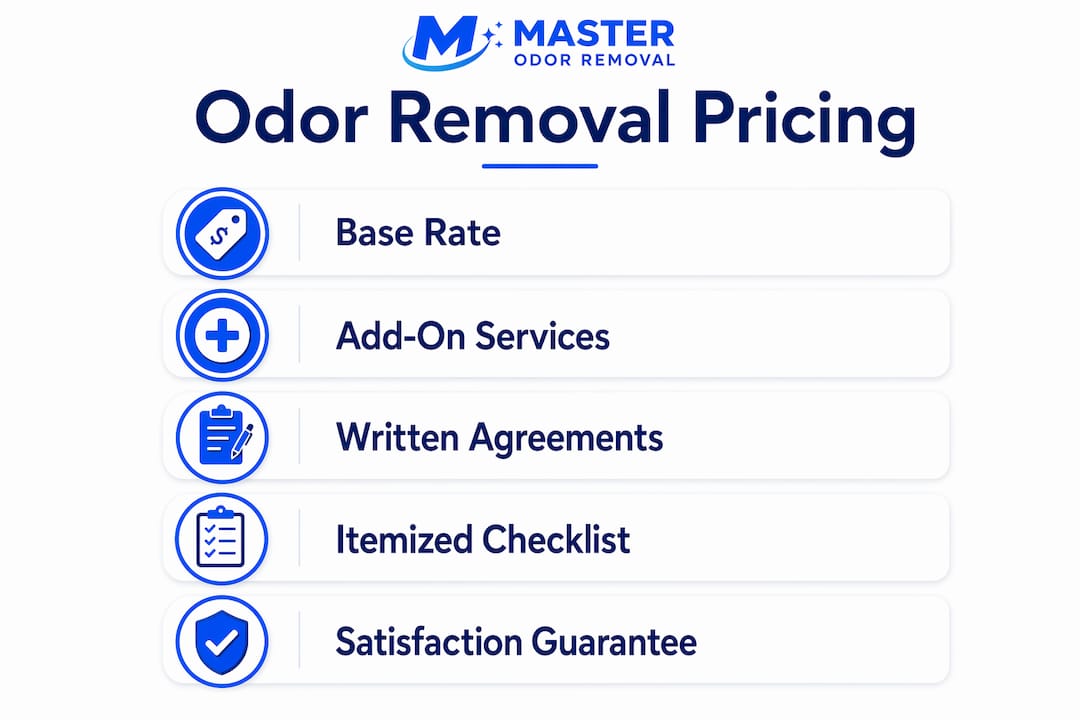
The table below shows typical pricing ranges for common add-on services found in professional odor remediation contracts:
| Service | Typical Price Range | Notes |
|---|---|---|
| Pet odor neutralizer | $35 per application | Applied to carpets, upholstery, or vehicle interiors |
| Upholstery cleaning | $85 to $200 per piece | Price varies by size and fabric type |
| Tile and grout treatment | $75 to $150 per room | Often paired with mildew odor removal |
| Protector application | $50 to $100 per area | Extends time between service visits |
| Smoke or tobacco treatment | $100 to $300 per space | Requires specialized equipment and chemistry |
Written add-on sales increase average ticket size by 20 to 35 percent compared to verbal sales. That figure reflects a real behavioral difference: clients who see a checklist of services with prices attached are more likely to approve additional work than clients who hear the same options spoken aloud. For businesses managing multiple properties, this transparency also simplifies budget forecasting.
Pro Tip: Request an itemized add-on checklist as part of your contract, not as a separate verbal quote. When every service and its price appear in the signed document, there are no surprises on the final invoice.
What types of odor removal contracts exist and how do they differ?
Not every odor problem requires the same contractual structure. The two primary formats are single-job contracts and recurring service agreements, and the differences between them go beyond frequency.
| Contract Type | Best For | Key Features |
|---|---|---|
| Single-job contract | Move-outs, vehicle sales, one-time events | Fixed scope, flat pricing, one service visit |
| Recurring maintenance contract | Hotels, restaurants, dealerships, rental properties | Scheduled visits, supply refills, volume pricing |
| Commercial contract | Restaurants, gyms, healthcare facilities | Off-hours clauses, industrial chemistry, labor surcharges |
| Residential contract | Homeowners, landlords, short-term rental hosts | Standard chemistry, flexible scheduling, per-room pricing |
Commercial odor control contracts often require recurring automated visits, typically bi-monthly, and include provisions for maintenance and supply refills. This reflects a core reality of commercial odor management: a single treatment rarely holds in high-traffic environments. A hotel lobby treated once in January will need attention again by March.
Commercial contracts also carry clauses that residential agreements do not. Restaurants, for example, require specific provisions for off-hours service and surcharges, plus different cleaning chemistry suited for heavy grease and industrial odors. Standard residential formulas are not effective against the compounds produced by commercial kitchen exhaust or industrial solvents. A contract that does not specify chemistry type leaves the client with no recourse if the wrong product is used.
Residential contracts tend to be simpler but still require written documentation for any job exceeding $200. Written agreements are essential for protecting providers from unrealistic expectations about irreparable issues, such as odors embedded in drywall or subflooring that cannot be fully eliminated without structural remediation.
What are the benefits of having a written odor removal service agreement?
A written odor removal service agreement does more than document a transaction. It actively shapes the quality of the service relationship from the first visit forward.
The primary benefits for clients include:
- Legal protection. A signed contract is admissible evidence if a dispute reaches small claims court or requires mediation. Verbal agreements are nearly impossible to enforce.
- Scope clarity. The contract defines exactly which areas, surfaces, and odor types are covered. A client who expects tobacco odor removal from a vehicle’s HVAC system needs that scope written in, not assumed.
- Price certainty. Fixed pricing in a contract prevents providers from adding charges after the fact. Clients know the total cost before work begins.
- Quality benchmarks. Contracts can specify that professional odor removal uses HEPA scrubbers and thermal fogging to treat odors at the source. When the method is written in, the client has grounds to object if a provider substitutes inferior equipment.
- Repeat service reliability. For recurring contracts, written schedules prevent service gaps. A luxury hotel cannot afford an unannounced skip in its odor management program.
For service providers, the benefits mirror the client’s. A written agreement limits liability exposure, sets payment terms, and reduces the time spent resolving misunderstandings. Facility managers rely on professional advice for configuring odor programs that match property layout and guest volume. A contract formalizes that advisory relationship and makes it actionable.
How to choose and negotiate a service contract for odor removal
Choosing the right odor remediation contract requires more than comparing prices. Follow these steps to select and negotiate a contract that actually serves your needs:
- Assess your odor sources before the first call. Identify whether the problem is pet, tobacco, mildew, food, or chemical in origin. Different sources require different chemistry, and your contract should reflect that specificity.
- Read the scope of work section first. This is the most important clause in any service agreement. Confirm it lists the exact spaces, surfaces, and odor types being treated. Vague language like “general odor treatment” gives the provider too much latitude.
- Verify the method: neutralization, not masking. Ask the provider directly whether their treatment deactivates odor molecules or covers them with fragrance. Then confirm that language appears in the contract.
- Negotiate add-ons in writing, not over the phone. Any specialty service, whether pet odor neutralization, upholstery treatment, or HVAC deodorizing, should appear as a line item in the signed document before work begins.
- Confirm scheduling terms match your operational needs. A restaurant cannot accept daytime service visits. A vacation rental needs same-day turnaround between guests. Make sure the contract reflects your actual schedule.
- Review cancellation terms carefully. Recurring contracts should allow cancellation with 30 days’ written notice and no penalty after the initial term. Contracts that lock you in for 12 months without an exit clause deserve scrutiny.
For move-in and move-out scenarios, a single-job contract with a clearly defined scope is usually sufficient. For commercial properties or luxury interiors that require ongoing maintenance, a recurring agreement with documented visit frequency and supply provisions is the stronger choice.
Key takeaways
A written service contract for odor removal is the single most effective tool for protecting both clients and providers from misunderstandings, billing disputes, and unmet expectations.
| Point | Details |
|---|---|
| Contract definition | A legally binding agreement covering scope, pricing, frequency, and liability for odor neutralization. |
| Neutralization vs. masking | Contracts must specify molecular deactivation, not fragrance masking, to set accurate expectations. |
| Add-on pricing | Written add-on checklists increase average ticket size by 20 to 35 percent and prevent billing surprises. |
| Contract types | Single-job and recurring agreements serve different needs; commercial contracts require off-hours and chemistry clauses. |
| Written protection | Any job exceeding $200 warrants a written agreement to protect both parties from disputes. |
Why clear contracts matter more than most clients realize
After years of working across vehicles, yachts, hotels, and residential properties, the pattern I see most often is not a bad odor treatment. It is a misaligned expectation. A client assumes the contract covers the HVAC system. The provider assumed it covered only the cabin surfaces. Neither party wrote it down clearly, and the relationship ends badly despite a technically competent job.
The second most common issue is the neutralization versus masking confusion. Clients who have been sold fragrance-based treatments before often cannot tell the difference until two weeks later when the smell returns. When a contract specifies the method, that confusion disappears. The client knows what they are buying, and the provider is accountable to a documented standard.
The contracts I trust are the ones that are specific enough to be uncomfortable. If a contract does not mention what happens when an odor source is structural, or what the cancellation window is, or which chemistry will be used, those are not oversights. They are gaps that will cost someone money later. Insist on specificity. A provider who resists detailed contract language is telling you something important about how they handle disputes.
— Master
Get a clear, customized odor removal contract from Masterodorremoval
Masterodorremoval builds every service agreement around the specific property, odor source, and client timeline before any work begins. Whether you manage a luxury auto dealership, a boutique hotel, or a residential property between tenants, the contract you receive is itemized, plain-language, and backed by eco-friendly methods that never use ozone or chlorine.

Every client at Masterodorremoval gets a written scope of work, transparent add-on pricing, and a satisfaction guarantee before the first visit. For expert odor removal professionals who document every term in writing, visit Masterodorremoval’s service page and request a same-day or next-day consultation.
FAQ
What is a service contract for odor removal?
A service contract for odor removal is a legally binding agreement that defines the scope, pricing, frequency, and liability terms for professional odor neutralization. It protects both the client and the provider by documenting exactly what services will be performed and under what conditions.
What does odor removal typically cover in a service contract?
Most contracts cover the targeted spaces, odor types such as pet, tobacco, or mildew, the treatment method, and any add-on services like upholstery cleaning or HVAC deodorizing. Exclusion clauses typically protect providers from liability for pre-existing permanent stains or structural odor sources.
How much does a professional odor removal contract cost?
Base pricing varies by property size and odor type, with add-ons like pet odor neutralizers running approximately $35 per application and upholstery cleaning ranging from $85 to $200 per piece. Written contracts that include add-on checklists increase average transaction values by 20 to 35 percent compared to verbal agreements.
Do I need a written contract for a one-time odor removal job?
Any odor removal job exceeding $200 warrants a written agreement to protect both parties from disputes over scope and results. Single-job contracts are simpler than recurring agreements but should still specify the method, the areas covered, and any exclusions.
What is the difference between odor neutralization and odor masking in a contract?
Odor neutralization refers to molecular deactivation of odor compounds using equipment like HEPA scrubbers or thermal fogging, while masking simply covers smells with fragrance. A well-written contract specifies which method the provider will use, giving the client a clear standard to hold the provider accountable to.
Recent Comments