
TL;DR:
- Regular odor maintenance is essential because masking only obscures smells and allows underlying sources to persist and worsen.
- Effective odor control involves neutralizing chemical molecules at their source and preventing new odors through scheduled sanitation and monitoring tools, protecting health and property value.
Most people assume a quick spray of air freshener or lighting a candle takes care of an odor problem. It doesn’t. The scent fades, the source remains, and the smell comes back stronger. Understanding why regular odor maintenance matters is the difference between a space that feels genuinely fresh and one that just smells like lavender covering something worse. Whether you manage a property, run a business, or simply care about the quality of your home environment, consistent odor upkeep is not optional. It is the foundation of comfort, health, and real estate value.
Table of Contents
- Key Takeaways
- Why regular odor maintenance matters more than you think
- The real benefits of odor maintenance for health and property
- Methods that actually work for ongoing odor control
- Common mistakes that undermine odor control
- My perspective on what odor maintenance really costs you when ignored
- How professional odor removal fits into your maintenance plan
- FAQ
Key Takeaways
| Point | Details |
|---|---|
| Masking odors fails long-term | Sprays and candles trap smells beneath the surface, worsening scent pockets over time. |
| Health benefits are significant | Routine odor maintenance reduces allergens, mold risk, and respiratory irritants in indoor air. |
| Property value depends on scent | Poor odor control damages leasing conversions, guest reviews, and overall brand perception. |
| Neutralization beats masking | Altering odor molecules at the source creates permanent results that masking never achieves. |
| Technology supports consistency | Humidity and VOC sensors catch odor risks early before they escalate into expensive problems. |
Why regular odor maintenance matters more than you think
Odors don’t just appear. They build. Every interior space accumulates bacteria, organic debris, mold spores, and volatile chemical compounds over time. When conditions are right, these agents interact and produce the persistent, unpleasant smells that no amount of room spray can truly fix.
Here’s why that matters at a chemical level. Odor molecules bond to porous surfaces: upholstery, drywall, carpet fibers, wood, and HVAC ductwork. Once embedded, those molecules continue off-gassing long after the original source is removed. A pet accident cleaned with a standard household cleaner may look fine, but the bacterial residue generating the odor is still present and active.
Masking agents only cover smells. Worse, they frequently make the underlying problem harder to detect and can create “scent pockets” where competing fragrances trap and concentrate the original odor. True odor control requires:
- Neutralization: Altering the chemical structure of odor molecules so they no longer register as a smell
- Source removal: Eliminating the bacteria, mold, or organic matter generating the odor in the first place
- Barrier prevention: Regular maintenance that stops new odor-causing agents from accumulating
- Sanitation cycles: Scheduled cleaning with enzymatic or microbial cleaners that digest organic material rather than just moving it around
Pro Tip: When evaluating any odor product, ask whether it neutralizes or masks. A product that simply adds fragrance is not a maintenance solution. It is a delay tactic.
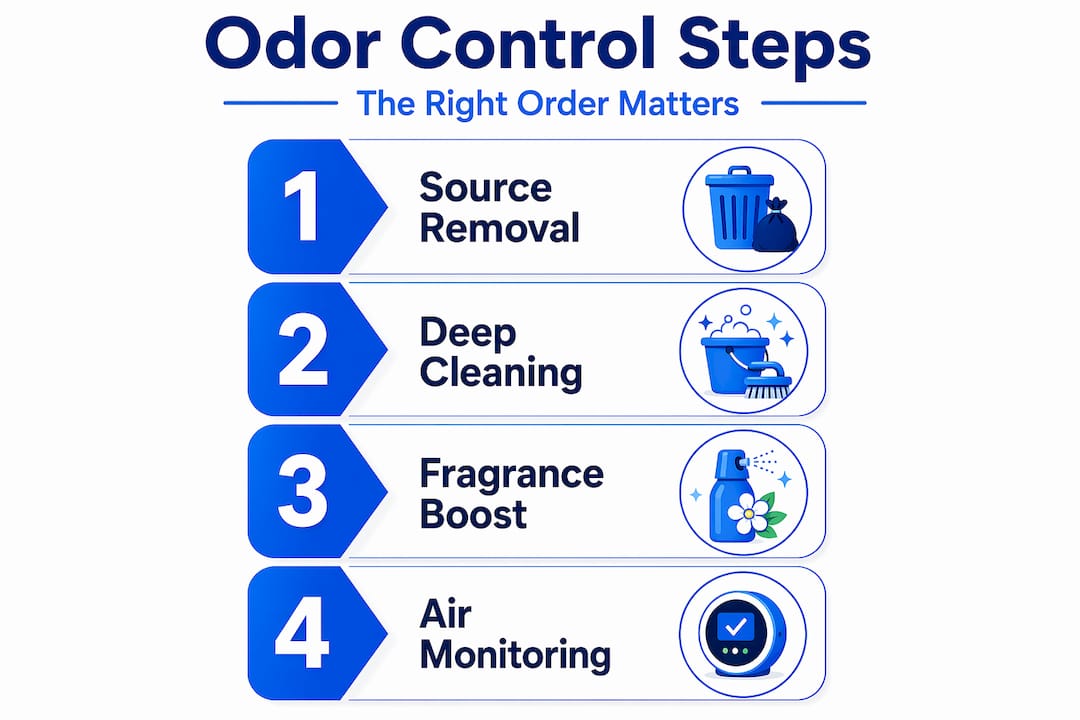
True odor control means eliminating sources first and only then applying light fragrance for ambiance. That sequence is what separates temporary fixes from lasting results.
The real benefits of odor maintenance for health and property
The benefits of odor maintenance extend well beyond comfort. They touch health outcomes, financial returns, and the long-term reputation of any space or brand.
Health and air quality
Indoor air quality is directly connected to odor control. Mold, mildew, bacteria, and volatile organic compounds (VOCs) that generate bad smells also trigger respiratory symptoms, allergic reactions, and cognitive fatigue. 90% of indoor air quality failures in public buildings are preventable with scheduled maintenance. That statistic applies equally to private homes, rental properties, and commercial spaces.
Mold prevention requires controlling moisture, organic material, and the time those two elements are allowed to coexist. Regular HVAC drain pan cleaning, humidity control, and rapid response to leaks are not optional extras. They are the baseline for a healthy interior.
Comfort and first impressions
Scent is the fastest sense to influence judgment. First impressions form in seconds based on smell, and that subconscious evaluation shapes how long people stay, how much they spend, and whether they return. For hospitality venues, retail spaces, and luxury properties, this is not abstract. It is revenue.
Property value and reputation
Poor odor control directly damages leasing conversions, online reviews, and the perceived quality of a property. Odors travel through shared ventilation systems in multi-unit buildings, meaning one problem tenant or neglected trash room can generate widespread dissatisfaction across an entire property.
For homeowners preparing to sell, for hotel operators managing guest reviews, and for auto dealers managing vehicle inventory, regular odor upkeep significance cannot be overstated. A space that smells clean feels well-maintained, trustworthy, and worth paying for.
HVAC efficiency and equipment lifespan
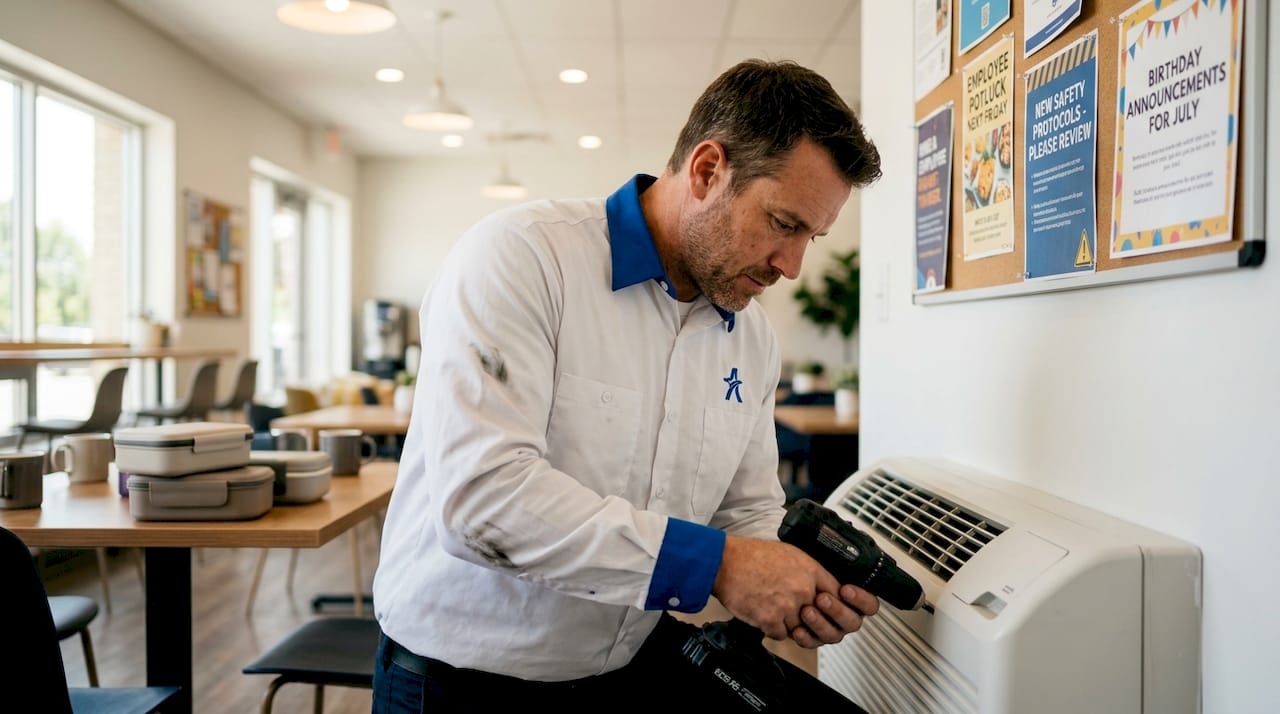
Consistent odor maintenance ties directly to HVAC performance. Routine HVAC maintenance improves seasonal energy efficiency by 10 to 20% and extends equipment lifespan by 25% or more. Regular air duct cleaning removes dust and allergens that both degrade air quality and generate musty odors. Maintaining your HVAC system is not just a mechanical task. It is an odor prevention strategy.
Methods that actually work for ongoing odor control
Knowing how to manage odors at scale requires understanding which tools and methods address root causes versus symptoms. Not all approaches are equal.
| Method | What it does | Best for |
|---|---|---|
| Enzymatic cleaners | Digest organic matter at the source | Pet odors, food spills, bathroom odors |
| Microbial sanitation | Introduces odor-consuming bacteria | Commercial kitchens, gyms, large facilities |
| HVAC filtration upgrades | Captures airborne odor-carrying particles | Whole-building air quality improvement |
| Hydroxyl generators | Neutralize odor molecules through UV light | Occupied spaces requiring safe, ongoing treatment |
| Humidity and VOC sensors | Detect conditions that produce odors before they escalate | Proactive monitoring in any building type |
| Ozone treatments | Kill bacteria and oxidize odors (requires vacancy) | Post-event or post-damage decontamination |
Sensors deserve more attention than they typically receive. Continuous IAQ monitoring that tracks humidity and CO2 levels automates maintenance work orders and reduces odor-related complaints by 83%. Catching a humidity spike before mold develops is far cheaper than remediating an established mold odor problem.
For interior environments like sustainable property maintenance, combining enzymatic cleaning schedules with humidity monitoring creates a two-layer defense. One addresses existing organic sources. The other prevents new sources from forming.
Pro Tip: Switch from monthly reactive cleaning to bi-weekly targeted maintenance in high-traffic zones like entryways, restrooms, and break rooms. These are the spaces where odor-causing bacteria accumulate fastest and spread most efficiently.
Common mistakes that undermine odor control
Even people who take odor seriously make errors that compromise their results. Recognizing these patterns is the first step toward a schedule that actually holds.
Relying on masking products. Sprays, plug-ins, and candles generate a temporary scent that competes with the underlying odor rather than removing it. Over time, layered fragrances create a dense, artificial scent environment that signals neglect to anyone walking in for the first time.
Nose-blindness. Occupants adapt to ambient smells within hours. Staff and residents genuinely stop noticing odors that are obvious to every visitor. This is why objective monitoring matters. Sensor-based monitoring must complement human observation to catch what noses miss.
Reactive cleaning only. Most facilities clean in response to complaints. By the time a complaint arrives, the odor source has had days or weeks to embed in surfaces and spread through ventilation. Why odor prevention is essential is precisely because reactive schedules always fall behind.
Ignoring odor migration. In multi-unit buildings, schools, and offices, odors travel through shared HVAC systems, corridors, and wall cavities. Treating one area in isolation misses the broader picture.
“Poor indoor air quality is rarely an isolated nuisance. Most failures are preventable via disciplined maintenance, not reactionary fixes.” — industry research on building IAQ
The pattern across all these mistakes is the same: odor is treated as an aesthetic issue rather than a maintenance priority. Shifting that mindset changes results immediately.
My perspective on what odor maintenance really costs you when ignored
I’ve watched clients spend tens of thousands of dollars on renovations and staging, then lose a deal or a hotel guest review because of a smell they stopped noticing three months earlier. That’s the real cost of neglect, and it’s never the smell people see coming.
In my experience, the “mask and cover” approach doesn’t just fail. It actively damages reputation. A sophisticated client walks into a space that smells like synthetic lavender on top of something damp, and they read it immediately. They can’t always name what they’re sensing, but they trust it. And they walk.
What I’ve learned from years working with premium properties, luxury dealerships, and hospitality clients is that proactive odor control is a form of brand management. The spaces that hold their value and earn their reviews are the ones on a maintenance schedule, not the ones reacting to problems. Monitoring tools, regular sanitation cycles, and professional-grade neutralization are not overhead. They are the infrastructure of a well-run space.
The uncomfortable truth is that most odor problems I’ve been called to fix were completely avoidable. They started as small, manageable issues and grew into structural problems because nobody had a system in place. The cost of prevention is always lower than the cost of remediation. Always.
— Master
How professional odor removal fits into your maintenance plan
Consistent maintenance keeps most odors at bay, but even the most disciplined schedule has limits. Embedded smoke, decades of pet odor, post-flood mildew, and deep tobacco contamination require professional-grade intervention that goes beyond what routine upkeep can address.

Masterodorremoval specializes in permanent odor elimination using eco-friendly odor solutions that avoid ozone and chlorine treatments, making them safe for occupied spaces and environmentally responsible. For homes, commercial properties, vehicles, and hospitality environments, the approach always targets the source rather than the symptom.
When a deep reset is needed, professional odor removal gives you a clean baseline to maintain from. From there, a scheduled maintenance program keeps the space performing at that level year-round. Same or next-day service is available, and every result is guaranteed.
FAQ
What causes persistent indoor odors?
Persistent odors are caused by bacteria, mold, organic residue, and VOCs embedded in porous surfaces like carpet, drywall, and upholstery. Masking products do not remove these sources, so the odor returns once the fragrance fades.
How often should odor maintenance be performed?
High-traffic spaces like commercial kitchens, gyms, and rental properties benefit from bi-weekly targeted maintenance. Residential spaces typically need monthly professional sanitation supplemented by ongoing humidity and ventilation management.
Why does masking odors make the problem worse?
Masking agents add fragrance on top of the odor source without neutralizing it. Over time, layered scents create dense “scent pockets” that are more noticeable than the original odor, signaling a neglected environment to first-time visitors.
Can odor control improve property value?
Yes. Poor odor control measurably reduces leasing conversions, depresses guest satisfaction scores, and damages brand perception for both residential and commercial properties. A consistently fresh-smelling space commands stronger pricing and better reviews.
What is the most effective odor removal method?
The most effective approach eliminates the odor source first through neutralization or enzymatic cleaning, then addresses any residual molecule presence before applying fragrance. Professional services that improve indoor air quality use this sequence consistently to achieve permanent results.
Recent Comments