
TL;DR:
- Effective car odor control requires using neutralizers like activated charcoal bags and enzyme cleaners, which target the source without damaging luxury materials. Ozone generators may remove odors quickly but pose significant risks to high-end interiors, making professional treatment necessary for persistent or severe odors. Routine maintenance, thorough source removal, and expert intervention ensure long-lasting freshness in luxury vehicle interiors.
That new car scent fades fast, and what replaces it is often worse: stale coffee, pet dander, a hint of mildew, or the ghost of someone’s cigarette from three owners ago. For luxury vehicle owners, dealership professionals, and anyone who depends on a pristine interior to make the right impression, a bad smell is a real problem. Spraying a pine-tree freshener on top of it is not a solution. This guide walks through the science-backed, eco-friendly strategies that actually neutralize odors at the source, without risking damage to high-end materials or filling your cabin with unnecessary chemicals.
Table of Contents
- Key criteria for effective car odor control
- Best eco-friendly methods to keep your car smelling fresh
- What about ozone generators, sprays, and ‘new car scent’ products?
- Eco-friendly solutions head-to-head: What actually works?
- When to call in a professional: Tough odors and luxury interiors
- What most guides miss: The real secret to a lasting fresh car interior
- Get expert help for flawless, eco-friendly car interiors
- Frequently asked questions
Key Takeaways
| Point | Details |
|---|---|
| Activated charcoal effectiveness | Charcoal bags offer superior and long-lasting odor absorption without risk to luxury interiors. |
| Limit ozone usage | Ozone is powerful but risky, best avoided for high-end or leather cars due to potential damage. |
| Eco-friendly options work | Enzyme cleaners, ventilation, and non-toxic approaches safely remove most mild odors. |
| Professional help for tough odors | Persistent smoke and pet smells often require expert, green-certified intervention for full removal. |
Key criteria for effective car odor control
Not every odor eliminator is created equal, and choosing the wrong one for a luxury interior can cost more than a fresh smell. Before reaching for any product or treatment, there are five things worth evaluating carefully.
- Effectiveness: The most important distinction is between products that neutralize odors and those that simply cover them up. A genuine neutralizer breaks the odor molecule apart or absorbs it permanently. A masking agent just layers a new scent on top of the old one, and eventually both smells compete for your attention.
- Material safety: Leather seats, natural wood trim, alcantara headliners, and brushed aluminum panels all react differently to chemicals, moisture, and heat. The treatment that works on a fleet vehicle may permanently discolor or crack a luxury cabin material.
- Sustainability: Eco-friendly solutions are non-toxic, biodegradable, and safe for repeated use. This matters especially when the car is used daily, or when the driver or passengers include children, pets, or anyone with chemical sensitivities.
- Time to results: Some solutions work within hours (enzyme sprays), while others are gradual (activated charcoal bags over 24 to 48 hours). Matching the solution to your urgency is part of the strategy.
- Cost and reusability: Many green solutions, like charcoal bags, can be recharged in sunlight and reused for months. Single-use sprays or ozone treatments may seem cheap upfront but add up quickly.
The ozone risks for luxury interiors are a good example of why effectiveness alone is not the right filter. Ozone generators can neutralize odors powerfully, but as drivingpress.com reports, ozone (O3) generators neutralize odors by oxidation but risk damaging luxury materials like leather if overused. Power without precision is not a win.
Pro Tip: For luxury vehicles, fleet cars, or business-use interiors, always test any new product on a hidden surface area first. When in doubt, consult a specialist before treating the full cabin.
Best eco-friendly methods to keep your car smelling fresh
With the key criteria set, let’s look at the most effective eco-friendly odor solutions available right now. Each one has a specific strength and a best use case, and knowing the difference will save you time and money.
Activated charcoal bags. Activated charcoal is the gold standard for passive, continuous odor absorption. Its porous surface area traps odor-causing compounds and holds them rather than releasing them back into the air. Activated charcoal absorbs 67 to 97% of odor compounds due to its porous structure, making it superior to baking soda per independent tests. To put that in practical terms, a quality charcoal bag placed under a front seat or in the trunk can reduce odors up to 90% in 48 hours. These bags are reusable, affordable, and completely safe for all interior materials. Simply set them in direct sunlight every four to six weeks to recharge them and they are ready for another cycle.
Baking soda. Baking soda (sodium bicarbonate) is a mild odor absorber that works through a simple acid-base reaction, neutralizing some volatile compounds. It is best applied directly to carpets and fabric seats, left for several hours, and then vacuumed out. It is safe, accessible, and costs almost nothing. The downside is that it offers moderate effectiveness at best, particularly against strong odors like tobacco or pet urine. Think of it as a maintenance tool, not a remedy for serious odor situations. It should also never be applied to leather or finished wood without careful testing.
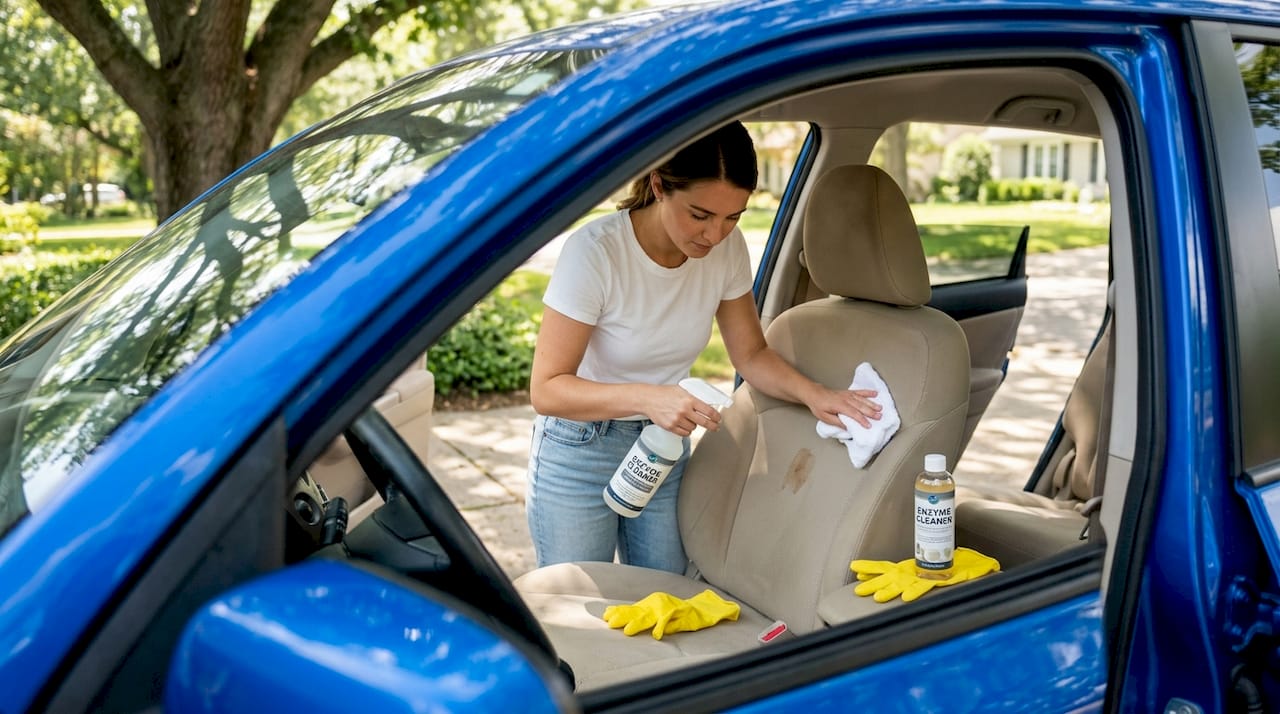
Enzyme-based cleaners. Enzyme cleaners are among the most targeted tools available for organic odors. They contain biological enzymes that literally break down the molecular structure of odor-causing matter, including urine, vomit, food residue, and pet dander. Once the source molecule is destroyed, the odor cannot return. These cleaners are gentle on most interior surfaces when used as directed, making them a strong choice for neutralizing luxury vehicle odors from organic sources without the chemical aggression of bleach or ozone.
Ventilation and moisture management. This one is often overlooked, but humidity is behind a surprising number of persistent car odors. Mildew smell, musty seat fabric, and that vague “old car” scent are almost always moisture problems. Park with windows cracked when safe, use a small silica gel packet or reusable dehumidifier bag in the cabin, and address any water leaks (door seals, sunroof drainage, trunk seals) immediately. Prevention here is significantly more effective than any cure.
“Activated charcoal outperforms baking soda empirically across almost every odor category tested, making it the clear eco-friendly frontrunner for vehicle interiors.”
Pro Tip: Enzyme cleaners are the right call for pet odors, food spills, and anything biological. They work at the source level, making them ideal for vehicles where upholstery condition and material integrity are a priority.
What about ozone generators, sprays, and ‘new car scent’ products?
While the eco-friendly solutions stand out, many car owners consider quick fixes. Let’s address why caution is needed, especially for anyone managing a high-value interior.
Ozone generators are popular in professional detailing for one reason: they work fast. Ozone achieves 90 to 95% odor removal in many applications. But that same oxidizing power that destroys odor molecules also attacks organic materials. The risks for luxury interiors are real and documented:
- Ozone exposure can dry out and crack leather seats and steering wheels
- Rubber seals and gaskets around windows and sunroofs can degrade
- Natural wood trim and veneer can discolor or warp
- Fabric dyes may fade unevenly under heavy ozone exposure
- Electronic components exposed to high-concentration ozone face oxidation risk
Beyond ozone, the spray market is full of products claiming instant freshness. Most are fragrance-based masking agents. They work for about 20 minutes. Some leave chemical residues that attract more dirt, and in enclosed spaces like a car cabin, layering synthetic fragrance on top of a legitimate odor problem can actually make the overall scent profile worse over time. For anyone in a professional or client-facing role, that is the opposite of what you need.
“For luxury or eco-focused use, enzyme cleaners and activated charcoal are the responsible choice over ozone every time.”
Safer alternatives to ozone exist for every odor type, and most produce comparable results over a slightly longer timeline without any material risk. The trade-off is almost always worth making.
Eco-friendly solutions head-to-head: What actually works?
With methods explained, here’s how the leading solutions stack up side by side for results and safety.
| Method | Effectiveness | Material safety | Sustainability | Ease of use |
|---|---|---|---|---|
| Activated charcoal bags | Very high (67 to 97% absorption) | Excellent, all surfaces | Excellent, reusable | Very easy |
| Baking soda | Moderate | Good (avoid leather) | Excellent, biodegradable | Easy |
| Enzyme-based cleaners | High for organic odors | Very good on most surfaces | Very good, biodegradable | Moderate |
| Fragrance sprays | Low (masking only) | Fair (may leave residue) | Poor, single use | Very easy |
| Ozone generators | Very high (90 to 95%) | Poor for luxury materials | Fair | Requires expertise |
The numbers tell a clear story. Activated charcoal absorbs 67 to 97% of odor compounds, which places it ahead of every other passive eco-friendly method tested. Enzyme cleaners close the gap for organic sources. Ozone tops the chart on raw effectiveness but falls to last place when you factor in material safety for premium interiors.
The right eco-friendly odor removal steps usually combine more than one method. Activated charcoal handles the ambient air quality continuously, enzyme cleaners treat specific contaminated spots, and moisture management prevents the whole cycle from restarting. Using all three together is the closest thing to a complete system available without professional intervention.
When to call in a professional: Tough odors and luxury interiors
Sometimes, even the best eco-friendly methods need backup. Here’s when expert intervention becomes necessary, not just convenient.
- Persistent cigarette or marijuana smoke odors that survive multiple cleaning cycles have usually saturated the cabin’s foam, headliner, and HVAC system. Surface treatments alone cannot reach these areas. Smoke particles bind to porous materials at a molecular level, and persistent smoke and pet odors genuinely require professional detailing when DIY naturals fall short.
- Mold and mildew discovery inside the cabin, under carpet, or in the trunk is a health and safety issue, not just a comfort issue. Mold spores require careful remediation to prevent re-growth, and treating mold incorrectly can spread it further.
- Post-spill or post-flood situations where liquid has reached deep into seat foam, padding, or subfloor material need immediate professional attention. Residual moisture becomes a persistent odor factory within days.
- Luxury, antique, or business-use vehicles where DIY risk is simply too high. A real estate professional’s flagship vehicle, a dealership’s floor model, or a hospitality shuttle bus represents too much investment to experiment on.
For high-value vehicles specifically, look at professional odor removal for supercars as a benchmark for what precision service looks like. The standards applied to exotic vehicles translate directly to any premium interior.
Pro Tip: For vehicles used in client-facing roles (luxury real estate, hospitality transport, high-end auto sales), the cost of professional service is negligible compared to the impression a fresh, neutral interior creates. Green-certified odor specialists handle these environments without introducing new chemicals or risks.
What most guides miss: The real secret to a lasting fresh car interior
Most odor guides treat a bad smell like an isolated event. Fix the smell, move on. That framing is the core mistake, and it is why so many car interiors smell fine for two weeks and then return to the same problem.
Recurring odors are almost never a product failure. They are a diagnostic signal. When a smell comes back after treatment, it usually means the root cause was never fully addressed. Hidden damp under the rear carpet. A slow HVAC drain leak that nobody noticed. A residual food spill that soaked through the seat base into the foam. Charcoal bags and enzyme cleaners are excellent tools, but they cannot fix a structural moisture problem or reach contamination inside a headliner.
The truth that most guides skip is this: odor management in a vehicle is a routine, not a one-time event. The best-smelling cars belong to owners who treat them consistently. Monthly charcoal bag recharging. Immediate attention to spills before they set. Regular HVAC cabin filter replacement. Seasonal moisture checks on door seals and trunk seals. None of these are complicated. All of them are more effective than any single “miracle” product.
For facts about auto odor removal that go beyond surface-level advice, the difference between temporary relief and permanent results almost always comes down to identifying and eliminating the source, not just treating the air around it. Luxury and professional vehicle owners understand this intuitively because the stakes of getting it wrong are higher for them. The same discipline applies to every car.
The industry’s honest answer to recurring odors is straightforward: most of the time, the smell came back because you treated the symptom, not the cause.
Get expert help for flawless, eco-friendly car interiors
Eco-friendly strategies work well when the problem is manageable and the source is known. But for stubborn, complex, or high-stakes odor situations, a professional approach makes the difference between a temporary improvement and a permanent result.

Master Odor Removal specializes in odor removal done right for vehicles of every category, from daily drivers to exotic supercars and hospitality fleets. Every treatment uses green odor elimination methods that are safe for passengers, gentle on materials, and free from ozone and chlorine. For allergen-sensitive occupants, luxury interiors, and professional environments where impression matters, our certified specialists deliver same or next-day service with guaranteed results. If your interior needs a clean start, explore our approach to luxury vehicle odor neutralization and schedule your service today.
Frequently asked questions
Are activated charcoal bags safe for all car interiors?
Yes, activated charcoal bags are non-toxic, produce no moisture or residue, and are safe for leather, alcantara, and all luxury cabin materials. Their absorption of 67 to 97% of odor compounds makes them an ideal passive treatment for premium interiors.
How quickly do eco-friendly odor removers work?
Enzyme cleaners can begin working within hours on fresh organic odors, while activated charcoal provides deep results more gradually, reducing odors up to 90% within 48 hours of placement.
Do ozone generators permanently remove car odors?
Ozone achieves strong initial odor removal, but ozone generators risk damaging leather, rubber seals, and other luxury materials, making them a poor choice for premium interiors and a last resort even in standard vehicles.
When should I call a professional for car odor removal?
If persistent smoke or pet odors remain after thorough cleaning, or if mold, flooding, or deep contamination is suspected, a certified professional can reach the source in ways that consumer products simply cannot.
Recent Comments