
TL;DR:
- Effective odor elimination addresses the chemical and source of odors, not just masking scents.
- Different odors require specific neutralizers targeting their unique chemical compounds.
- Advanced, science-based methods provide permanent, safe, eco-friendly results for luxury environments.
Spraying a luxury penthouse or detailing a high-end vehicle with a commercial air freshener is roughly equivalent to putting a bandage over a structural crack. The odor returns, often stronger, because the source was never addressed. For property managers and owners who hold their spaces to the highest standard, this approach is not just ineffective, it is costly. Porous materials like carpets and upholstery trap odor molecules deep within their fibers, well beyond the reach of any spray. True, permanent odor elimination starts with understanding what an odor actually is and where it lives.
Table of Contents
- Why traditional odor solutions fall short in luxury environments
- The science behind odor formation and elimination
- Science-guided techniques for every space: Homes, vehicles, and commercial properties
- Cutting-edge innovations: AI, digital twins, and the future of odor control
- What most experts miss: Science isn’t one-size-fits-all in odor elimination
- Choose proven, science-backed odor elimination for your space
- Frequently asked questions
Key Takeaways
| Point | Details |
|---|---|
| Science over masking | Lasting odor elimination requires identifying and neutralizing the source at a molecular level. |
| Tailored strategies work best | No single solution fits all—match the technique to odor type and material for permanent results. |
| Eco-friendly methods are effective | Enzyme cleaners and well-designed ventilation can safely remove tough odors without harmful chemicals. |
| Innovation leads the way | AI and digital twins are emerging tools for proactive, ongoing odor control in upscale settings. |
Why traditional odor solutions fall short in luxury environments
Most off-the-shelf odor products work by coating the air with a stronger, more pleasant scent. The original odor molecules are still present. They simply get pushed to the background until the masking agent fades, and then they resurface. For a budget rental property, this might be acceptable. For a luxury residence, yacht, or high-end commercial space, it is simply not good enough.
High-value environments require three things from an odor solution: permanence, subtlety, and safety. Guests, tenants, and buyers in premium settings have heightened expectations. A faint chemical smell or a synthetic floral fragrance signals poor maintenance just as loudly as the original odor. This is why science-based odor removal has become the standard for upscale property management.
One method that often comes up in industry conversations is ozone treatment. Ozone generators can be fast and penetrating, which is why some providers favor them. But the ozone treatment limitations are significant, particularly for occupied spaces, where residual ozone poses respiratory risks. We do not use ozone, and we have never needed to. There are safer, equally effective alternatives.
“The best odor solution matches the chemistry of the odor itself. Anything less is temporary.”
Here is a quick breakdown of how superficial fixes compare to scientific approaches:
| Approach | Duration | Safety | Eco-Friendly | Root cause addressed |
|---|---|---|---|---|
| Air fresheners / sprays | Hours | High | No | No |
| Ozone treatment | Days | Moderate | Partially | Partial |
| Enzyme-based cleaners | Permanent | High | Yes | Yes |
| Integrated scientific methods | Permanent | High | Yes | Yes |
The contrast is clear. Direct chemical vs. gas methods produce very different results depending on the environment. Scientific approaches that address the root chemical source consistently outperform surface-level solutions. Understanding odor neutralization with science means knowing which molecules you are targeting, not just which scent covers them up.
For environments where a single client visit can define the reputation of a property, the choice is straightforward. Tailored odor solutions built around the specific chemistry of each space are now the expectation, not a premium upgrade.
The science behind odor formation and elimination
An odor is a volatile molecule that travels through air and binds to receptors in the nose. That simple fact has major implications for how you remove it. You cannot neutralize what you cannot identify. Different odor sources release fundamentally different chemical compounds, and each class requires a specific countermeasure.
Here is how the main odor categories break down:
- Organic acids (pets, sweat, mildew): These require alkaline-based neutralizers or enzyme cleaners that break down the acid at a molecular level.
- Ammonia compounds (urine, decay): Acidic neutralizers or oxidizing agents work best here, converting the ammonia into non-volatile salts.
- Sulfur compounds (food, water leaks, rotten materials): Oxidation is the primary tool, as it breaks the sulfur bonds that cause the smell.
- Volatile organic compounds (smoke, chemical off-gassing): Activated carbon filtration and controlled ventilation remove these from the air column.
The critical insight here is that no universal neutralizer exists. A treatment that works perfectly on pet urine may do nothing for tobacco smoke. Strategy must be matched precisely to the odor chemistry of the space.
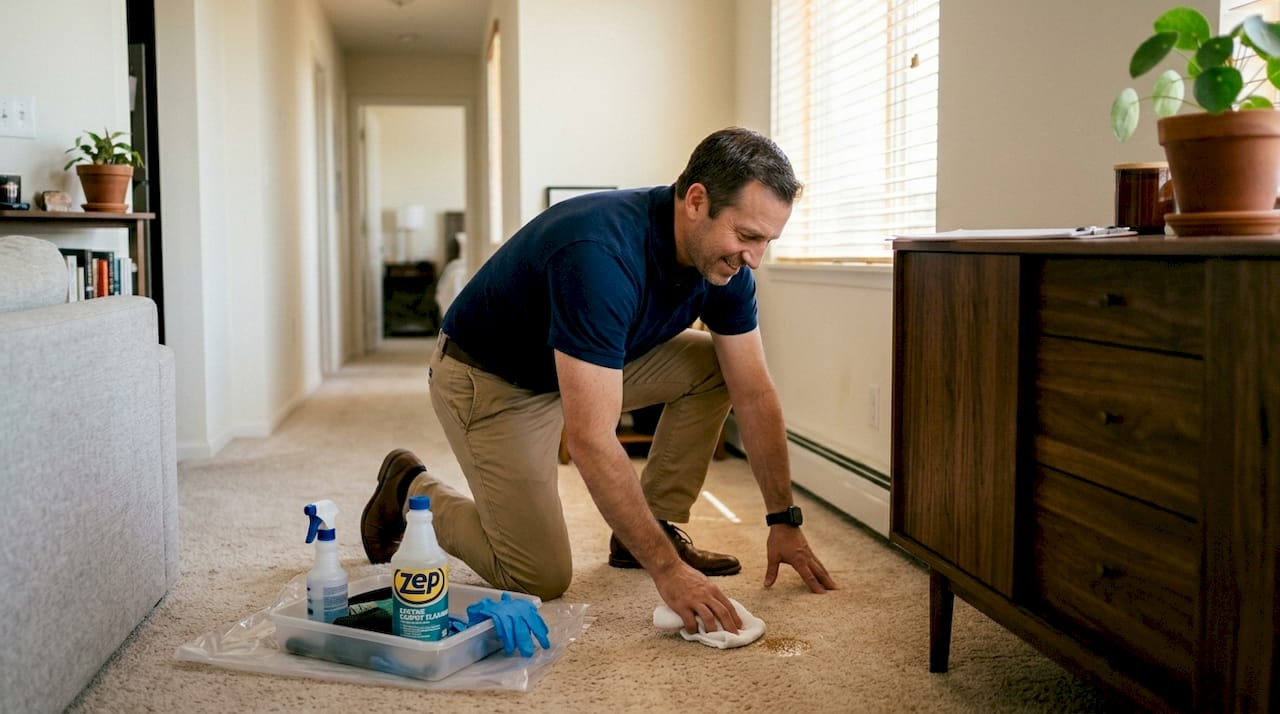
This is where porous materials add a layer of difficulty. Embedded odors in porous materials require source removal first, followed by enzyme application that penetrates the material structure. A surface wipe will not reach odor molecules bonded inside carpet backing or seat foam.
| Odor type | Chemical class | Recommended method |
|---|---|---|
| Pet urine | Organic acids/ammonia | Enzyme cleaner + source removal |
| Tobacco smoke | VOCs + particulates | Carbon filtration + oxidation |
| Mold/mildew | Organic acids | Anti-fungal treatment + ventilation |
| Food decomposition | Sulfur compounds | Oxidizing agent + air exchange |
For removing tobacco smoke odors from a vehicle interior or improving indoor air quality in a residential setting, the path always begins with source identification.
Pro Tip: Never apply an odor neutralizer before removing the source. Enzyme cleaners and oxidizers work on residual molecules. If the source is still active, the odor will return regardless of treatment quality.
Science-guided techniques for every space: Homes, vehicles, and commercial properties
Every environment presents a unique odor profile. A luxury vehicle has tightly enclosed surfaces, limited ventilation, and materials that absorb odors quickly. A large commercial lobby deals with high foot traffic, variable humidity, and constant air exchange. A residential estate might combine multiple odor sources across dozens of rooms. One method does not fit all.
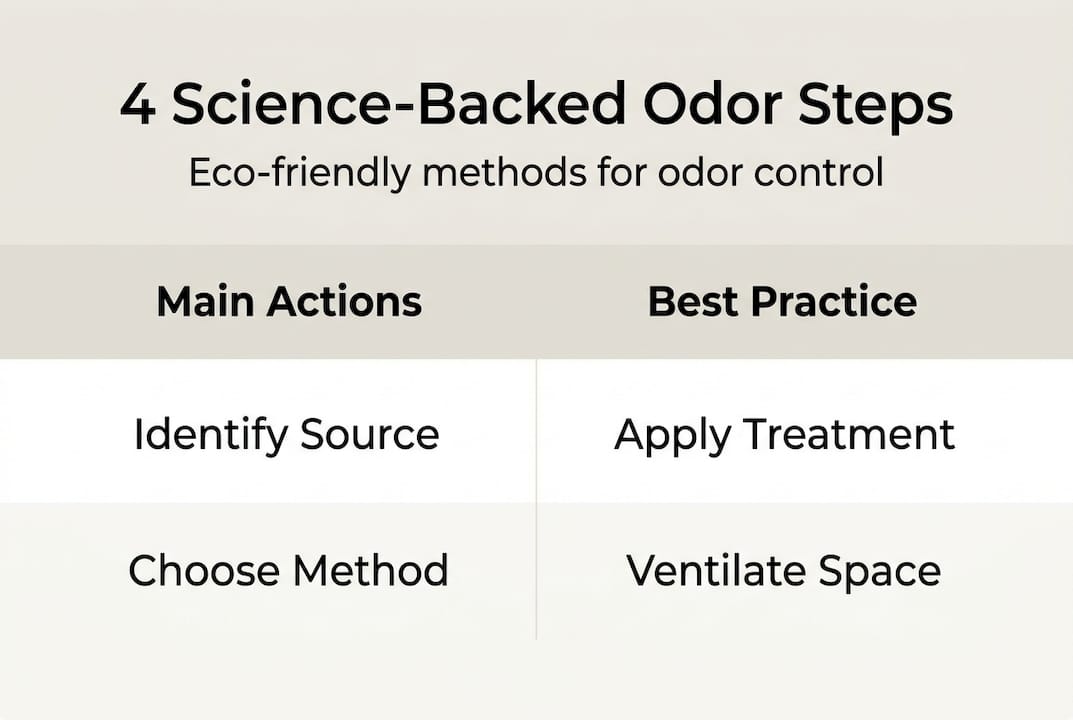
Here is a practical framework for selecting the right technique:
- Identify the source: Is it biological (pet, mold), chemical (smoke, VOCs), or physical (food residue, water damage)?
- Match to chemistry: Select the neutralization class that targets the specific molecular structure.
- Choose the delivery method: Enzyme cleaners for organic materials, oxidizers for gas-phase odors, carbon filtration for ambient air.
- Apply with precision: Treat surfaces and air simultaneously. Single-axis treatment leaves gaps.
- Verify with monitoring: Use air quality sensors to confirm elimination, not just absence of smell.
Eco-conscious methods reduce both health risk and environmental load without sacrificing results. Enzyme-based cleaners are biodegradable. Advanced filtration systems require no chemical discharge. Targeted ventilation design removes odors without introducing artificial fragrances.
The science confirms this: no single neutralizer fits every situation, and integrated odor control that addresses chemical and biological transformations together produces the most durable outcomes.
For property managers dealing with workplace odor challenges or overseeing multiple residential units, working with expert odor removal specialists ensures that each environment gets a solution built around its specific profile rather than a generic treatment applied uniformly.
Pro Tip: Schedule periodic air quality checks after treatment, especially in high-occupancy spaces. Odors can re-emerge from untreated secondary sources or seasonal humidity changes, and early detection prevents full recurrence.
Cutting-edge innovations: AI, digital twins, and the future of odor control
The next evolution in odor management is already here, and it is moving fast. Property managers who stay ahead of this curve will see measurable advantages in guest satisfaction, asset value, and operational efficiency.
Artificial intelligence is now capable of analyzing real-time air quality sensor data to predict when and where odor risks are likely to develop before they become noticeable. Think of it as a smoke detector, but for any volatile compound that could affect comfort or health. The system flags a developing problem in the HVAC intake before a guest ever walks through the door.
Digital twins take this further. A digital twin is a virtual model of a physical interior space, updated continuously with real sensor data. Odor control specialists can use these models to test treatment strategies virtually, predicting how a specific enzyme application or ventilation adjustment will perform across the actual materials and airflow patterns of a space. The result is fewer trial-and-error treatments and faster, more reliable outcomes.
AI and digital twin integration represents the leading edge of proactive odor management for high-value properties.
Here is what early adoption looks like in practice:
- Predictive alerts: AI flags rising VOC levels in a hotel suite before checkout, prompting immediate treatment.
- Virtual testing: A digital twin of a luxury vehicle interior simulates enzyme penetration depth before the technician arrives.
- Automated scheduling: Systems recommend treatment intervals based on occupancy patterns and seasonal air quality data.
- Cost reduction: Proactive management eliminates emergency treatments, which are always more expensive and disruptive.
For property managers overseeing multiple assets, these tools shift odor control from reactive to strategic. Maintaining air quality innovations at this level is what separates a well-managed luxury property from one that simply looks the part.
What most experts miss: Science isn’t one-size-fits-all in odor elimination
After working across vehicles, residences, yachts, and commercial spaces, one pattern stands out: the biggest mistakes in odor elimination come from overconfidence in a single method. We see this constantly. A provider uses the same oxidizing treatment on pet odors in a wool carpet that they would use on smoke in a concrete parking structure. The chemistry is completely different. The result is incomplete.
Permanent odor elimination requires adapting to the material, the space, the occupancy habits, and the way odor chemistry evolves over time. A freshly treated room can develop new odor signatures as temperatures shift, humidity changes, or untreated secondary sources activate. Ongoing monitoring is not optional in high-value environments. It is part of the service.
The research is direct: no universal neutralizer exists, and any provider claiming otherwise is offering convenience over results. The attention to detail that defines scientific odor removal for offices and upscale properties is exactly what separates outcomes that last from treatments that fade.
Choose proven, science-backed odor elimination for your space
For property managers and luxury owners who need results that hold up over time, the difference between a professional, science-guided service and a consumer-grade product is not subtle. It is the difference between solving the problem and postponing it.

At Master Odor Removal, we use eco-friendly, green-certified methods tailored to the specific odor chemistry of your space. No ozone. No chlorine. No shortcuts. Our odor removal specialists are available same or next day, and every treatment is backed by a satisfaction guarantee. Explore our eco-friendly odor elimination approach or learn why discerning clients trust our luxury odor removal expertise to protect the value of their properties.
Frequently asked questions
Why do odors persist even after cleaning?
Porous materials trap odors at a molecular level, meaning surface cleaning removes visible residue but leaves the odor compounds embedded in fibers or foam. Only targeted enzymatic or chemical treatment at the source level achieves true elimination.
Is ozone treatment safe for continuous use in homes?
Ozone can be effective for unoccupied spaces, but ozone in occupied spaces poses respiratory risks and is not recommended for regular residential use. Safer, science-backed alternatives deliver comparable results without the health trade-offs.
How do I choose the right odor removal method for my property?
Start with source identification, then match neutralization to chemistry and ensure proper ventilation throughout. A professional assessment removes the guesswork and avoids costly retreatments.
Can eco-friendly solutions really eliminate tough odors?
Absolutely. Enzyme cleaners and ventilation work at the molecular level and are highly effective against even the most persistent biological and chemical odor sources, without introducing harmful byproducts into the environment.
Recommended
- Eliminate common household odors: 5 eco-friendly fixes – Master Odor Removal
- Pet odor elimination: Eco-friendly solutions for fresher homes – Master Odor Removal
- Odor neutralization explained: 5 eco-friendly solutions – Master Odor Removal
- Next-day odor removal: Fast, eco-friendly luxury solutions – Master Odor Removal
Recent Comments