
TL;DR:
- Pet odors penetrate deep into porous materials and HVAC systems, making surface cleaning ineffective.
- Standard cleaning methods often mask odors or worsen contamination, requiring structural treatments for lasting results.
- Proper inspection, sealing, and professional odor removal are essential to prevent odor recurrence and ensure tenant satisfaction.
You cleaned the carpets, repainted the walls, and even replaced the air fresheners, yet the moment a prospective tenant walks in, the smell hits them immediately. Pet odor in rental properties is one of the most stubborn, lease-breaking challenges property owners face, and the frustrating reality is that surface cleaning almost never solves it. This guide explains exactly why pet smells outlast standard cleanups, what is actually happening inside your floors and walls, and which strategies will genuinely eliminate odors before your next tenant move-in.
Table of Contents
- What causes pet odor to linger in rental properties?
- Why standard cleaning fails: Surface vs. deep contamination
- Common triggers and why odors come back
- Inspection, prevention, and long-term strategies for odor-free rentals
- What most property owners miss about persistent pet odors
- Professional solutions for stubborn rental odors
- Frequently asked questions
Key Takeaways
| Point | Details |
|---|---|
| Odors embed deeply | Pet urine and dander penetrate carpets and subfloors, making surface cleaning insufficient. |
| Standard cleaning often fails | Enzyme and professional treatments are needed for true odor removal in rentals. |
| Humidity and re-marking trigger returns | Odors can resurface long after cleaning due to environmental changes or repeated marking. |
| Inspection is critical | UV light and subfloor checks are essential for detecting hidden odor sources. |
| Prevention saves costs | Proactive policies, HVAC cleaning, and lease clauses help protect properties and tenant satisfaction. |
What causes pet odor to linger in rental properties?
Understanding why pet odor refuses to leave starts with what it is made of. Most people assume the smell comes from the visible stain. It does not. The real problem is buried.
Uric acid crystals form when pet urine dries, embedding themselves deep into porous materials like carpet fibers, padding, subfloor wood, and even drywall. These crystals are essentially inert when dry, meaning they produce little odor until moisture reactivates them. A humid day, a steam mop, or even a rainstorm that raises indoor humidity can instantly wake those crystals back up, releasing a wave of ammonia and sulfur compounds that hits your nose hard.
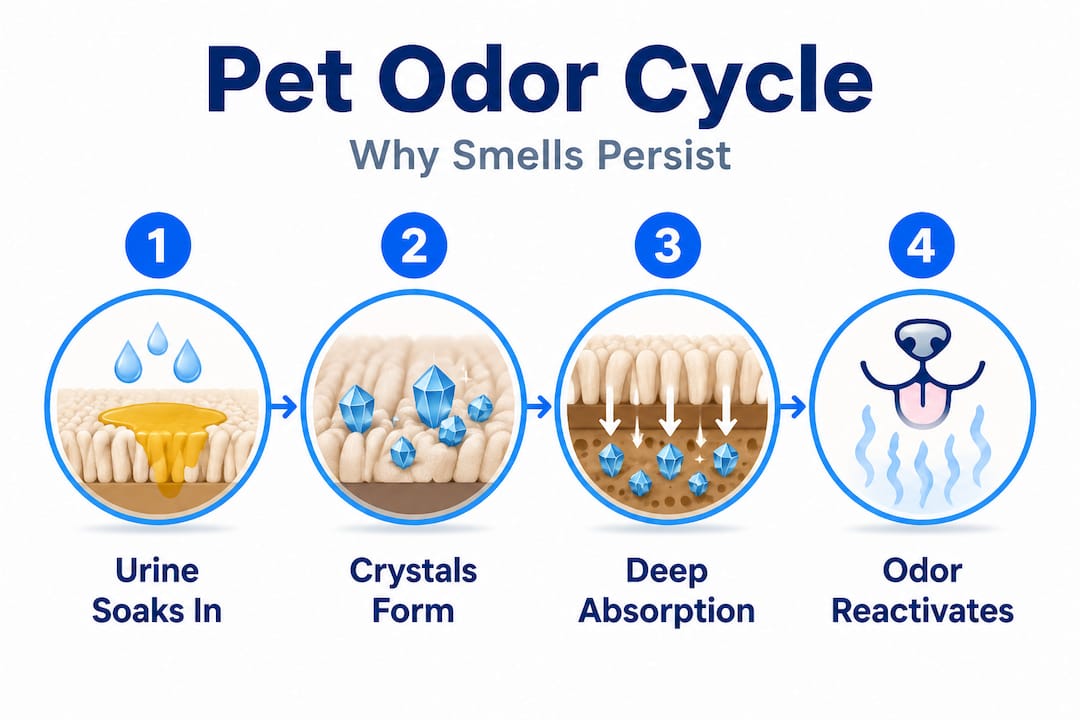
The layered structure of a rental unit makes this worse. Odors penetrate from carpet down through padding, then into the subfloor, and finally spread laterally to wall edges and baseboards. Surface treatments simply cannot reach that deep. By the time you see a stain on the carpet, contamination has likely already reached two or three layers below.
Pet dander, saliva, and biological pollutants circulating in HVAC systems add another layer of persistent odor. Your air ducts become highways for distributing pet-related compounds throughout every room, including ones the animal may have never even entered. Fabrics on blinds, curtains, and upholstered fixtures absorb airborne particles as well.
| Source | Where it penetrates | Detection difficulty |
|---|---|---|
| Uric acid crystals | Carpet, padding, subfloor | High (requires UV light) |
| Airborne dander | HVAC ducts, fabric surfaces | Medium |
| Saliva and skin oils | Walls, furniture, baseboards | Low to medium |
| Fecal matter residue | Grout, flooring, subfloor | High |
The pet odor challenges for managers go well beyond what any single cleaning session can address. You are dealing with chemistry embedded in the physical structure of your unit.
“A rental unit is not just a surface. It is a layered system, and pet contamination works its way through every layer. Treating only the top one is like putting a bandage on an infection.”
Why standard cleaning fails: Surface vs. deep contamination
Most property managers rely on carpet shampooing, mop-and-bucket floor cleaning, and aerosol sprays between tenants. These methods work perfectly for dust, grime, and minor odors. For pet urine contamination, they often make things worse.
Standard cleaners mask residues rather than break them down, and some actually reactivate uric acid crystals by introducing moisture without the chemistry to neutralize them. This is why a freshly “cleaned” unit can smell stronger the day after shampooing than it did before.
Enzymatic cleaners are a step up. They use biological enzymes to break apart uric acid molecules at the molecular level. However, enzymatic cleaners work optimally only when applied with full saturation and a minimum dwell time of 24 hours or more. Most people spray, blot, and move on in under an hour. That approach does not give the enzymes enough time or penetration to do their job. Even when used correctly, enzymatic products typically cannot reach contamination in the subfloor or inside wall cavities.
Here is a comparison of common odor removal approaches:
| Method | Depth reached | Time required | Cost level | Effective for subfloor? |
|---|---|---|---|---|
| Aerosol sprays | Surface only | Minutes | Low | No |
| Carpet shampooing | Carpet fiber only | 1 to 2 hours | Low to medium | No |
| Enzymatic cleaners | Carpet and partial padding | 24+ hours | Medium | Rarely |
| Professional extraction | Carpet, padding, subfloor | Several hours | High | Sometimes |
| Structural sealing/replacement | Full material depth | 1 to 3 days | High | Yes |
Steps for properly applying enzymatic cleaners when you do use them:
- Identify the exact contamination zone using a UV blacklight in a darkened room.
- Saturate the entire affected area, not just the visible stain. Use enough product to soak through to the padding.
- Cover with plastic sheeting to keep the area moist during the full dwell period of at least 24 hours.
- Extract the liquid with a wet vacuum rather than blotting or air drying.
- Reassess with the UV light after the area dries fully before declaring success.
- If odor persists after this process, the contamination is below the carpet and requires structural intervention.
Pro Tip: Never use steam cleaners on areas with suspected pet urine. Heat permanently bonds uric acid proteins into fibers, making the odor almost impossible to remove afterward without replacing the material entirely.
The threshold for calling in professionals comes when the subfloor shows staining visible through the carpet underside, when enzymatic treatments have failed twice, or when deep cleaning after move-out reveals odors that no amount of product application resolves. At that point, sealing the subfloor with an odor-blocking primer or replacing the subfloor section becomes the practical path forward.
For property owners who want to protect their units without harsh chemicals, eco-friendly odor solutions now offer professional-grade results without ozone or chlorine treatments that can irritate future tenants.
Common triggers and why odors come back
You thought you solved the problem. The new tenant moved in, and three weeks later they are complaining about a smell you cannot explain. This is one of the most common and frustrating experiences for property owners, and it has a clear cause.
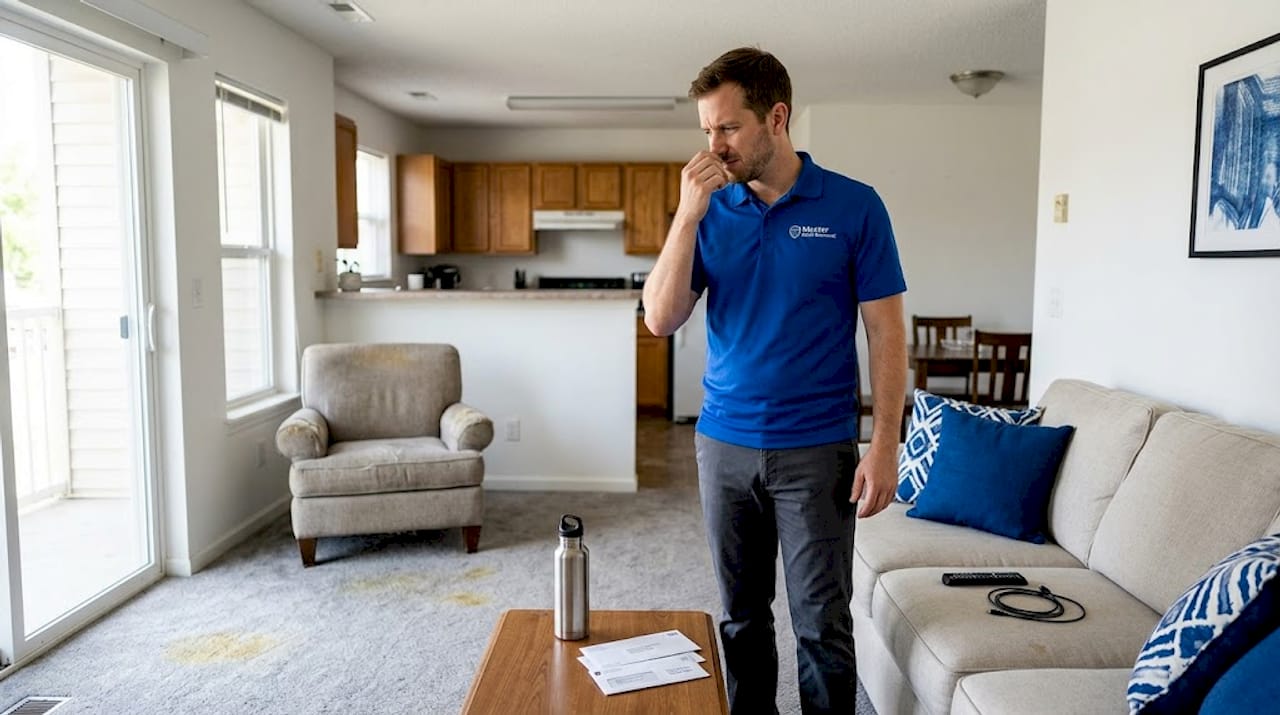
Uric acid crystals are humidity-reactive. When indoor humidity rises, whether from cooking, showering, a rainy season, or even the HVAC switching modes, those dormant crystals absorb moisture and release odor compounds again. A unit that smells perfectly fine during a dry inspection can become offensive to the tenant during the first humid week.
Cat urine is especially concentrated and persistent due to its higher protein and felinine content. Cats that repeatedly mark the same spot create layer upon layer of crystalline deposits that can fully saturate not just carpet and padding but the subfloor itself. Dog urine, while less concentrated chemically, tends to cover larger areas per incident, which spreads contamination more widely. Both require deep treatment, but cat urine almost always demands more aggressive intervention or full material removal.
Key triggers that cause odors to return:
- Humidity above 50%: Reactivates dormant uric acid crystals in flooring layers.
- HVAC cycles: Move contaminated air from ducts into freshly cleaned rooms.
- New pet contact: A new tenant’s pet can sniff out previous marking spots and re-mark them, compounding old contamination.
- Incomplete treatment zones: Even one missed contamination pocket restarts the entire odor cycle.
- Seasonal temperature swings: Warm conditions accelerate bacterial activity in contaminated materials.
Odors can linger weeks or months in an untreated or undertreated rental, and professional sealing or subfloor repair becomes necessary when odor returns after initial cleanup efforts. This is not a rare edge case. It is common enough that experienced property managers budget for it in their turnover costs.
Understanding the relationship between renter satisfaction and odor reveals why this issue directly affects your bottom line. A bad smell experienced during a showing can override every other positive feature of the unit. And a complaint from an existing tenant about odor can become a lease dispute if not addressed quickly.
Pro Tip: After any pet-owning tenant moves out, use a UV blacklight inspection before scheduling any cleaning. Map every contamination zone with tape markers before a single drop of cleaner is applied. This prevents missing spots that later reactivate.
The signs of persistent odor in a property are sometimes subtle early on. A faintly musty or sharp smell near floor level, discoloration on baseboards, or staining visible on the underside of carpet padding all indicate contamination that will return without structural intervention.
Inspection, prevention, and long-term strategies for odor-free rentals
The most effective property managers do not wait until a new tenant complains. They build odor control into every stage of the rental cycle, from lease signing through move-out inspection.
Inspection protocol for pet odor:
- Conduct a UV blacklight sweep of every room during the move-out walkthrough, not just areas with visible staining.
- Lift carpet corners in multiple spots to examine padding and subfloor surfaces for crystalline deposits or staining.
- Check baseboard seams and wall edges, which collect urine runoff and are almost never treated by standard cleaning crews.
- Run the HVAC on recirculate during the inspection and note any odor increase when air flows.
- Check closets, corners, and behind appliances, as these are preferred marking spots and rarely included in routine cleaning.
For confirmed deep contamination, prioritize UV inspection and subfloor checks over repeated surface treatments. Replacing padding and sealing the subfloor with an oil-based odor-blocking primer gives you a clean, verifiable baseline that removes guesswork from your turnover.
On the prevention side, your lease is your first line of defense. Leases specifying pet damage responsibility, combined with routine HVAC cleaning schedules and good ventilation design, reduce the likelihood that odors escalate to a structural problem. Tenants who know they are financially responsible for professional odor remediation are more likely to address accidents immediately rather than letting contamination set over months.
“Prevention is not just about writing a good lease. It is about setting up systems that catch problems early, before a $200 carpet cleaning becomes a $3,000 subfloor replacement.”
Practical long-term strategies include:
- Installing hard flooring in pet-permitted units to reduce porous material exposure.
- Specifying low-pile, easy-clean carpeting in areas where carpet is required.
- Scheduling HVAC filter replacements every 60 days in pet-permitted units rather than the standard 90.
- Requiring a professional odor inspection report as part of move-out documentation.
- Building odor remediation costs into your pet deposit structure so funds are available when needed.
Preventing odors in rentals over the long term is about design, policy, and inspection working together, not just cleaning harder after damage occurs. Knowing why to call an odor professional before the situation escalates can save you both money and tenant relationships.
What most property owners miss about persistent pet odors
Here is the uncomfortable truth after years of working on rental properties: the budget spent on repeated cheap treatments almost always exceeds the cost of doing it right the first time.
A property owner who schedules three rounds of carpet shampooing, two enzyme treatments, and a paint job over two months has typically spent more money, and more time with a vacant unit, than one who authorized a professional structural assessment and treatment from the start. Vacancy is expensive. Every week a unit sits empty because it smells costs you real rental income, not just cleaning fees.
The other thing most owners miss is that a bad odor is a credibility problem, not just a maintenance issue. When a prospective tenant smells pet odor during a showing, they do not think “this can be cleaned.” They think “this property was not maintained well.” That perception affects not just whether they rent, but what they tell others.
Investing in a UV inspection, subfloor sealing, and professional-grade odor elimination before the next showing is not a luxury. It is a business decision with a direct return. Properties that consistently present as odor-free have shorter vacancy periods, fewer deposit disputes, and better tenant retention. Tenants who feel their landlord maintains high standards tend to reciprocate by taking better care of the unit.
The short-term fix mindset also creates a false sense of security. If you mask an odor rather than eliminate it, you are not solving the problem. You are delaying it to a moment when it will be someone else’s surprise, and that someone else will often be your new tenant on move-in day. Addressing eliminating luxury rental odors with the right level of investment is what separates properties with strong reputations from ones stuck in a cycle of complaints and turnover.
Professional solutions for stubborn rental odors
When surface treatments, enzymatic products, and standard move-out cleaning have not delivered a genuinely odor-free unit, it is time to bring in specialized help. Not all professional odor removal services are equal, and the distinction matters for your tenants and your property.

Master Odor Removal specializes in permanent odor elimination using green-certified, eco-friendly methods that do not rely on ozone or chlorine treatments. That matters in rental properties where future tenants need a safe, breathable environment from day one. Our licensed professionals identify contamination at the structural level, treat every affected layer from carpet to subfloor, and provide results that hold up even when humidity fluctuates. With same or next-day availability, we work around your turnover schedule so vacant units get back on the market fast. If you are managing a unit where odors keep returning or where a tenant has already complained, contact us today to schedule an assessment.
Frequently asked questions
How long can pet odors linger in a rental if not properly treated?
Untreated odors persist for weeks or months, and if uric acid has reached the subfloor, professional sealing or material replacement may be the only reliable fix.
Why do pet odors return after cleaning the carpet?
Odors return because residues remain deep in the padding, subfloor, and wall edges, well beyond the reach of surface carpet cleaning.
Are there any specific strategies for cat urine compared to dog urine?
Cat urine is more concentrated and persistent, often requiring full material replacement or deep structural treatment rather than enzymatic cleaning alone.
What is the best way to prevent persistent pet odors in rentals?
Combining regular inspections, lease clauses that hold tenants financially responsible, and routine HVAC maintenance addresses odors before they become structural problems.
Do standard cleaners really remove pet odors?
Standard cleaners only mask surface-level odors, and without enzymatic or professional treatments that reach deep contamination, the smell will return.
Recommended
- Pet odor removal for property managers: eco-friendly solutions – Master Odor Removal
- Eliminate Pet Odors: Eco-Friendly Solutions for a Fresh Home – Master Odor Removal
- Top 5 Odors That Impact Luxury Rentals: How to Eliminate Them – Master Odor Removal
- Pet odor removal tips for hotels: keep rooms fresh – Master Odor Removal
Recent Comments