
TL;DR:
- True pet odor elimination targets organic molecules in stains, not just masking with scents.
- Enzymatic cleaners, activated charcoal, and baking soda work together for effective deep odor removal.
- Professional treatments are necessary for deeply soaked or persistent odors beyond DIY methods.
If you’ve ever spritzed air freshener after your dog had an accident on the carpet, you already know the result: a confusing mix of lavender and wet dog that fades within the hour. Air fresheners don’t fix pet odors. They cover them. True pet odor elimination means targeting the actual molecules causing the smell, not layering a pleasant scent on top. Eco-friendly solutions prioritize enzymatic cleaners, activated charcoal, and plant-based neutralizers that break down odor at the source. This guide walks you through what actually works, why it works, and how to apply it in your home and vehicle.
Table of Contents
- Understanding pet odor elimination
- Eco-friendly products and proven methods
- Step-by-step: Eliminating pet odors in homes and vehicles
- Common mistakes and expert tips
- What most pet odor guides miss: Real-world lessons
- Take odor elimination further: Professional solutions
- Frequently asked questions
Key Takeaways
| Point | Details |
|---|---|
| Elimination beats masking | True pet odor removal targets the source instead of covering it up. |
| Eco-friendly is safer | Enzymatic cleaners and charcoal bags are effective, pet-safe, and better for the environment. |
| Layered approach works | Combining surface treatment, air purification, and regular cleaning delivers the best results. |
| Expert help for tough odors | Professional odor elimination services succeed where DIY methods struggle. |
Understanding pet odor elimination
Odor elimination and odor masking are not the same thing, even though most products on store shelves blur the line between them. Masking uses fragrance to override a smell temporarily. Elimination removes the underlying cause so the odor cannot return. For pet owners, that distinction matters enormously.
Pet odors are stubborn because they come from organic compounds. Urine contains uric acid crystals that bond to porous surfaces like carpet fibers, wood subfloors, and car upholstery. Those crystals don’t dissolve with water alone. Feces, dander, and saliva add their own layers of bacteria and proteins. When those compounds sit in a warm, humid environment, the smell intensifies. That’s why a room can smell fine in winter and overwhelming in summer.
Here are the most common sources of persistent pet odors in homes and vehicles:
- Urine soaked into carpet padding or subfloor beneath visible stains
- Fecal residue on upholstery, rugs, or car seats
- Dander embedded in soft furnishings, air vents, and HVAC filters
- Saliva on pet bedding, couches, and fabric headrests
- Wet fur odor absorbed into curtains, walls, and ceiling fabric in vehicles
For getting rid of bad smells that keep coming back, the approach has to match the source. Surface-level cleaning removes visible mess but leaves odor-causing compounds behind.
“Enzymatic cleaners are the gold standard for eco-friendly treatment of pet urine and feces odors because they break down the organic molecules that cause the smell rather than masking them.”
Enzymatic cleaners work by introducing beneficial bacteria that produce enzymes. Those enzymes digest uric acid, proteins, and bacteria responsible for the odor. Once the organic matter is consumed, the smell disappears. This is not a temporary fix. It’s a biological process that targets the actual problem. Understanding this distinction is the foundation for every effective odor removal strategy covered in this guide.
Eco-friendly products and proven methods
Once you understand what you’re fighting, choosing the right tools becomes much easier. Eco-friendly solutions fall into four main categories: enzymatic cleaners, activated charcoal, baking soda, and plant-based neutralizers. Each one plays a different role.
| Product type | How it works | Best use case | Eco credentials |
|---|---|---|---|
| Enzymatic cleaner | Digests organic odor molecules | Urine, feces stains on carpet or upholstery | Biodegradable, non-toxic |
| Activated charcoal | Absorbs airborne odor molecules | Ambient air in rooms or vehicles | Natural, reusable |
| Baking soda | Neutralizes acidic odor compounds | Carpets, upholstery, litter areas | Non-toxic, inexpensive |
| Plant-based neutralizer | Binds and neutralizes odor molecules | General surfaces and air | Chemical-free formulas |
Activated charcoal bags are particularly useful for ongoing odor control. Moso charcoal bags cover 90 square feet and last up to 2 years, making them a cost-effective, waste-reducing option for bedrooms, living rooms, and car interiors.
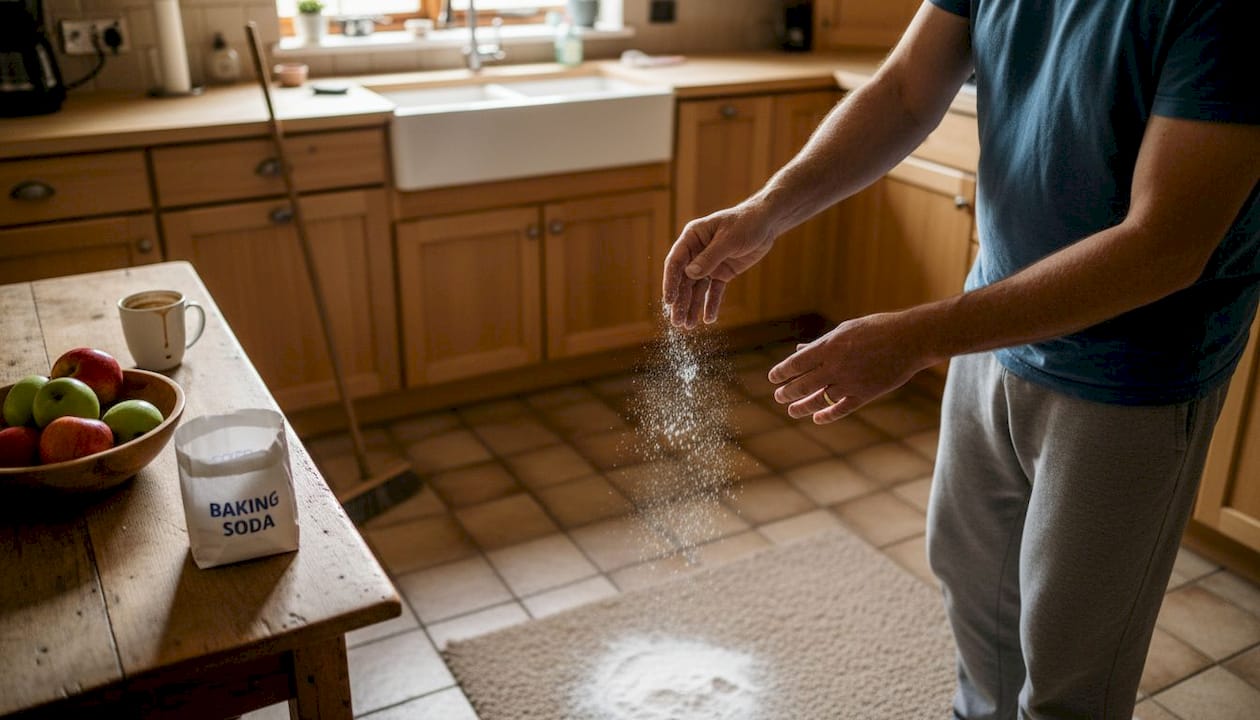
Baking soda is one of the most underrated tools in this category. Sprinkling it on a carpet, letting it sit for 30 minutes, and vacuuming it up neutralizes surface-level acid compounds without introducing any chemicals. It won’t handle deep urine stains, but it’s excellent for routine maintenance between deeper treatments.
Plant-based neutralizers avoid synthetic fragrances and harsh solvents. They use compounds derived from citrus, thyme, or other botanicals to bind with odor molecules and render them inert. These are a smart choice for households with young children or pets with sensitivities.
For improving indoor air quality long-term, combining charcoal absorption with enzymatic treatment gives you the most complete coverage. Charcoal handles what floats in the air. Enzymes handle what’s embedded in surfaces.
- Use enzymatic cleaners on any spot where a pet has had an accident
- Place charcoal bags near pet sleeping areas, litter boxes, and car seats
- Apply baking soda weekly on high-traffic carpet areas
- Choose plant-based sprays for daily freshening without chemical buildup
Pro Tip: Always test enzymatic cleaners on a hidden section of carpet or upholstery first. Some formulas can lighten certain dyes, especially on older or delicate fabrics. A 5-minute test saves a lot of regret.
For green odor elimination solutions that go beyond the basics, look for products with third-party certifications like Green Seal or EPA Safer Choice. Those labels mean the formula has been independently verified as safe for people, pets, and the environment.
Step-by-step: Eliminating pet odors in homes and vehicles
Knowing which products to use is only half the job. Applying them in the right sequence makes the difference between a temporary fix and a lasting result.
- Locate the source. Use a UV blacklight in a darkened room to find urine stains invisible to the naked eye. Pet urine glows under UV light, revealing exactly where treatment is needed.
- Blot, don’t scrub. Remove any fresh mess by blotting with a clean cloth. Scrubbing spreads the contamination deeper into fibers and padding.
- Apply enzymatic cleaner. Saturate the stained area thoroughly. The cleaner needs to reach as deep as the urine soaked, which often means soaking through carpet into the padding beneath.
- Allow full dwell time. Most enzymatic cleaners need 10 to 15 minutes of contact time. Cover the area with a damp cloth to prevent the cleaner from drying too fast, which stops the enzymatic process.
- Blot and dry. Remove excess moisture and allow the area to air dry completely. Avoid heat, which can set remaining odor compounds.
- Place charcoal bags or run an air purifier to handle ambient odor while the treated area dries.
- Steam clean for deep extraction. For carpets and vehicle upholstery, enzymatic sprays for stains combined with steam cleaning provide the deepest level of extraction available without professional equipment.
| Surface | Recommended method | Frequency |
|---|---|---|
| Carpet | Enzymatic cleaner plus steam clean | After each incident, deep clean monthly |
| Car upholstery | Enzymatic spray plus charcoal bag | After each incident, charcoal ongoing |
| Hard floors | Plant-based neutralizer plus mop | Weekly |
| Air/ambient | Charcoal bag or HEPA air purifier | Ongoing, replace as needed |
For removing pet odors from car interiors, the enclosed space makes odors more concentrated. Ventilate the car fully before treating, and leave charcoal bags inside overnight after cleaning.
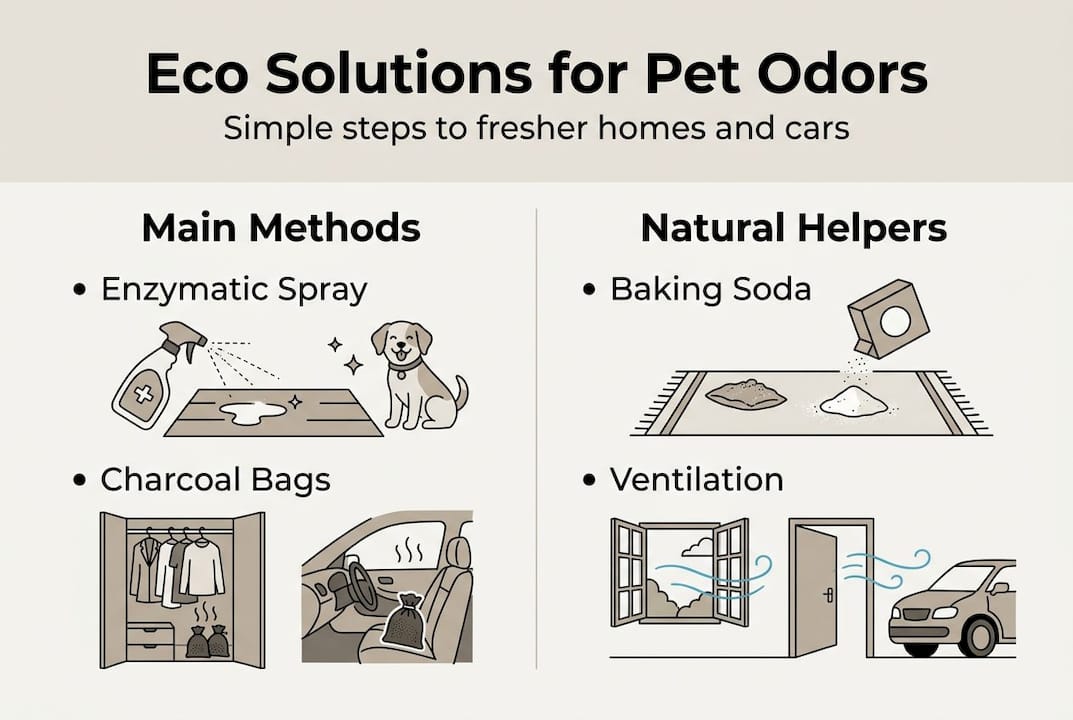
Pro Tip: Combining methods works far better than relying on any single product. Enzymes for spots, charcoal for air, and regular vacuuming and steam cleaning for maintenance is the framework that delivers lasting results.
For persistent or recurring odors that resist DIY treatment, professional odor removal specialists have access to commercial-grade tools and techniques that go deeper than consumer products can reach.
Common mistakes and expert tips
Even motivated pet owners make the same errors repeatedly. Knowing what to avoid is just as valuable as knowing what to do.
Mistake 1: Treating the symptom, not the source. Spraying air freshener or using scented candles after a pet accident is the single most common error. The smell returns because the uric acid crystals are still there, waiting for humidity to reactivate them.
Mistake 2: Using too much product. Oversaturating a carpet with enzymatic cleaner without allowing it to dry fully can create a damp environment that encourages mold. Follow product instructions on dwell time and drying.
Mistake 3: Using harsh chemical cleaners first. Bleach and ammonia-based cleaners can actually set odor compounds into fibers and kill the beneficial bacteria in enzymatic cleaners applied afterward. Always reach for eco-friendly options first.
Mistake 4: Skipping the padding. Most carpet urine odors live in the padding beneath the carpet, not the carpet itself. Surface cleaning alone will never fully eliminate the smell.
- Always treat the full depth of the contaminated area, not just the surface
- Ventilate rooms and vehicles during and after treatment
- Replace HVAC filters regularly to prevent dander and odor recirculation
- Wash pet bedding weekly in hot water with a pet-safe detergent
“No single solution suffices for complete pet odor removal. Combining enzymatic treatments for spots, charcoal or air purifiers for ambient air, and regular vacuuming and steam cleaning for maintenance is the only approach that delivers lasting results.”
Pro Tip: After treating a urine spot, place a fan directed at the area to speed drying. Faster drying means the enzymatic process completes before moisture evaporates, giving the enzymes more time to work.
For ongoing odor removal tips for homes, consistency matters more than intensity. A weekly maintenance routine prevents odors from building up to the point where deep treatment is needed. If you’re dealing with a property transition, move-in and move-out odor removal requires a more thorough reset of the entire space.
What most pet odor guides miss: Real-world lessons
Most pet odor guides treat this as a product selection problem. Pick the right spray, follow the directions, done. In practice, that thinking fails more often than it succeeds.
What we see repeatedly in real-world odor removal work is that the source is almost always deeper than it looks. A stain on a carpet is just the visible entry point. The actual odor source is usually in the padding, the subfloor, or the seat foam beneath the fabric. Treating only what you can see is why so many DIY attempts end in frustration.
The other thing most guides skip is the layered approach. No single product eliminates every dimension of a pet odor problem. Enzymes handle organic compounds in surfaces. Charcoal handles airborne molecules. Steam extraction handles what’s embedded too deep for sprays. These methods work together, not as alternatives to each other.
For cases where the odor has been present for months or has soaked into structural materials, next-day odor removal solutions from specialists are not a luxury. They’re the only realistic path to a genuinely neutral interior. Quick fixes rarely solve long-term problems because they were never designed to.
Take odor elimination further: Professional solutions
Sometimes the odor goes deeper than any consumer product can reach. Whether it’s a car that’s absorbed years of pet travel or a home where urine has soaked into the subfloor, DIY methods have real limits.
Our odor removal specialists use green-certified, eco-friendly techniques that go far beyond what store-bought products offer, without ozone or chlorine treatments that can harm your family or pets. From eco-friendly odor elimination for home interiors to targeted pet odor removal for cars, we handle the cases where the smell keeps coming back no matter what you try. Same-day and next-day availability means you don’t have to live with the problem any longer than necessary.
Frequently asked questions
What is the difference between pet odor elimination and odor masking?
Pet odor elimination removes the source and the molecules causing the smell, while odor masking only hides it temporarily with fragrance. Masking never addresses the underlying organic compounds that keep producing odor.
Are enzymatic cleaners safe for pets and eco-friendly?
Yes, high-quality enzymatic cleaners are biodegradable, non-toxic, and pet-safe when used as directed. Products like Biokleen Bac-Out carry Green Seal certification and are made from bio-based ingredients.
How often should I use odor-eliminating products for lasting results?
Apply enzymatic cleaners immediately after an incident, use charcoal bags for continuous air purification, and deep clean monthly. Charcoal bags last 2 years and cover 90 square feet, making them a low-effort, long-term solution.
What’s the best way to eliminate pet odors from car interiors?
Vacuum and steam clean upholstery, use enzymatic spot treatments for stains, and place activated charcoal bags inside the vehicle for ongoing air purification between uses.
Recent Comments