
TL;DR:
- Eliminating odors at their source is essential for guest trust and repeat bookings. Proper maintenance of drains, proper staff training, and sustainable systems like mechanical seals prevent long-term odor issues in hotels. Professional odor removal services are necessary for severe or persistent problems that routine protocols cannot resolve.
A single bad smell can undo everything else you’ve done right. This hotel odor control guide gives property operators the specific, practical strategies needed to eliminate odors at their source and keep them from returning. Guest reviews increasingly mention cleanliness and air quality, and properties that rely on air fresheners to cover up problems are losing ground to competitors who have solved them permanently. The difference between masking and eliminating is the difference between a one-time guest and a repeat booking. This guide walks you through identifying sources, designing prevention systems, executing removal, and maintaining results long-term.
Table of Contents
- Key takeaways
- Common odor sources in hotels and vacation rentals
- Designing and maintaining an odor control system
- Proven techniques for removing and preventing odors
- Verification and ongoing maintenance
- Sustainable and eco-friendly odor control practices
- My take on what actually works in real hotels
- Ready to solve persistent odor problems professionally?
- FAQ
Key takeaways
| Point | Details |
|---|---|
| Source elimination beats masking | Focusing on odor elimination rather than covering smells with fragrance builds guest trust and protects your reviews. |
| Drains are your first priority | Dried P-traps in unoccupied rooms are a top odor source. Mechanical seals prevent sewer gas entry without daily maintenance. |
| Cleaning frequency drives results | High-traffic restrooms need attention at minimum every two hours to stop bacteria from compounding into detectable odors. |
| Sustainable products outperform chemicals | Enzyme-based cleaners and mechanical solutions reduce chemical dependency while delivering more consistent long-term results. |
| Staff training closes the gap | Technology and products fail without staff who understand what causes odors and follow documented procedures consistently. |
Common odor sources in hotels and vacation rentals
Most odor problems in hospitality properties come down to the same handful of sources. Knowing exactly where to look is what separates operators who solve the problem from those who keep buying air fresheners.
Drains and P-traps are among the most overlooked culprits. When a guest room or wing sits unoccupied for two to three weeks, P-traps dry out and create a direct pathway for sewer gases to rise into the room. In hotel environments with high airflow from HVAC systems, water in those traps evaporates faster than in a typical home. The result is a sulfur or sewage smell that no surface cleaning will touch.
High-traffic restrooms accumulate odor-causing bacteria faster than most operators realize. Urine residue in grout lines, under toilet bases, and around urinal fixtures feeds bacterial colonies that produce ammonia continuously. You can mop the floor and still have a room that smells terrible because the source is in the surfaces, not on them.
Here are the most common odor sources to audit in any property:
- Drains, floor drains, and dried P-traps in low-occupancy wings
- Restroom grout, toilet bases, and urinal areas
- HVAC ducts, coils, and filters that trap and recirculate odors
- Carpets, upholstered headboards, and fabric curtains
- Garbage rooms, trash chutes, and kitchen exhaust areas
- Laundry areas where damp linens sit before processing
| Odor source | Primary cause | Typical detection delay |
|---|---|---|
| Dried P-traps | Water evaporation in idle drains | Days to weeks |
| Restroom grout | Bacterial growth in porous surfaces | Hours |
| HVAC ducts | Trapped debris and mold growth | Weeks to months |
| Upholstered surfaces | Absorbed smoke, food, and body odors | Immediate to days |
| Waste areas | Decomposing organic material | Hours |
HVAC systems deserve special attention because they can distribute one room’s odor problem across an entire floor. Dirty coils, clogged filters, and condensation pans that don’t drain properly are all odor generators. Proactive odor control also reduces pest attraction by neutralizing waste and kitchen smells before insects and rodents find them.
Designing and maintaining an odor control system
Getting odor control right is 70% prevention and 30% remediation. The operators who consistently win on cleanliness reviews have systems in place before smells develop, not response plans for after guests complain.
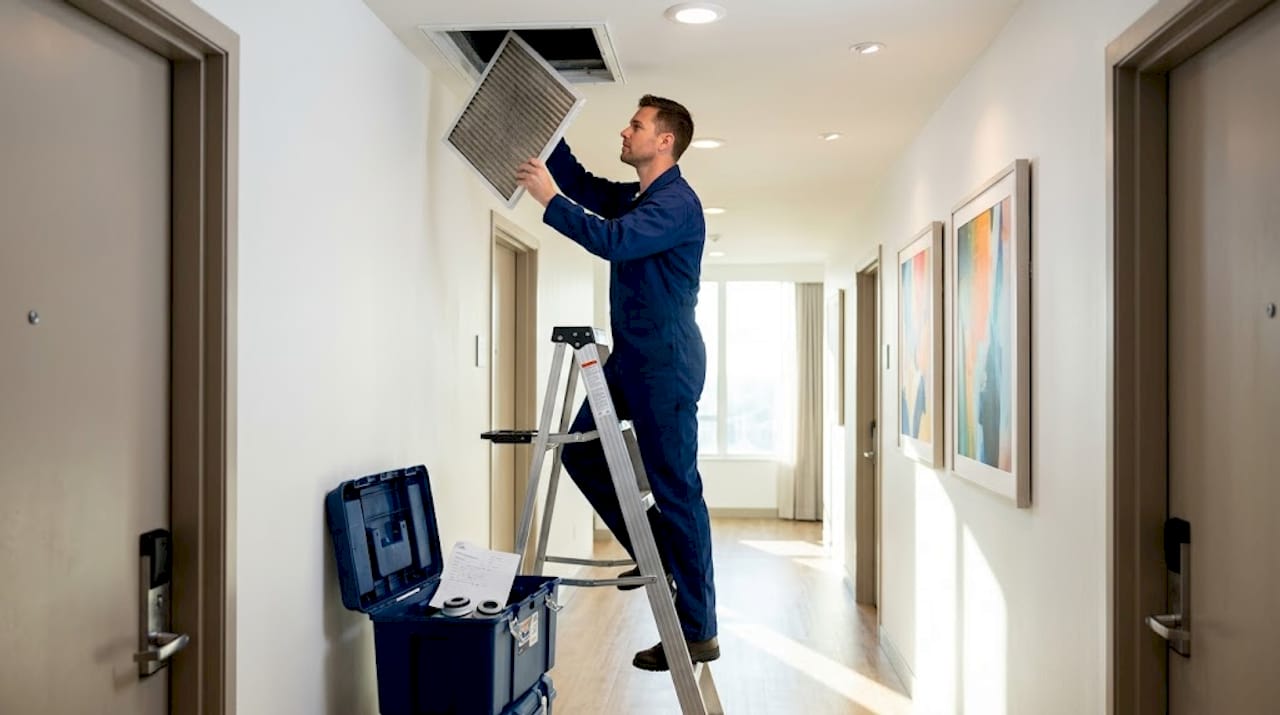
Ventilation design is where most properties underinvest. Adequate fresh air intake dilutes odor-causing compounds before they concentrate. If your HVAC is recirculating mostly stale interior air, you are fighting against your own system. Fresh air exchange rates matter as much as filtration quality.
Activated carbon filters are a reliable tool for odor removal in air handling units, but they are only effective when maintained properly. Activated carbon filters should be replaced every 6 to 12 months. Most properties stretch this out far too long, running filters at a fraction of their intended capacity without realizing it.
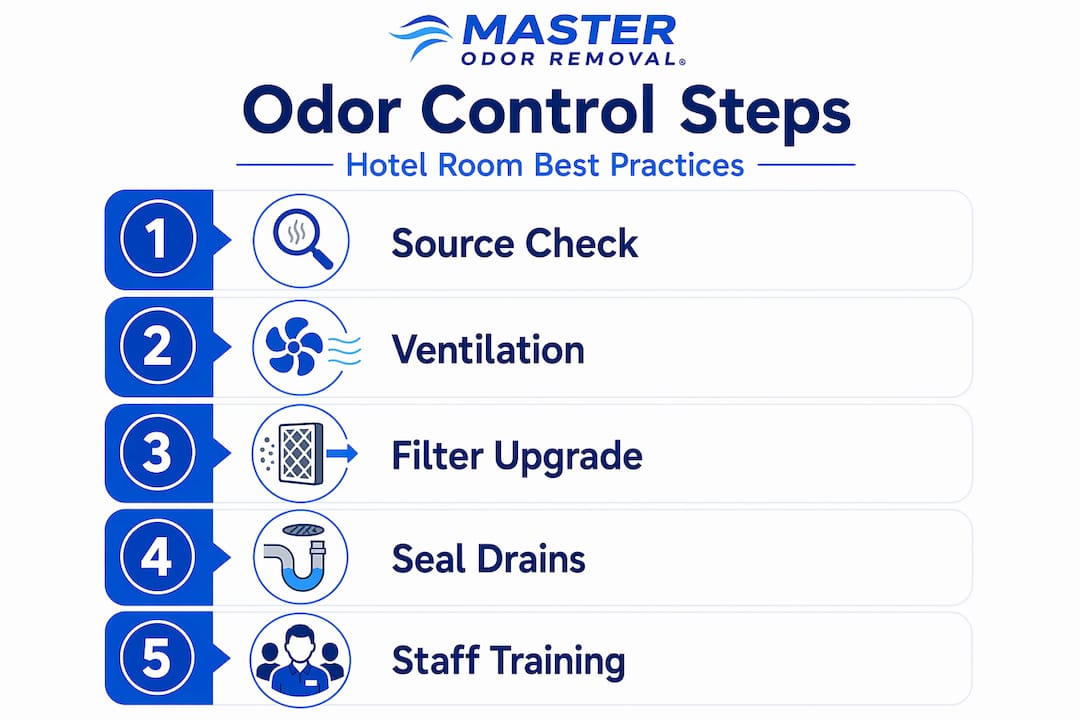
Mechanical drain seals are one of the highest-return investments a hotel can make. Mechanical valves reduce trap evaporation by over 96%, which means guest rooms in low-occupancy wings stay odor-free without daily flushing routines or staff labor. This is the solution that eliminates the P-trap problem at the structural level.
For material selection, consider these factors when making purchases or planning renovations:
| Material type | Odor resistance | Maintenance level | Best use |
|---|---|---|---|
| Polished porcelain tile | High | Low | Restroom floors and walls |
| Sealed concrete | Medium | Low | Back-of-house areas |
| Carpet | Low | High | Lobby and corridors only if necessary |
| Vinyl plank flooring | High | Low | Guest rooms |
| Upholstered fabric | Low | High | Limit use in high-traffic areas |
Pro Tip: Build a pre-inspection checklist tied to your check-in process. Staff who inspect rooms before guests arrive catch drain odors, stale air, and carpet smells before they become negative reviews.
Proven techniques for removing and preventing odors
Having the right system in place is step one. Executing it correctly every day is what actually protects your guest experience. Combining enzyme-based cleaners with physical air purification creates the most thorough approach, addressing both surface-level sources and airborne odor molecules.
Here is a practical execution sequence for high-impact odor control:
- Apply enzyme-based cleaners to drains and grout weekly. Enzymatic treatments break down the organic matter feeding bacterial odor production. They work slowly over hours, so they should be applied at the end of cleaning shifts, not rinsed away immediately.
- Schedule restroom deep cleans twice daily in addition to continuous touch-up visits. Focus on grout lines, the perimeter of toilet fixtures, and any floor drains that collect debris.
- Use UV-C air sterilizers in HVAC units to neutralize airborne bacteria and mold spores before they circulate. These units work without ozone and are safe for occupied spaces when properly installed.
- Install odor-neutralizing urinal pads and deodorizing screens in all restrooms. These slow bacterial growth at the fixture level and reduce the frequency of deep cleaning cycles needed to maintain acceptable air quality.
- Apply neutral-scented air fresheners only after odor sources are addressed. Using fragrance on top of an unresolved source is the pattern that signals poor hygiene to experienced travelers and damages trust.
- Address pet-friendly rooms with targeted enzyme treatments after every checkout. Pet odors bind deeply to soft surfaces. A standard room turnover will not remove them. See pet odor tips for hotels for room-specific strategies.
Pro Tip: For vacation rentals, install mechanical drain seals in every floor drain before your first guest arrives in spring. The maintenance savings alone offset the cost within one season.
Verification and ongoing maintenance
Executing your odor control plan correctly is necessary, but verifying that it is actually working is where most operators fall short. Systems drift. Staff miss steps. Filters expire. Without active monitoring, you find out about failures through guest reviews rather than internal checks.
The most effective verification tool is a signed, timestamped cleaning log kept in every restroom. Checking high-traffic restrooms every two hours is the recognized best practice for preventing bacteria buildup from crossing the threshold of detectable odor. A physical log makes this visible to staff and supervisors, and creates accountability without micromanagement.
Here are the maintenance habits that separate properties with consistent results from those with recurring complaints:
- Inspect HVAC filters monthly and replace activated carbon filters on a 6-month schedule minimum
- Review guest complaint data weekly and map feedback to specific rooms or areas
- Walk every low-occupancy wing at least once a week to test for drain odor
- Test enzyme cleaner effectiveness quarterly by having a manager inspect treated drains 24 hours after application
- Conduct a quarterly odor audit of soft surfaces including carpets, drapes, and upholstered furniture
Staff training and complaint tracking are the backbone of consistent execution. A well-trained housekeeper who understands why they are checking a floor drain catches the problem before the guest does. Staff who are just following a task list without context miss the nuance. Training should explain the source, not just the task.
Sustainable and eco-friendly odor control practices
Sustainability is no longer a differentiator in luxury hospitality. It is a baseline expectation. Eco-friendly green elimination methods reduce chemical use while delivering results that synthetic masking agents cannot maintain over time.
The most practical sustainable practices for hotel operators include:
- Replacing solvent-based cleaners with enzyme-based alternatives that biodegrade safely and eliminate odors rather than cover them
- Installing mechanical drain seals that require zero water to maintain trap seals, saving labor and water in low-occupancy wings
- Selecting energy-efficient UV-C and HEPA-filtered air purification over chemical spray systems
- Choosing long-lasting odor-neutralizing products over disposable chemical blocks that generate plastic waste
- Incorporating odor control metrics into your existing sustainability reporting alongside energy and water use
Properties pursuing eco-friendly odor removal for luxury operations have seen significant drops in guest odor complaints while reducing their chemical purchasing budgets. The two goals are not in conflict. They reinforce each other because sustainable products address root causes rather than cycling through masking agents that require constant repurchasing.
My take on what actually works in real hotels
I have worked with hotel operators who had invested in every product on the market and still received odor complaints every season. The pattern is almost always the same. They treated odor control as a product problem when it was a system problem.
The drain issue is the most underdiscussed problem in hospitality. I have walked into guest rooms that smelled like sewage, and the housekeeper had cleaned that room perfectly. The floor drain in the corner had not had water running through it in three weeks. That is not a cleaning failure. It is a design gap that no amount of scrubbing fixes. Mechanical seals changed how I think about seasonal properties entirely.
The second thing I have seen repeatedly is that heavy fragrances create more suspicion than they resolve. Guests who smell strong synthetic fragrance in a hotel room often assume something is being hidden. They are right to think that way, because usually something is. The properties with the best odor reputations are the ones that smell like nothing at all. Neutral, fresh, clean air.
Staff buy-in is the variable that makes or breaks every program I have seen work in practice. You can have the right products, the right schedule, and the right equipment. If your housekeeping team does not understand why they are adding an enzyme treatment to a drain at the end of a shift, they will skip it under time pressure. The properties that train for understanding, not just compliance, get consistent results.
Sustainable solutions also changed my perspective on cost. The operators I have worked with who switched to enzyme-based cleaners and mechanical seals reported lower ongoing costs within the first year because they were no longer cycling through chemical products that only temporarily suppressed the problem.
— Master
Ready to solve persistent odor problems professionally?
When onsite protocols are not enough, or when you are dealing with smoke damage, deep-set mildew, or odors that have penetrated structural surfaces, professional intervention delivers what maintenance routines cannot.
Masterodorremoval specializes in permanent odor elimination for hospitality properties using eco-friendly, green-certified methods. No ozone. No chlorine. No temporary masking. The team works with luxury hotels, boutique properties, and vacation rental operators to identify and permanently eliminate sources that standard cleaning misses. With same and next-day service availability and a satisfaction guarantee, you get results without disrupting guest schedules. If you are managing a property where odors are affecting reviews or occupancy, explore professional odor removal tailored to hospitality environments. For complex or recurring cases, connect with the odor removal specialists team directly.
FAQ
What is the biggest odor source in hotel rooms?
Dried P-traps in floor drains are one of the most common and overlooked causes. Rooms unoccupied for two or more weeks allow drain water to evaporate, letting sewer gases rise directly into the guest space.
How often should hotel restrooms be checked for odors?
High-traffic restrooms should be inspected and cleaned at least every two hours. This frequency prevents bacteria from accumulating to levels that produce noticeable odor between standard cleaning shifts.
Do air fresheners work for hotel odor control?
Air fresheners should only be used after the odor source is eliminated. Using fragrance to mask an unresolved source signals poor hygiene to guests and can worsen their perception of the property’s cleanliness.
How do enzyme-based cleaners help with hospitality odor management?
Enzyme cleaners break down the organic matter feeding odor-producing bacteria in drains, grout, and soft surfaces. They eliminate the source over several hours rather than temporarily suppressing the smell.
When should a hotel use professional odor removal services?
Properties dealing with smoke damage, deep mildew penetration, or recurring odors that survive standard cleaning protocols should bring in professional services. These situations require tools and methods that go beyond routine maintenance.
Recent Comments