
TL;DR:
- Addressing the source of odors ensures permanent removal, unlike masking with fragrances.
- Eco-friendly methods like baking soda, vinegar, and activated charcoal safely neutralize household smells.
- Persistent or hazardous odors often require professional, science-based remediation to protect health and property value.
Subtle odors in your home or rental property can quietly chip away at comfort, guest impressions, and even resale value. Hidden odor sources range from trash cans and pet beds to moisture trapped behind walls. The good news is that identifying the root cause and applying the right eco-friendly strategy can eliminate smells permanently, not just cover them up. This guide walks you through the most common sources, the science behind real odor removal, and practical green solutions you can use today.
Table of Contents
- What are the most common household odor sources?
- Why source control beats masking: The science of odor elimination
- Eco-friendly solutions for major household odors
- Comparing household odor solutions: What works best?
- Why ignoring subtle odors is costing you time and money
- Discover professional, eco-friendly odor removal options
- Frequently asked questions
Key Takeaways
| Point | Details |
|---|---|
| Source control is essential | Eliminating the source of odors is more effective than masking them with sprays or candles. |
| Eco-friendly methods work | Baking soda, vinegar, and active charcoal offer safe, effective odor removal for most household smells. |
| Don’t ignore warning odors | Scents like rotten eggs or fishy smells may signal serious hazards and require immediate attention. |
| Professional help for persistent issues | If green solutions fail or odors return, a professional odor removal service can solve deeper or hidden problems. |
What are the most common household odor sources?
To tackle odor removal, you need to first know what’s causing the problem. Let’s break down the top sources you likely encounter.
Most persistent home smells trace back to a handful of culprits. Some are obvious, like a full trash can or a wet dog. Others are sneaky, hiding inside your HVAC ducts, behind drywall, or deep in the fibers of a sofa you’ve owned for years. Recognizing both the visible and hidden sources is the foundation of any effective odor removal plan.
Common household odors include trash, pet smells, sinks, drains, vents, and upholstery. Here’s a quick breakdown of the top ten:
- Garbage and food waste: Decomposing organic material releases sulfur compounds fast.
- Pets: Dander, urine, and saliva soak into carpets and soft furniture.
- Drains and sinks: Biofilm buildup in pipes creates a persistent sewer-like smell.
- Mold and mildew: Moisture behind walls, under floors, or in musty odor sources like HVAC systems.
- Cooking residue: Grease and food particles cling to cabinets, vents, and walls.
- Dirty laundry and washers: Front-loading washers trap moisture and breed mildew.
- Upholstery and carpets: Fabric absorbs everything, from smoke to spilled beverages.
- Vents and ductwork: Dust, mold spores, and debris circulate through every room.
- Rotten egg smell: This signals a potential gas leak. Leave immediately and call your utility provider.
- Fishy or burning smell: Often an electrical issue. Treat it as an emergency.
The last two deserve special attention. A rotten egg odor or a fishy smell without an obvious food source can indicate serious hazards. Use our bad smell checklist to rule out safety risks before attempting any DIY fix.
For a broader look at odor origins room by room, the full odor source list from Better Homes and Gardens is a useful reference.
Expert note: “Any odor that intensifies with humidity, appears suddenly, or smells chemical or electrical in nature should be investigated for hazards before any cleaning or masking is attempted.”
Why source control beats masking: The science of odor elimination
Now that you know where common odors come from, let’s dive into why resolving the underlying causes is essential and how science backs up a green approach.
Air fresheners, scented candles, and plug-in diffusers are everywhere. They’re also largely useless for real odor problems. Masking adds a new smell on top of the old one. The moment the fragrance fades, the original odor returns, often stronger because the source has had more time to develop.
Source control means fixing or removing what’s actually causing the smell. That could mean repairing a slow leak, deep-cleaning a drain, replacing a water-damaged subfloor, or professionally treating a surface saturated with pet urine. Once the source is gone, the odor has nothing left to feed it.
The science is clear on why this matters for your health too. VOC concentrations indoors can be 2 to 5 times higher than outdoors, and sometimes up to 10 times higher. Volatile organic compounds, or VOCs, are gases released by everything from cleaning products to building materials. When you spray a chemical air freshener, you’re adding more VOCs to an already compromised space.
Eco-friendly odor removal works differently. Absorption methods, like activated charcoal, trap odor molecules in microscopic pores. Oxidation methods break down the chemical bonds that create the smell in the first place. Neither approach adds harmful compounds to your air. For a deeper look at how these processes work, our guide on eco-friendly odor neutralization explains the chemistry in plain terms.
Here’s a simple comparison of approaches:
- Source removal: Permanent fix, addresses root cause
- Absorption (charcoal, baking soda): Effective for ongoing maintenance
- Oxidation (enzyme cleaners, green products): Breaks down organic odor compounds
- Masking (sprays, candles, plug-ins): Temporary, adds VOCs, can worsen air quality
- Ozone treatments: Effective but potentially harmful to occupants and surfaces
Property managers who rely on masking between tenants often face recurring complaints and costly turnover. Expert odor removal practices consistently show that verified elimination, not fragrance layering, is what protects long-term property value.
Key insight: Never ignore odors that change with humidity or temperature. These patterns almost always point to an active moisture or biological source that masking will never resolve.
For a practical breakdown of natural alternatives, the natural odor eliminator guide from Green Citizen covers common household applications well.
Eco-friendly solutions for major household odors
Understanding the science is only half the battle. Here’s how you can apply safe, environmentally friendly solutions for the most persistent home odors.
Eco-friendly methods like baking soda, vinegar, and activated charcoal neutralize odors through absorption or oxidation rather than chemical masking. Each tool has a specific use case, and knowing which to reach for saves you time and money.
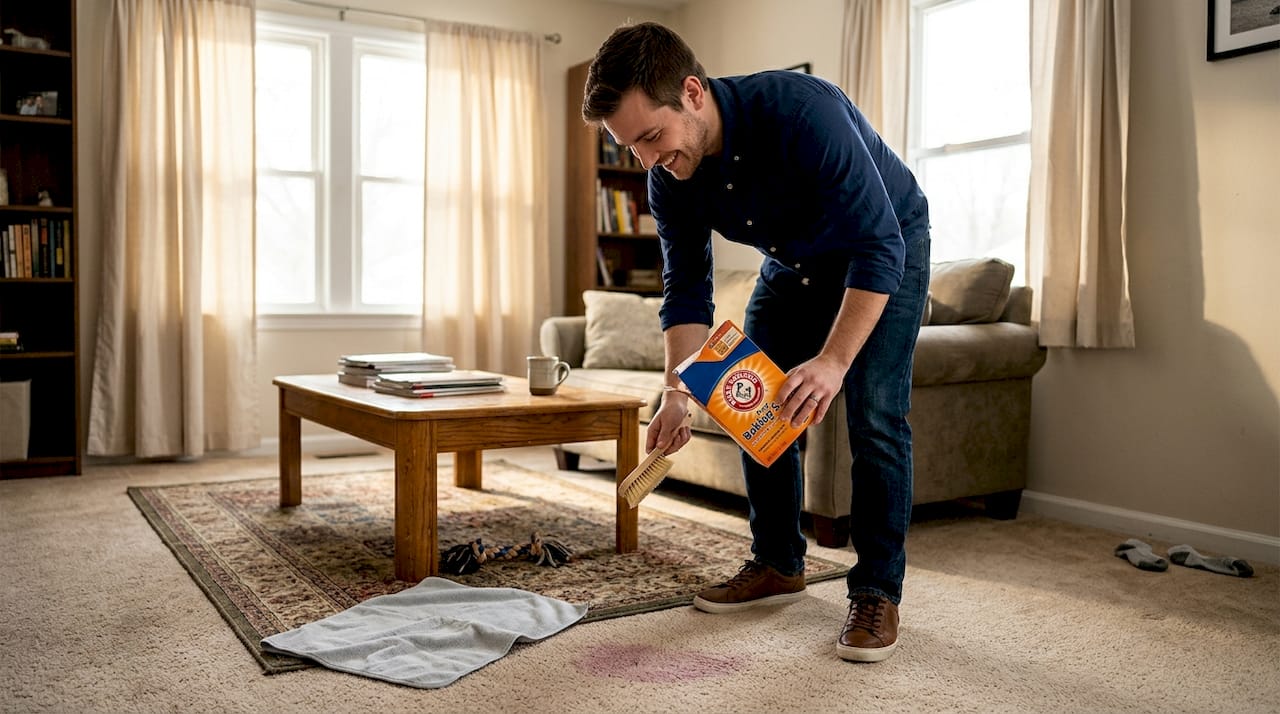
Baking soda works best on acidic odors, like pet urine, garbage, and food spills. Sprinkle it on carpets, leave it for 30 minutes, and vacuum. For drains, pour half a cup down the drain, follow with white vinegar, wait 15 minutes, then flush with hot water.
White vinegar is a mild acid that neutralizes alkaline odors and kills mold spores on contact. Mix equal parts water and vinegar in a spray bottle for surface cleaning. The vinegar smell dissipates within an hour, taking the original odor with it.
Activated charcoal handles VOC-based odors and musty smells that baking soda can’t fully absorb. Place open bags or bowls in closets, basements, and near HVAC returns. Replace every 30 to 60 days.
Here’s a step-by-step approach for the three most common problem areas:
- Pet odors: Blot up any liquid, apply an enzyme cleaner to break down urine proteins, let it sit for 10 minutes, then blot dry. Follow with a baking soda treatment. For deeper issues, explore our pet odor solutions for property managers.
- Kitchen odors: Clean grease from cabinet surfaces and range hoods with a vinegar-based degreaser. Boil lemon peels in water to neutralize airborne cooking smells. Check the drain for biofilm buildup.
- Musty basement or closet odors: Identify and fix any moisture source first. Then use activated charcoal and improve ventilation. Check EPA indoor air quality tips for ventilation guidance.
Pro Tip: Before applying any solution, test your indoor humidity. Anything above 60% creates the conditions mold and mildew need to thrive. A $15 hygrometer from any hardware store can save you hours of repeated cleaning.
Always address the underlying issue first. Green cleaners are powerful, but they can’t fix a slow leak, a cracked drain pipe, or inadequate ventilation on their own. Knowing how green solutions work helps you set realistic expectations and choose the right product for each situation.
Comparing household odor solutions: What works best?
You’ve seen the methods, but which odor eliminators actually deliver the best results? Let’s break it down so you can match solutions to problems.
Baking soda absorbs acidic odors, activated charcoal handles VOC-based smells, and chemical sprays can sometimes worsen air quality by adding synthetic fragrance compounds. Here’s how the main approaches stack up:
| Method | Effectiveness | Safety | Sustainability | Best for |
|---|---|---|---|---|
| Baking soda | Moderate | Very safe | High | Pet, food, carpet odors |
| Activated charcoal | High | Very safe | High | Musty, VOC, basement odors |
| White vinegar | Moderate to high | Safe | High | Mold, mildew, drains |
| Enzyme cleaners | High | Safe | Moderate | Organic odors, pet urine |
| Chemical air fresheners | Low (masking only) | Low | Low | Temporary cover-up only |
| Professional eco-removal | Very high | Very safe | High | Persistent, layered odors |
Source removal is the priority, especially for humidity-driven and hazardous odors. No product in the table above replaces fixing the actual cause.
Pro Tip: Layer your approach. Start with source removal, add a targeted neutralizer for the odor type, then use activated charcoal or baking soda for ongoing maintenance. This three-step sequence outperforms any single product.
For additional guidance on odor removal tips specific to musty smells, we’ve covered that in detail separately. If you’re dealing with unusual water smells, this water odor troubleshooting resource from the University of Georgia Extension is worth reviewing.
Know when to call a professional. Some situations are beyond what any off-the-shelf product can handle:
- Smoke damage that has penetrated drywall or subfloor
- Sewage backups or persistent drain odors after cleaning
- Mold confirmed behind walls or under flooring
- Rental units with odors that return within days of cleaning
- Any smell linked to a potential gas, electrical, or structural issue
Why ignoring subtle odors is costing you time and money
Here’s a perspective most odor guides skip entirely. The real cost of a persistent smell isn’t the cleaning supplies you buy. It’s the time you spend re-treating the same problem, the rental income you lose from a unit that doesn’t show well, and the structural damage that quietly worsens while you mask the symptom.
We’ve seen properties where homeowners spent months cycling through sprays, candles, and DIY treatments. Every solution worked for a few days. Then the smell came back. In nearly every case, there was a hidden moisture source, a slow drain leak, or organic material trapped in a surface that needed professional-grade treatment, not another box of baking soda.
Property managers must verify elimination, not just mask odors. Tools like humidity meters and total VOC benchmarks confirm that a space is genuinely clean, not just fragrance-covered. That verification matters for tenant satisfaction, lease renewals, and property appraisals.
The luxury odor removal experts we work alongside consistently say the same thing: small odors are almost never small problems. They’re early signals. Catching them early with the right approach, not the cheapest one, is what separates properties that hold their value from those that don’t.
From experience: “A space that smells neutral is a space that earns trust. That’s true whether you’re welcoming a guest, showing a rental, or simply living in it.”
Discover professional, eco-friendly odor removal options
If you’ve worked through every step in this guide and still can’t shake a persistent smell, the problem likely runs deeper than surface-level cleaning can reach. That’s exactly where professional eco-friendly treatment makes the difference.

Master Odor Removal specializes in odor removal done right for homeowners, property managers, and commercial clients. Every treatment uses green-certified, science-based methods with no ozone or chlorine. Whether you’re dealing with embedded pet odors, smoke damage, or stubborn mildew, our green odor elimination process targets the source, not the symptom. For rental properties and multi-unit spaces, our pet odor elimination specialists deliver same or next-day service with guaranteed results. Reach out today and get your space smelling genuinely clean.
Frequently asked questions
What causes a musty smell in homes?
Musty smells usually come from mold, mildew, or moisture problems in carpets, walls, or HVAC systems. Fixing the moisture source is always the first step.
How can I get rid of pet odors naturally?
Use baking soda, vinegar, or activated charcoal to neutralize pet odors and always remove the source first. Enzyme cleaners are especially effective on urine proteins.
Are chemical air fresheners safe for indoor air quality?
Many air fresheners add VOCs to your air and may worsen indoor quality. VOC concentrations indoors can be 2 to 5 times higher than outdoors, making eco-friendly methods a safer choice.
When should I call a professional for odor removal?
If odors persist after cleaning or signal hazards like gas or electrical issues, consult an expert immediately. Recurring smells after treatment also warrant professional assessment.
Can eco-friendly solutions handle strong odors like smoke or musty basement smells?
Eco-friendly solutions work on many strong odors, but persistent smoke or deep mildew may need professional treatment. Heavy smoke and mildew often penetrate structural materials that surface-level products cannot fully reach.
Recommended
- Eliminate Pet Odors: Eco-Friendly Solutions for a Fresh Home – Master Odor Removal
- Pet odor elimination: Eco-friendly solutions for fresher homes – Master Odor Removal
- Odor neutralization explained: 5 eco-friendly solutions – Master Odor Removal
- How to remove mildew smell: eco-friendly guide for homes – Master Odor Removal
Recent Comments